Seasonal residents face a different problem from short-trip travelers. A home that sits closed for months needs a plan for who holds keys, who checks the property, how locks are kept working in humid air and what to inspect on arrival. This checklist covers the extended absence.
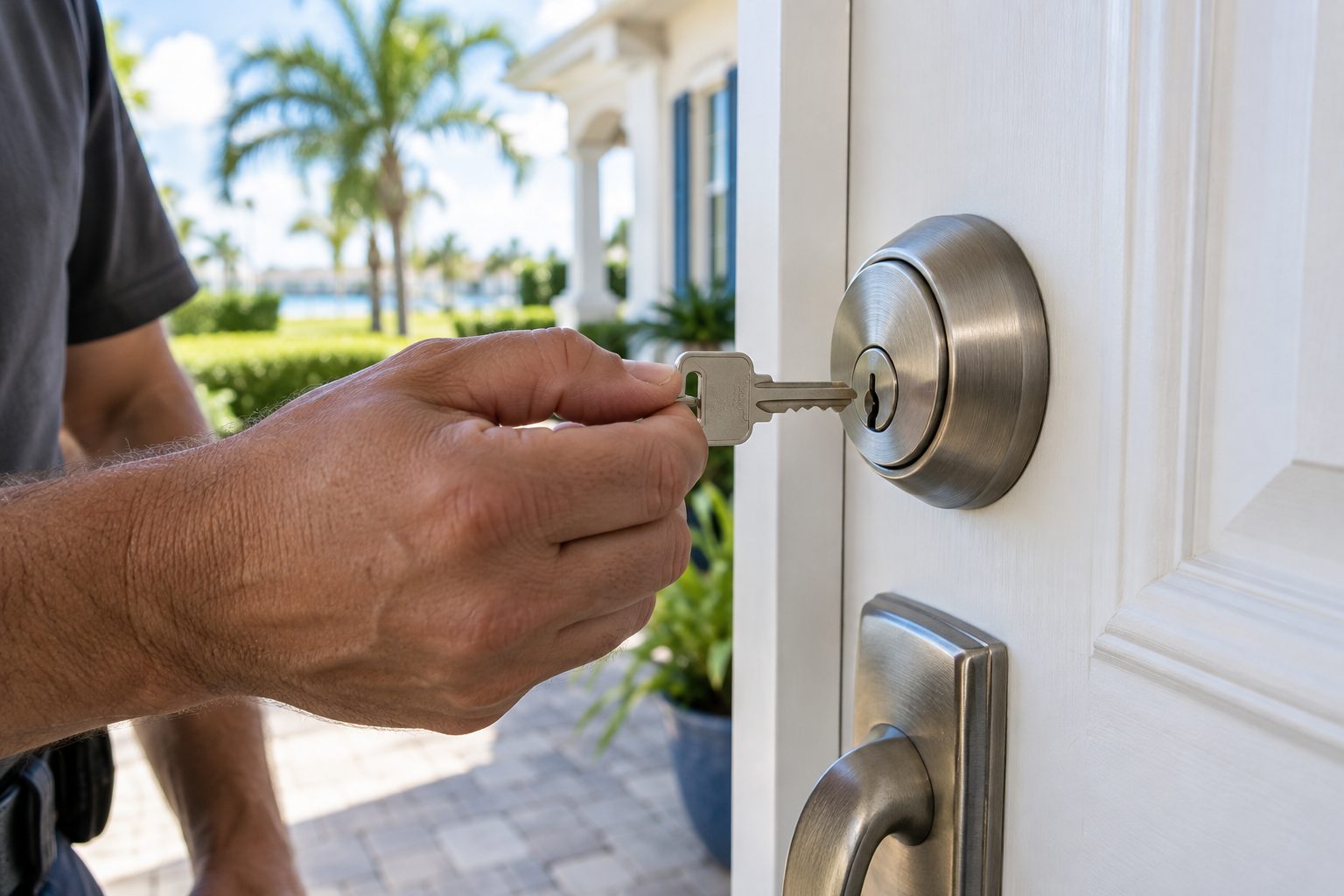
A week away is a matter of closing up and coming back. A season away is a matter of management. Over several months, locks sit unused, humidity works on hardware, batteries run down, mail piles up unless it is handled, and small problems grow without anyone noticing. Meanwhile many people with access come and go: property managers, pool and lawn crews, pest control, cleaners, an air conditioning technician, a neighbor with a spare key.
Seasonal homes are also known to be vacant, at least to the people who watch the neighborhood. A property that is dark for long stretches, with no cars in the driveway, draws attention. Many Central Florida communities have a high share of part-time residents, so a vacant house is not unusual, but it still needs thought.
The goal is to make the home resilient. That means strong locks and doors, a short and well-documented list of people who have access, a routine for checking the property and a plan for what happens if something goes wrong while you are a long way away. This guide is organized around those needs.
The best time to find a failing lock is while you are still in town. Walk every exterior door and gate, turn each key, throw each deadbolt and watch for stiffness, grinding or doors that need extra force. Check sliders and lanai doors, garage entry doors and any gate to the pool or yard. A lock that is rough now will be rougher after months of humid air.
Replace or repair what is marginal. A deadbolt that sticks, a handle that wobbles or a strike plate that is loose is easy to fix in a single visit and hard to arrange from another state. If you have keypads or smart locks, replace the batteries and check the mechanical key override. See the page on lock lubrication and maintenance and the guide on humidity and lock longevity for what moisture does to hardware.
Consider the door and frame as part of the same system. A strong lock in a weak frame is only partly effective. If a door is swollen or the frame is shifting, ask for it to be looked at now. The page on door hardware repair describes common fixes.
Over a long absence, the number of keys in circulation tends to grow. The pool service gets a gate key, the property manager has a copy, a neighbor holds one for emergencies, a relative has another, and a contractor was handed one last spring and never gave it back. Before you leave, write down every key and PIN that exists and who has it. If the list is longer than it needs to be, shorten it.
Give each person only what they need. A pool service may need the gate but not the house. A cleaner may need the front door for a short window. A property manager may need everything. Where possible, use a keypad or smart lock with individual PINs, so you can add and remove access without handing out metal keys. Individual PINs also let you see who came and when, on models that keep a log.
If you are unsure who holds a key, rekey. It is the cleanest way to reset the list, and it is quick. See the page on lock rekeying and the guide on key control policies, which has ideas that translate well to a second home.
Someone should walk through the property regularly. This can be a property manager, a neighbor, a relative or a home watch service. The more often they visit, the sooner a problem is found: a leak, a storm-damaged door, a door that has come unlatched, a failed lock or evidence of entry. A short written task list helps, and so does a way to report what they find.
Tell them exactly what to check: operate each exterior lock, confirm gates are latched, look at windows, check the garage, test the alarm panel and look for water stains or damage. Ask them to take a few photos each visit. If they find something wrong, they should know whom to call and what you want done. Say in advance whether they may authorize a locksmith or repair call, and where to find the key information.
Do not assume a neighbor knows your home. Show them how the doors work, especially anything with a trick, such as a slider that needs lifting or a deadbolt that sticks. Give them a plan for a storm, including what to do if shutters need closing. The guide on hurricane season door and lock prep covers much of what a person acting on your behalf would need to know.
Remote access is attractive when you live elsewhere. A smart lock can let a service in and tell you it happened. A video doorbell shows who is at the door. A garage opener with an app tells you whether the door is closed. These tools are useful, but they come with maintenance. Batteries die, accounts expire, firmware needs updates, internet providers change and routers fail.
Make a list of every connected device, its account and its battery type. Record who has the login. If you are the only person who knows how to reset a smart lock, nobody can help when it fails. Keep the mechanical key somewhere reachable and make sure a trusted person can use it. The smart lock buying guide helps you choose a model that suits a part-time home.
Be sure that remote features do not leave a gap. For example, a lock that unlocks automatically when your phone is near is not helpful if your phone is in another state. Turn off features that you do not need. If you share access, review the list of authorized users and delete anyone who no longer needs it. See digital lock PIN practices.
Garage doors and gates are heavily used in occupied homes and sit unused in empty ones. A garage door opener left in normal mode with a remote lying around is a concern. Use the lock or vacation mode if your opener has one, or disconnect power and secure the door with its own lock if it has one. Check that the door closes fully, because a small gap at the bottom allows someone to reach in or pry.
Gates and latches rust. A pool gate latch that was fine in April may be sticky by October. Pool barriers have safety purposes, so keep them working. If a latch or hinge looks weak, replace it. See the page on pool gate lock service and gate lock and latch repair.
Store anything that could be used to break in, such as ladders and tools, out of sight and locked. Make sure outdoor lighting works and consider timers. Keep trees and shrubs trimmed back from windows and doors so they do not offer cover. The guide on securing garage doors and entry points has more.
A mailbox that overflows is a billboard. Use a forwarding or hold service for mail, and make sure the mailbox lock works and you have the key. Cluster boxes in communities have their own rules and keys, and replacing a lost key may involve the post office or the community association. Check the mailbox and cluster box locks page for how that usually works.
Set up deliveries so nothing sits on the step. Stop newspapers and subscriptions, and redirect packages. Ask your check person to bring in anything that arrives despite your efforts. Keep your lawn and trash service running so the property looks maintained.
Be careful on social media. Posting that you are away for the season or tagging your location can advertise that a house is empty. Share photos later, once you are back. Keep community groups informed only to the extent that is useful, such as telling your neighbors and the association who your contact is.
A closed house with air conditioning set high or turned off can build humidity, and humidity affects locks, doors and wood. Many seasonal owners leave the air conditioning running at a moderate setting to keep moisture under control, which also helps doors, cabinets and flooring. Ask your HVAC professional what is appropriate for your home.
If the house is closed without air conditioning, expect swelling of wood doors, stiff locks and possibly mildew. The first thing you notice on arrival may be a door that will not open easily or a key that will not turn. Do not force it. Forcing a swollen door or a stuck key can break the key off in the cylinder. The page on a key that will not turn in the lock explains what to do.
Planning for this saves a difficult arrival. Ask your property check person to operate every lock regularly, since moving parts stay in better condition than parts that sit. Have a locksmith on your list before you need one, and keep the call details in the same place as your other home contacts.
Home insurance policies often include conditions about how long a property can be unoccupied and what must be done while it is empty, such as keeping the water shut off or having someone check it on a schedule. The details differ between insurers and policies, so read yours or ask your agent. A security measure you plan to rely on, such as a keypad lock or an alarm, may also be something your insurer wants to know about.
Keep a simple written record of your locks: how many doors and gates, what hardware is on each, how many keys exist and who holds them, and the date of any rekeying or replacement. Store a copy somewhere other than the house. If something goes wrong, a clear record makes it much easier to explain the situation to a technician, an insurer or the person looking after the property.
Write down a short emergency plan for your check person. Include who to call about a lock or door problem, where the spare keys are, where the water shutoff and breaker panel are, and how to reach you. A page taped inside a closet is better than a plan that lives only in your head.
Before you carry bags inside, look at the exterior. Check doors and frames for scratches, pry marks, new dents or bent strike plates. Look at windows and the garage door. Try the key in the front door and note how it feels. If the door has been forced, do not go in. Call the police from a safe place and wait for them to clear the house.
If everything looks normal, go in and walk the house. Check every exterior lock and note any that feel different from when you left. Test the alarm, the smart lock and the garage opener. Look for signs of water, pests and damp. Check that the people you gave access to have returned keys and that any temporary PINs are cancelled.
Make a short list of repairs you notice and arrange them early in your stay, so they are done before the next absence. If a lock has failed or a door needs adjustment, call for a technician and describe what you see. A mobile locksmith can come to the house, which helps when you are unpacking and do not have a car available to drive around.
At the end of a season you have information: which locks were stiff, which doors swelled, who held keys and which devices gave trouble. Use it. If you cannot account for every key, rekey. If locks are worn or corroded, replace them. If you spent the season worrying about who had access, a keypad or smart lock with individual PINs may suit you.
A technician can walk the house with you and suggest a practical plan, such as matching several locks to a single key, adding a deadbolt where there is only a knob lock, or fitting a reinforced strike. The page on rekeying versus replacing locks helps you think it through, and the home security checklist for Florida adds more ideas.
Quotes are given by phone. Complicated jobs, such as replacing a door or a frame, need an on-site look, and a service call charge applies to dispatch, which is explained before anyone is sent. When you are ready to plan your lock work for the next absence, call and describe the home, and the dispatcher will explain the options.
There is no universal rule, but regular visits are better than occasional ones. Many owners ask a property manager or neighbor to visit on a steady schedule and after any storm. More frequent checks catch leaks, failed locks and signs of entry sooner. Agree on a routine and a short list of tasks.
It can be, because you can give and cancel PINs from afar. But it needs battery checks, a working connection and a trusted person who knows the mechanical key. Choose a model rated for humid conditions and make sure the door and frame are strong. Electronics add convenience, not strength.
Not necessarily. Rekey if you cannot account for every key, if a key was lost or if someone who held a key should no longer have access. Otherwise, regular checks and careful key control are enough. A technician can advise based on your situation, and rekeying is a short job.
Do not force it. Humidity can swell doors and stiffen locks. Try the key gently and use only suitable lock lubricant. If it still will not turn, or the key sticks, stop and call. Forcing can snap a key inside the cylinder or damage the door. A mobile technician can come to the property.
Keep the list short: a property manager or a trusted neighbor or relative who lives close by. Give each person only what they need, record who holds what and collect keys when your arrangement ends. Avoid hiding keys outside, since hiding places are the first ones people check.
Yes. A technician can test each lock, look at doors and frames, and recommend repairs, rekeying or upgrades. Doing this before you leave means problems are fixed while you are present. Describe your doors and any trouble when you call, and a quote is given by phone where the work is straightforward.
Describe the situation by phone and we will tell you what the job involves. Quotes are given by phone. Jobs that cannot be quoted without seeing them need a technician on site, and the service call charge is explained on the phone before anyone is dispatched.