Williamsburg sits close to the tourist corridor, so one street can mix long-term residents, seasonal owners and short-stay guests. That mix creates its own lock problems: keys in too many hands, visitors locked out late, and condo doors that need careful handling. Here is how mobile locksmith help works here.
Williamsburg is a residential pocket that sits close to the busiest visitor areas in Orlando. Condos, townhomes, apartments and single-family streets sit within a short drive of hotels, restaurants and attractions. That proximity shapes the locksmith calls that come from the area. In many neighborhoods, almost everyone who has a key lives there full time. Here, a single building can have a full-time resident on one floor, a seasonal owner on another, and a short-stay guest in a unit that is rented out by the week.
More people touching more keys is the main theme. A guest who leaves with a key by accident, a cleaner who has an old copy, a former renter who never returned a fob, a seasonal owner who lent a key to a relative: each one is a small gap in security that nobody planned. A mobile locksmith can close most of those gaps on one visit, usually by rekeying the lock so old keys stop working while the door and hardware stay in place.
The other theme is timing. Visitors arrive late, drive tired, and lose or lock away keys in unfamiliar places. Residents get home from a shift in the hospitality trade at odd hours and find a lock that will not turn. That is why the 24-hour concept matters here, though availability depends on the day and the location, and the person on the phone will tell you what is realistic when you call.
If you are locked out of a condo or townhome, the safest first move is to stop and think about who else can legitimately let you in. A property manager, association office, spouse, roommate or neighbor with a spare key can often solve the problem faster than any outside service. Check whether a window or patio door was left unlocked only if you can reach it safely from the ground, and never climb a balcony or railing. Falls from balconies are a real risk, and the door is not worth an injury.
When you call a locksmith, expect to be asked to show that you live there or have the right to enter. A reputable technician will ask for identification and something that ties you to the address, such as a lease, a utility bill or a piece of mail. That can feel like an annoyance when you are standing outside in the heat, but it protects every resident. A technician who opens doors for anyone who asks is a danger to the whole neighborhood.
Association rules matter too. Some condo communities control the lock hardware on the front door because it is part of the building exterior or fire rating. Before any hardware is replaced, check your governing documents or ask the association. A rekey, which changes the inside of the existing cylinder, usually does not change the look of the door and is often the simpler path. A technician can tell you which option fits once they see the door.
Rekeying is the single most useful service in an area with this much turnover. The locksmith removes the lock cylinder, changes the internal pins to match a new key, and reassembles it. The outside of the lock looks the same, but keys that used to work no longer do. Every old copy in a drawer, a cleaner's bag or a guest's luggage becomes useless in one visit.
Owners of vacation or investment units often wait too long. The common pattern is a gradual one: a first guest keeps a key, a handyman is given a copy, a lockbox is opened with a number that is never changed. Nobody did anything wrong, yet the number of people who can open the door keeps growing. A scheduled rekey between long periods of rental, or after any key goes missing, resets the count to the keys you actually hold.
A rekey is not the right answer for every door. If the lock is worn, loose, damaged or a poor grade to begin with, replacing it gives better security than rekeying a tired part. A technician will look at the deadbolt, the handle set and the strike plate and tell you plainly which parts are worth keeping. The price is quoted over the phone after you describe the door, and an on-site visit is used when the job is more complicated than a standard rekey.
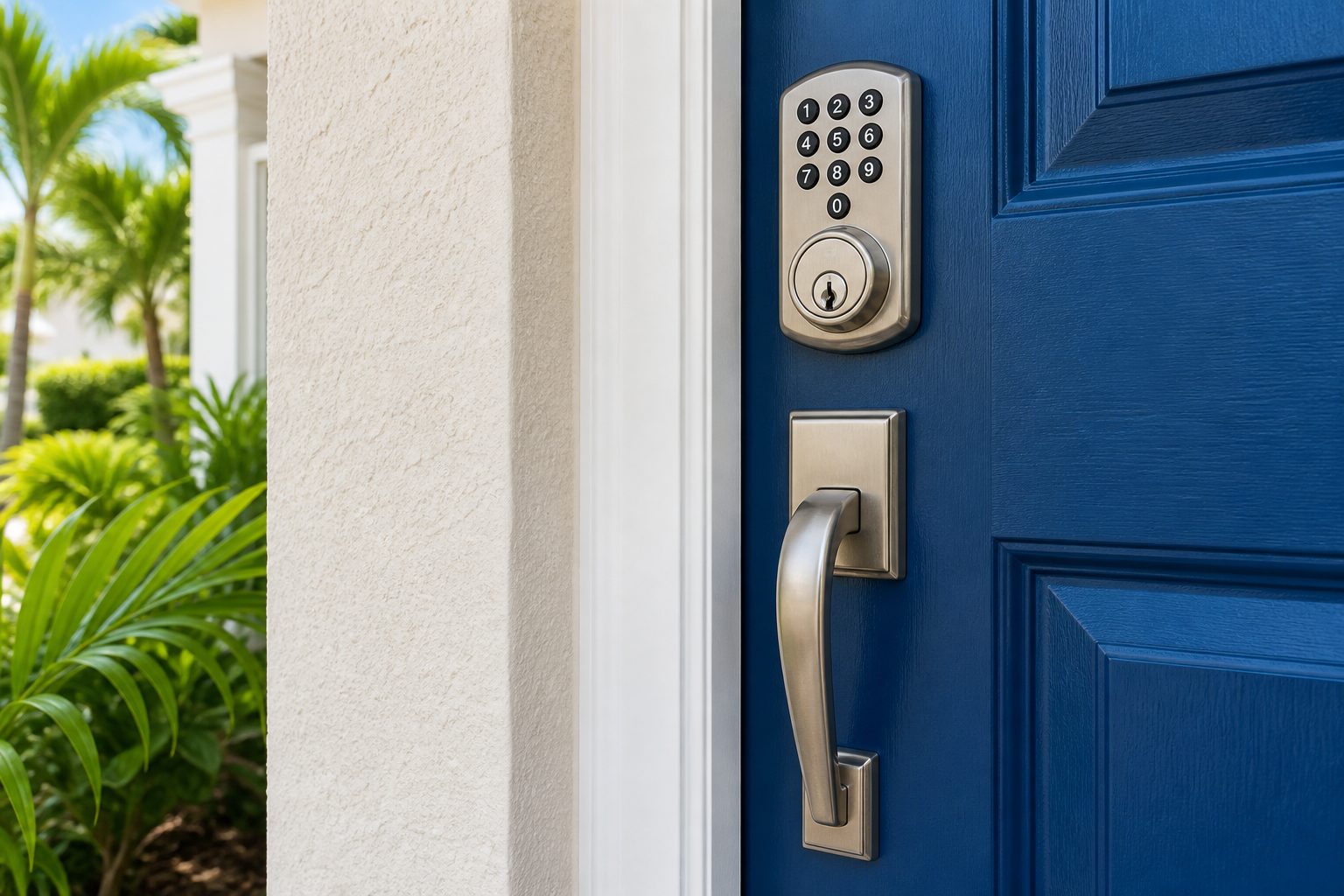
Keypad and smart locks are popular in short-stay units because they remove the need to hand over a physical key. A guest receives a temporary entry number, and the owner changes it after checkout. Done well, this solves the lost-key problem and the late-arrival problem at the same time. Done badly, it creates new problems: dead batteries, forgotten master numbers, and electronic locks that fight with an older door.
If you are considering a keypad or smart deadbolt, a few practical points apply. First, the door must be prepared correctly. A door that sags or a strike plate that does not line up will cause a motorized lock to jam, no matter how good the lock is. Second, choose a model that still has a physical key backup, and keep that key somewhere that is not the front mat. Third, keep a written list of who has been given an entry number and when it was changed.
Battery care is the most common cause of calls. Most smart locks warn you when the batteries are weak, but the warning is easy to miss in a unit you rarely visit. Change batteries on a routine you can remember, and test the lock from outside before you leave the unit. See the keypad deadbolt installation page and the smart lock buying guide for more on how to choose.
Owners of vacation rentals have a different set of lock needs from residents. The lock has to survive heavy use by people who are not careful with it, it has to be easy for a stranger to operate at night, and it has to stay secure when nobody is there. A lock that works well for a family that has lived in the house for years may be a poor choice for a rental that sees a new party every few days.
Common upgrades include a keypad entry on the front door, a keyed-alike setup so that one key works every door in the unit, a better strike plate and longer screws in the door frame, and a lockbox for the backup key that is mounted properly and not just hung from a handle. Sliding glass doors need a secondary lock or a bar, because the factory latch on many sliding doors is weak. The vacation rental lock service page covers these in more depth.
Owners should also think about what happens at the end of a booking. A quick walk-through that checks every lock, every window latch and every spare key makes sure the unit is ready for the next arrival. If a key is missing, a rekey before the next guest arrives avoids the far bigger trouble of discovering it after something has gone missing. Keep a short list of what the locksmith did and when, so the next owner or manager knows the history.
The roads around the visitor corridor produce a steady flow of car key calls. A rental car key fob falls into a pool bag or a theme park locker. A resident loses the only key to a car that uses a transponder chip. A sun-baked fob stops working because its battery or its internal board gave out. Each of these needs a different approach, and the first question is whether the car is yours or a rental.
If it is a rental, call the rental company first. They hold the contract, they know the vehicle, and in many cases they have their own roadside process. A locksmith can often help with a lockout, but the rental company may need to approve any work on their vehicle. If the car is yours, a locksmith can usually cut and program a replacement key at your location, provided you can show ownership with a registration or title and a matching photo identification.
For a car with no working keys at all, which is called an all-keys-lost situation, the work is more involved. The technician reads the vehicle information, cuts a new key blade if the key has one, and programs the transponder or smart key to the car's computer. See all keys lost and key fob replacement for what to expect. Have the vehicle identification number and your documents ready before the call.
Central Florida weather is hard on hardware. Summer humidity corrodes cylinders and springs, especially on doors that face the sun and rain. Afternoon storms push moisture into locks that have no weather protection, and tropical systems during hurricane season can swell doors in their frames so that deadbolts bind. If a lock has started to feel stiff, gritty or slow to return, weather is a likely cause.
A little care goes a long way. Use a dry graphite or a lock-specific lubricant sparingly, not household oil that attracts grit. Keep the keyhole clean and make sure the door closes without being forced. If you must lean on the door to make the bolt line up, the door has shifted or the hinges are loose. That is a door problem, not just a lock problem, and fixing the alignment will usually cure the strain on the lock.
Before a named storm, walk through the home and check that every exterior door latches firmly and that deadbolts fully extend. After a storm, check again, because wind and water movement can change how a door sits. Our hurricane season door and lock prep guide and the humidity and lock longevity page go into more detail.
A lockout at night feels more urgent than one at noon, and that urgency is exactly what dishonest operators rely on. A few simple habits protect you. Ask the company name and confirm it matches the name on the vehicle or the paperwork that arrives. Ask whether there is a service call charge and what it covers before anyone is dispatched. Expect the technician to ask for identification and proof that you belong at the address.
If you are alone, tell someone where you are and who is coming. Wait in a lit, visible spot, not behind the building. If anything feels wrong when the technician arrives, you can decline the work and ask them to leave. A legitimate professional will not argue. Our guide to spotting locksmith scams lists the most common warning signs, including a quote that changes once the work begins.
If anyone inside the home is in danger, a child or a pet is in a hot car, or you smell gas or smoke, call 911 first. Emergency responders can open doors and vehicles faster than any service when a life is at risk, and a locksmith can follow up afterward to repair or secure the door. Never put a person or animal at risk to save a little time.
A good visit starts with a short conversation. The technician asks what happened, looks at the door and lock, and explains what they plan to do before they touch anything. They will confirm who you are and whether you have the right to be there. Then they check the condition of the door itself: whether it is square in the frame, whether the strike plate lines up, whether the hinges are tight and whether the frame is cracked.
On a lockout, the aim is to open the door without damage where that is possible. Sometimes the cleanest answer is a different approach to the lock, and sometimes the lock must be replaced because it is already broken or worn out. The technician will tell you which, and why. After the door is open, they will test the lock from both sides and confirm that every key you hold works smoothly.
On a rekey or replacement, the technician will check the grade of the hardware and tell you about better options if the existing parts are weak. You are not obliged to upgrade, and you should not feel pressed. Ask for the work to be explained in plain words, and ask for new keys to be tested in front of you. Before the technician leaves, make sure you know how many keys you have, who else has one, and what you should do if one goes missing.
A few minutes of preparation shortens the call and avoids surprises. Know the address, including the unit or building number, and any gate or access instructions that a technician will need. If the property is in a gated community or a condo building with controlled entry, tell the dispatcher so that the technician can plan for it. Have a photo identification in hand and, if you can, a document that links you to the address.
Describe the problem as precisely as you can. Which door is it? Does the key go in but not turn, or not go in at all? Is the lock loose, broken or jammed? Is the problem happening on one door or several? Did anything happen just before, such as a storm, a break-in attempt or a recent lock change? These details let the dispatcher give you a sensible quote over the phone and avoid sending a technician who is not equipped for the job.
For a car, have the make, model, year and color ready, along with where the car is parked and whether it is in a garage or a lot with a gate. Quotes are given by phone only, and more complicated work needs an on-site look. There is a service call charge, and it is explained on the phone before anyone is dispatched. Ask any question you have before you agree, so that you are comfortable with the plan from the start.
If your problem involves an apartment, see the apartment lock service page. If you are a landlord or a manager who handles several units, the property manager lock service page explains how repeat work is handled. For a general overview of how a visit works from first call to finished job, read what to expect on a locksmith call.
Williamsburg is a place where many people are passing through, and the locks around it work harder than most. A little planning, such as a rekey at the right moment, a lock that suits heavy use and a record of who holds which key, saves most of the stress that comes with a lockout or a missing key. Nothing here replaces a conversation about your specific door.
When you are ready, call and describe what is going on. The person on the phone will ask a few questions, explain the service call charge, and tell you whether your job can be quoted on the phone or needs a visit to the door first. You can then decide with full information. Call when you are ready, and ask for anything to be repeated until it is clear.
Usually yes, but the technician will need to confirm that you have the right to enter. Have the booking confirmation, a message from the owner or manager, and your photo identification ready. If the owner or manager can be reached, they may be able to resolve it faster through a lockbox or a keypad entry. Call and describe the door, and the dispatcher will explain the next step.
Rekeying is often enough when the hardware is in good shape and you only want old keys to stop working. Replacement makes sense when the lock is worn, damaged, loose or a weak grade. Condo associations may also control the exterior hardware, so check the rules first. A technician can look at the door and recommend one or the other without pressure.
Yes. Quotes are given by phone only, after you describe the door and the problem. More complicated jobs need an on-site visit first. There is a service call charge, and it is explained on the phone before anyone is dispatched, so you know what to expect before you agree to anything.
Contact the rental company first, because they own the vehicle and may have their own process. If they approve outside help, a locksmith can often cut and program a replacement key on site. Have the rental agreement, your photo identification and the vehicle details ready. If you are in a hurry, ask the rental company what they will accept before anyone starts work.
It is safer to avoid it. Forcing a lock, climbing a balcony or breaking a window can cause injury and damage that costs more than the call you were trying to avoid. Check for an unlocked window only if you can reach it safely from the ground. If a person or animal is in danger, call 911 first.
Ask for the company name, ask about the service call charge before dispatch, and expect the technician to ask for identification and proof you live there. Verify credentials yourself and be wary of any company that will not give a name or changes its quote on arrival. Our scam guide lists more warning signs worth knowing.
Describe the situation by phone and we will tell you what the job involves. Quotes are given by phone. Jobs that cannot be quoted without seeing them need a technician on site, and the service call charge is explained on the phone before anyone is dispatched.