College Park is known for tree-lined streets, bungalows and a main street of small shops and restaurants along Edgewater Drive. Older homes and older hardware shape most lock calls here. This page explains how a mobile locksmith helps residents and business owners, and what to expect when you call.
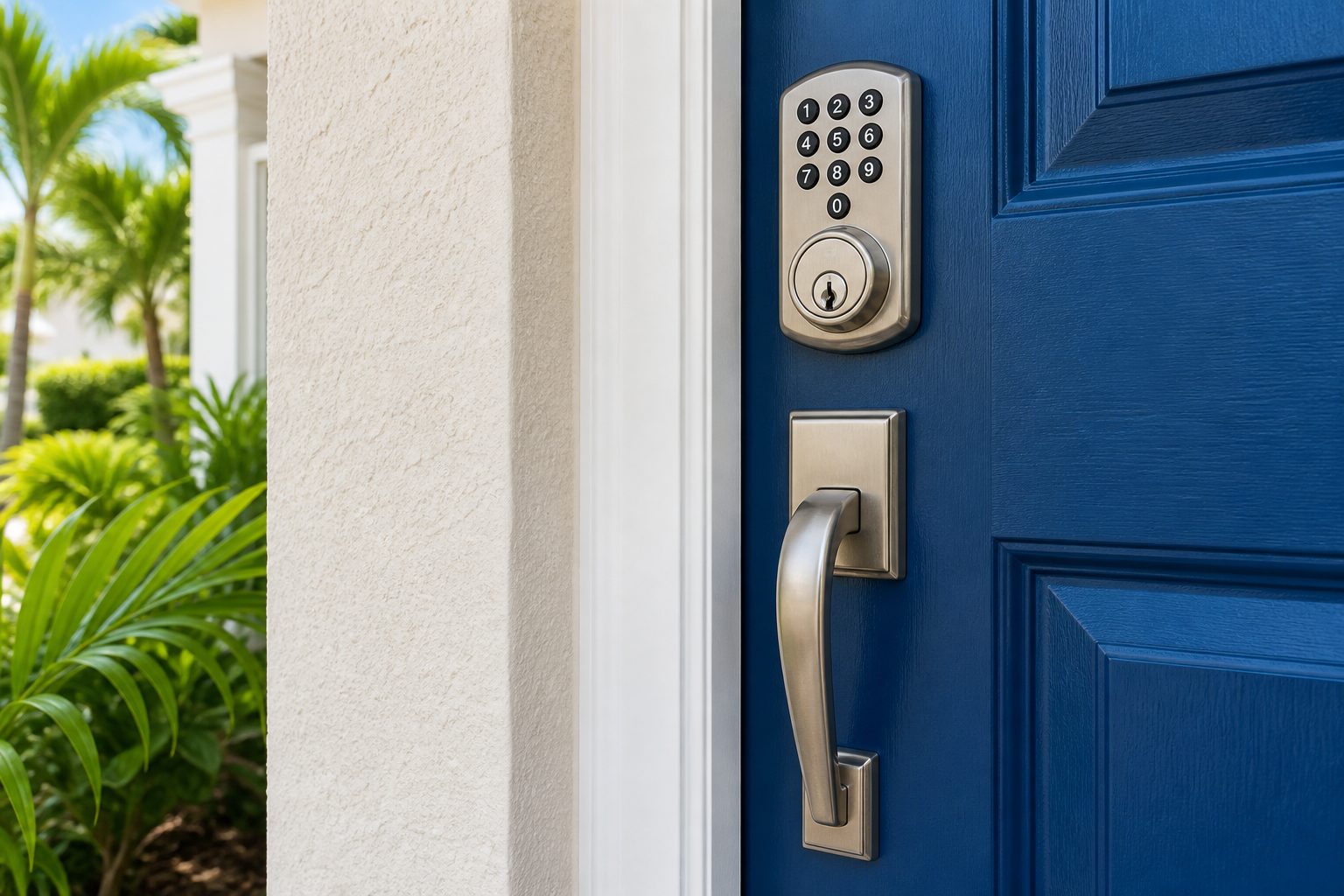
Walk through College Park and the housing stock tells its own story. Many homes are bungalows and cottages with front porches, wooden doors and windows that have been repaired and repainted over many seasons. Others are renovated or rebuilt houses that sit beside them with modern hardware. A single block can contain doors from several different eras.
That variety is what makes locksmith work here more individual than in a neighborhood built all at once. Two neighbors with the same problem, a key that will not turn, may need entirely different answers: one has a worn modern deadbolt and the other has a mortise lock set into a hundred-year-old door. The right fix depends on what is actually in the door.
Mobile service suits this kind of work. The technician comes to the house, looks at the hardware in place and brings the tools and parts to handle what is found. Quotes are given only by phone after you describe the lock and the problem, and for jobs that need a closer look, a visit comes first with a service call charge explained beforehand.
The classic bungalow front door is solid wood, often with glass panes in the upper portion and a simple lock below. The frame is wood too, and years of humidity, paint and settling can leave it slightly out of square. A bolt that lined up perfectly decades ago may now rub against the edge of the strike or miss it by a fraction.
Signs of a door that needs attention include a latch that must be lifted or pushed to catch, a deadbolt that works in cool, dry weather and sticks in the wet months, and visible gaps along one side. These are usually frame or hinge issues rather than lock failures, and a technician can tell which. Forcing the bolt can damage both the lock and the wood.
Glass panes near the lock are a security concern in any house. A thumb-turn deadbolt placed within reach of a pane can be a weakness, and a keyed deadbolt on the inside is sometimes suggested as a response. That choice has trade-offs for safety in an emergency, because everyone in the house must be able to leave quickly. A technician can talk through the options, and our historic home lock guide offers more detail.
Many older homes in College Park still carry hardware from earlier renovations: knob sets with the keyhole in the knob, rim latches, mortise cases and a deadbolt added at some later date. Over time, cylinders wear, keys are copied from copies and the whole system loosens. A key that turns with a wiggle, or only on the third try, is telling you something.
Do not force a stiff key. If it breaks off in the lock, you have a bigger problem, one that our broken key extraction page explains. A better first step is to stop, note the symptoms and call. The technician may clean and lubricate the lock, cut a fresh key from a good original, rekey the cylinder or replace it, depending on its condition.
A mortise lock can often be serviced instead of replaced, which keeps the original look of the door. Not every one is worth saving, and a worn case may be better retired. See our mortise lock service page for what the work involves.
A house that has been lived in for decades has probably had many keys cut. Previous owners, tenants, relatives, contractors, painters, house sitters and neighbors may all have kept one. When you buy or rent such a home, you rarely know where every key is.
Rekeying is the usual answer. It changes the pins inside each cylinder so the old keys no longer work, and you receive new ones. It is typically less involved than replacing locks and does not alter the appearance of the door. Where an old cylinder cannot be rekeyed, a new cylinder can sometimes be fitted into the existing hardware.
Many owners rekey every exterior door at once so that a single key opens the front, back and side doors. Our lock rekeying page describes the process. When you call, say how many doors you have, what type of lock each carries and whether any are known to be worn or stuck.
In an older neighborhood, the front door is only one of several entrances. Side doors onto porches, kitchen doors to the yard, French doors to a patio and detached garages or workshops at the back of the lot all need attention. Back entrances often have the weakest hardware, because they were never meant to face the street.
A detached garage may hold tools, bikes and equipment that are hard to replace, and it is often secured by a simple hasp, a basic knob lock or nothing at all. A sturdy deadbolt, a reinforced strike and a good lock on any side window go a long way. Our garage entry door locks page covers the options.
French doors are especially worth a look. They usually rely on a flush bolt or a small latch at the top and bottom, and glass in the door can be a weakness. A technician can suggest a keyed deadbolt or a surface lock that suits the door without damaging it.
Old wooden windows are part of the charm, but their latches are small and often worn. A sash lock that no longer pulls the two sashes tightly together can be defeated more easily, and a window left open for air in summer can be an invitation if it is not secured.
There are gentle solutions that respect the wood. Secondary pins or limiters that hold a window open a few inches while keeping it locked, and small locks that mount on the inside and can be removed later, avoid permanent damage. Our window lock repair page describes what a technician can fit.
Walk around your house at dusk and look at every window from the outside. Ask yourself which can be reached from the ground, a porch roof or a fence. Those deserve attention first. A short list of weak points is more useful than a general worry.
College Park's main commercial street is lined with small independent businesses: cafes, restaurants, boutiques and offices, many in older buildings with storefront doors that have seen heavy use. These doors are subject to the same wear as the homes nearby, with the added strain of opening and closing many times a day.
Common business calls include a front door that no longer latches at closing time, a back door whose lock has stiffened, a key that was never returned by a former employee and a storeroom lock that needs changing. For a business owner, the aim is to open on time and close securely, and a lock problem at either end of the day is costly.
When staff change, rekeying the exterior doors is a standard way to cut off old keys. For businesses with several doors and many keys, a master key system can organize access, though planning it requires a visit. Our business lock rekey page and storefront door repair page explain the work.
A lockout in College Park often involves a door that closed behind someone on the porch, a key left inside during a quick trip to the mailbox or a back door that latched while the owner was in the yard. Before calling, check for a spare key with a neighbor or family member and see if another door or a window is already open and safe to use.
Avoid any attempt to force the door, remove hinges or break glass. Old wooden doors can split, and old glass is hard to match. Most important, do not climb through a window if it risks injury. If a child, an elderly person or a pet inside is in danger, call 911 first.
When you call, describe the door, the lock and whether the house has more than one entry. A technician will ask you to show identification that connects you to the home before opening it. Our house lockout page explains the general process, and a phone quote is given before dispatch.
Many College Park homes have narrow driveways or none, and cars are parked on the street or beside the house. Vehicle problems follow: a locked-in key, a lost key or a fob that has stopped working while the car sits at the curb. Newer cars use transponder keys and smart keys, which need programming, and older cars may use simple metal keys.
When you call about a car key, have the make, model and approximate year ready, and be prepared to show identification and proof of ownership. If you have no working key at all, the work is more involved and our all keys lost page describes it. If you still have one key, a copy is often simpler.
A weak fob battery is a common and easy-to-miss cause of a dead remote. Check the manufacturer's instructions for the battery type before assuming the fob needs reprogramming. If a new battery does not help, call and describe the symptoms.
Layers of paint on old doors and frames are a hidden cause of lock trouble. Paint that has dried on a strike plate or the edge of the latch can stop a bolt from seating. A door repainted in a humid month can stick when the paint is still soft. Gentle cleaning of the hardware by someone who understands it is better than scraping.
Orlando's humidity affects wood throughout the year, and College Park's older doors feel it more than most. A door that sticks in summer and loosens in winter is behaving normally for wood, but the lock should still work. If it does not, the strike may need adjustment or the hinges may need tightening.
Lubricate only with a product suited to locks and use it sparingly. Household oils can attract dust and turn gummy. Our humidity and lock longevity guide offers practical advice, and a technician can look at a door that will not cooperate.
College Park is a place where houses are regularly renovated, added to or rebuilt, and each project brings contractors in and out. During a renovation, a home may be opened by carpenters, plumbers, electricians, painters and cleaners, and a lockbox or a hidden key is often used for convenience. When the project ends, nobody always remembers who had access.
A sensible habit is to rekey the exterior locks when a major project is finished, and to retrieve or disable any lockbox, temporary keypad entry or garage remote that was used. If you added a new door, check that the new hardware matches the key system of the rest of the house, so one key works throughout.
Renovations can also disturb existing hardware. A door that was removed and rehung may no longer close squarely, and a strike that was repainted may no longer seat. Test every door after the work is complete, and list anything that sticks or does not latch while the contractor is still on the job.
The porch is the heart of many College Park homes, and it often has its own door, a screen door or a gate. A screen door with a simple hook and eye is a comfort for a warm evening, not a security measure. A porch that is enclosed with a door can be given a proper lock, creating a first layer of protection before the front door.
Fences and side gates around a yard also benefit from a good latch and a lock suited to outdoor use. Humidity corrodes poor-quality hardware quickly, so choose marine or weather-rated products where you can. A technician can look at a gate and suggest what will last. Our gate lock and latch repair page explains the options.
Think about how you actually live. A gate you must unlock every time you carry groceries will be left open, so choose a lock that works for the way you use it. A security measure that is ignored is no security at all.
In a home with many doors, keys multiply. Front, back, side, garage, shed, gate and mailbox can add up to a heavy ring. Rekeying so that several doors share one key reduces the burden, and keeps the number of keys in circulation small. Store spares in one known place and write down who has which.
Make copies from a good original, not from a copy. Each generation of copy loses a little precision, and a key that is worn at the edges can damage the cylinder it is used in. If a key has begun to stick or feel rough, have it replaced before it fails. Our spare key duplication page describes the process.
If a key is lost, think about where it went. A key lost at home is less of a worry than one lost with an address attached or in a public place. When in doubt, rekey. A short call to describe the situation is the quickest way to decide.
Call, describe what is happening and give your address or the nearest cross street. You will hear the service call charge and, when the job can be quoted by phone, the cost of the work. For older hardware, damaged frames or commercial jobs with many doors, an on-site visit comes first. You can decline before any work starts. We do not promise arrival windows, because traffic and other calls vary.
Have identification ready, and for car work, proof of ownership. If your house has more than one door of concern, mention all of them so the plan covers them. If you have a lock you want to keep for its looks, say so, and the technician will try to work with it.
Our nearby pages for Winter Park and Thornton Park describe other parts of the area, and our phone quote guide explains the process. When you are ready, call and tell us about your door.
Usually yes. Many older cylinders can be rekeyed so that old keys no longer work, without changing the look of the door. Some are too worn, and a replacement cylinder is a better choice. A technician can tell by inspecting. Call, describe the doors and hear the quote by phone.
Often the problem is the door or the frame, not the lock. Humidity, paint buildup and shifted hinges can stop a bolt from lining up with the strike. Do not force it. A technician can check whether a strike adjustment, hinge tightening or carpentry is needed.
Often yes. A mortise lock can sometimes be serviced and rekeyed, which keeps the original look. Some cases are too worn to save, and a technician will say so after inspecting. Describe the lock on the phone so the right tools come to the visit.
Yes. Typical calls include doors that no longer latch, stiff back door locks, rekeying after staff changes and storefront door repair. Jobs with many doors need an on-site visit before a quote, and the service call charge is explained on the phone before dispatch.
Do not break the glass or force the door. Check for a spare key or another unlocked entry that is safe to use. Call, describe the door and say whether anyone inside is at risk. If someone is in danger, call 911 first. A technician will ask for identification tied to the address.
Quotes are given only by phone, because the right answer depends on the lock, the door or the vehicle. You hear the service call charge and the likely cost of the work before dispatch, and complicated jobs may need a visit first. You can decline before work begins. Call and describe the situation.
Describe the situation by phone and we will tell you what the job involves. Quotes are given by phone. Jobs that cannot be quoted without seeing them need a technician on site, and the service call charge is explained on the phone before anyone is dispatched.