A clinic holds records, supplies and sometimes medications that must be protected, while patients and staff need to move through the building without friction. This page explains how a locksmith helps practices control access to sensitive rooms, manage keys and handle after-hours entry in Orlando and nearby areas.
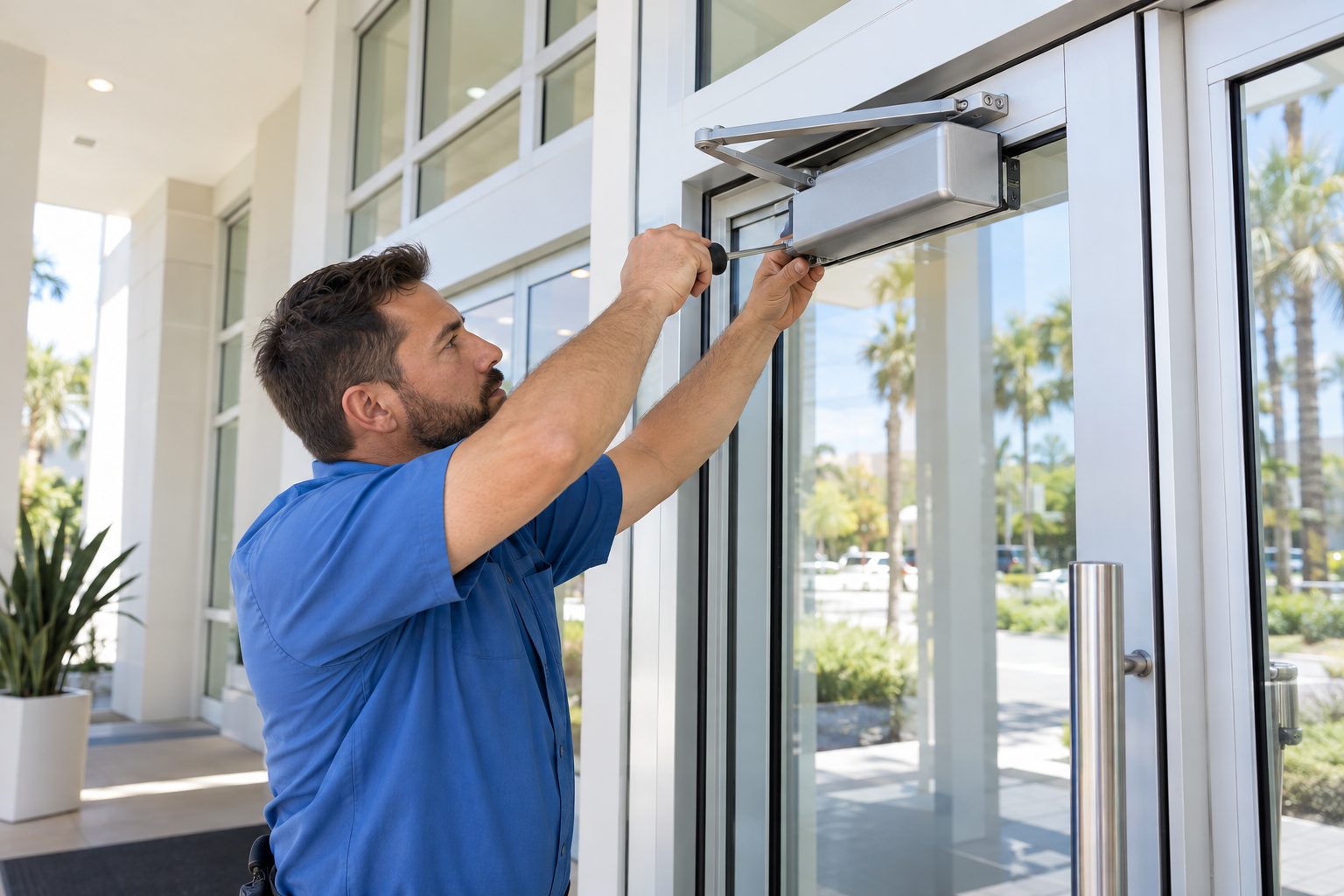
A medical or dental office combines public and private spaces. The waiting room is open during business hours, the exam rooms are semi-private, and the records room, supply closet, lab and staff areas are restricted. The same building must welcome patients and protect the things behind the front desk.
Several kinds of things need protection. Patient records, whether on paper or on computers in a back office, contain personal and health information that the practice is responsible for safeguarding. Supplies such as needles, sterile materials and equipment have value and carry safety implications. Some practices store medications, samples or controlled substances, which have strict storage requirements that come from health and drug regulations.
This site does not give regulatory advice. A locksmith is not a compliance consultant. The practice's own policies, professional guidance and the relevant regulators decide what level of security is required for records and medications. The locksmith's role is to supply and maintain the physical hardware that carries out those policies: door locks, cabinet locks, key systems and exit devices.
Because every practice is different, a first step is a conversation and often a walk through. Pricing is by phone, and larger projects require an on-site visit before a final quote. A service call charge applies and is explained before dispatch.
Many practices still keep some paper records, such as older charts, signed consent forms or billing documents. Even when records are mostly electronic, the computers, servers and printers that hold them sit in rooms that should be controlled.
The simplest control is a door with a good lock and a key policy. A solid core door, a quality deadbolt or a lever lock with a restricted keyway, and a reinforced strike plate and frame are the basics. The door should be kept locked when no authorized person is present, and the key should be carried by staff who need it. Do not leave a key on a hook near the door or under the keyboard.
File cabinets are the next layer. A cabinet lock does not stop a determined person with tools, but it prevents casual access and shows that the practice takes control seriously. Cabinet locks wear and keys get lost, and a locksmith can rekey or replace them. See file cabinet and desk locks for options.
If a practice shares a building with other tenants, think about who else can reach the records area. A shared hallway, a janitor with a master key, a landlord's maintenance team: each represents a possible path. A locksmith can help review the arrangement, and the practice can raise questions with the landlord about key control and rekeying.
For rooms that need a log of who entered, consider a keypad or card reader with an access record. These can be installed on single doors without overhauling the entire building.
Supply rooms hold items that are costly and safety-sensitive. A room that is left unlocked invites loss, and a room that is locked but whose key is widely shared invites the same. The usual solution is a locked door with a limited set of keys and a log of who holds them.
Medication storage is more regulated. Some medications and samples must be kept in locked cabinets or rooms, and the practice's policies and applicable rules decide what is required. A locksmith can supply and install the lock, but the practice decides whether it is sufficient. Cabinets with built-in locks, drawers with cam locks and cabinets with deadbolt-style locks are among the options. Quality varies, and a basic cam lock is easy to defeat. If a high level of control is required, a heavier lock, a restricted key and an access log may be better.
Refrigerators that hold medications or vaccines sometimes carry locks. These are typically small, and keys are easy to lose. A locksmith can replace them or help set up a procedure for who holds the key.
Think about the key. If every nurse has a key to the medication cabinet, the cabinet is only as secure as the least careful nurse. If one person holds a key and signs it out, the process is slower but more controlled. The right balance depends on the practice. For a more detailed look at planning, see master key systems and high-security locks.
The front door of a medical office has to be easy for patients in the daytime, including those who use wheelchairs, walkers or crutches. Heavy doors, difficult handles and awkward thresholds are barriers, and accessibility rules apply. A locksmith can often adjust or replace hardware so that doors open smoothly, but the building owner and the practice are responsible for compliance with accessibility requirements.
After hours, the practice needs a way to lock the building securely and a way for staff to enter safely. A deadbolt with a keyed cylinder on the exterior and a thumb turn on the inside is common. Panic hardware may be required on certain doors, and the technician can explain how it works. Do not disable exit hardware to save time.
Back doors and delivery entrances are common weak points. They are often propped open during the day for deliveries or breaks and left unlocked by accident. A door closer, a door position alarm or a clear policy can help. A locksmith can adjust the closer and the latch so the door closes and locks reliably.
Cleaning crews and maintenance staff also need access, often when no one else is present. Issue keys or codes in a controlled way. If a cleaner leaves, change the code or rekey. See commercial locksmith and business lockout for related services.
A clinic with a dozen locked doors can quickly accumulate dozens of keys. Doctors, nurses, front desk staff, billing staff, cleaners, landlords and contractors may all need access to different areas. A master key system can bring order, with each person carrying a key matched to their role.
A restricted keyway adds another layer. With a restricted keyway, a duplicate key can only be made with authorization, so a staff member cannot copy the key at a hardware store. When someone leaves, the practice knows the number of keys that exist.
Tracking matters as much as hardware. Keep a log that shows the key number, who holds it, when it was issued and when it was returned. Do not label keys with the practice name or room names; use codes. If a key is lost, assess which doors it opens, whether the risk justifies a rekey, and act promptly. A policy that says all lost keys must be reported at once and that the practice will rekey as needed reduces both risk and arguments.
Practices that rent space should discuss key control with the landlord. A landlord may have a master key to the whole suite. Ask who holds it, how it is secured and whether the landlord is willing to change cylinders when requested. A locksmith can explain the practicalities, though lease terms are a legal matter. The guide on key control policies for businesses is a useful starting point.
Many practices find electronic access convenient. A keypad or card reader on the staff entrance and the records room lets the practice grant and revoke access without collecting keys. Time restrictions can limit when a code works, such as weekday office hours only.
The advantages are real. When a staff member leaves, the practice deletes their code the same day. A temporary code can be issued to a contractor. Logs show who entered. But electronic systems add dependence on power and software, and doors that serve as exits must always allow unobstructed egress.
A locksmith can install keypad locks, electric strikes and magnetic locks, and coordinate with the vendor who supplies the controller. Plan how the system behaves when power fails and who has the authority to change codes. Keep the administrator password in a secure place, and do not share it with every employee.
Decide what you need before buying. A small practice might be well served by a few keypad locks and a clear policy. A multi-provider clinic may want a networked system with logs. See electric strikes and maglocks and access control vs traditional keys.
A lockout at a medical office is more than an inconvenience. Staff cannot enter, patients are waiting, and a delay can disrupt care. A broken lock on a supply room or a records door is a security problem the practice cannot ignore.
If someone is in danger or in a medical emergency, call 911 first. A locksmith is not a medical responder. For a lockout where no one is in danger, call and tell the dispatcher the address, the door, who you are and what you see. A technician will need confirmation that you are authorized to request the work. A staff member who does not own or manage the practice may be asked to have a manager confirm by phone.
Keep a short list of authorized contacts at the practice, so that the dispatcher can verify quickly. This is a simple measure that can speed up an urgent call. Keep a spare key in a secure location, such as a locked key cabinet at a trusted office, rather than hiding it outside.
This site does not promise arrival times, and no locksmith can honestly promise a technician at every hour and place. When you call, you will hear what is available, and the service call charge will be explained before anyone is dispatched. For related help, see emergency locksmith.
Orlando has several medical districts, including the Lake Nona Medical City area, hospital campuses and many smaller clinics in suburban shopping centers and office parks. Each setting has its own pattern. A suite in a multi-tenant office building has a landlord, shared hallways and building hours. A freestanding clinic controls its own doors. A practice in a converted house may have older doors and residential hardware that is not designed for heavy use.
Florida weather affects hardware. Humidity corrodes locks, and storms can shift door frames and misalign latches. After a hurricane or a heavy storm, check that every exterior door closes and locks properly. A practice that must close for days after a storm will want to know that the building is secure when it reopens. See hurricane season door and lock prep.
Think about growth. If the practice adds providers or expands into a neighboring suite, plan the key system with that in mind. A well-planned system can be extended; an ad hoc one tends to become chaotic.
Finally, involve the people who use the doors. Staff know which door sticks, which lock is stiff and which area is left unlocked. A short conversation often reveals problems that an inspection would miss.
Gather the practice name, address and suite, and your role. Describe the doors or cabinets you need help with, and whether the issue is a repair, a rekey, new hardware, a key system or an access control project. Say whether the building is owned or leased, and whether the landlord controls any of the locks.
Be ready to confirm authority. An office manager, practice owner or administrator may be asked for identification and, for some jobs, a document that shows they can authorize the work. If the work affects shared building doors, the landlord's permission may be needed.
If you have a key list or a floor plan, have it ready. If not, a quick sketch of the rooms you want to secure is useful. Take photos of the doors and cabinets if you can.
Ask for the quote by phone. Projects with several doors, or those that involve a key system or electronic access, need an on-site visit before a final quote, and a service call charge applies and is explained before dispatch. When you are ready, call and describe what you need. The person on the phone will explain the options.
A locksmith can supply and install cabinet or room locks, but the practice's policies and applicable rules decide the level of security required. Options range from cabinet locks to heavier hardware with restricted keys and access logs. Describe the cabinet and your requirements when you call.
Limit the number of keys, use a restricted keyway if possible, keep a written log of who holds each key, and never leave keys in open areas. If someone who held a key leaves or a key is lost, assess whether to rekey. A keypad with logs is another option.
Not always. A small clinic may be well served by a few well-chosen locks and a clear key policy. A larger clinic with many rooms and roles may benefit from a master system with restricted keys. A technician can discuss what fits after hearing how the space is used.
Ask who holds it, how it is stored and whether the landlord will change cylinders on request. Lease terms are a legal matter, but a locksmith can explain the physical options. Rekeying suite doors with your own key system may require landlord permission.
Yes, with keypad or card systems an administrator can delete the code or credential the same day. This is one of the main advantages over physical keys. Keep the administrator password secure and share it only with those who need it.
Call 911 first. A locksmith is not a medical responder. Once the emergency is handled, or if no one is in danger, call a locksmith and explain the situation. You will be asked to confirm your authority to request the work.
Describe the situation by phone and we will tell you what the job involves. Quotes are given by phone. Jobs that cannot be quoted without seeing them need a technician on site, and the service call charge is explained on the phone before anyone is dispatched.
Medical offices operate on schedules that leave little room for disruption, so lock work needs to be planned with the practice manager in mind. The technician asks when patients arrive, when the staff is busiest, and which rooms are in use at different times of day. Work on a records room, supply closet, or back door can often be arranged around those patterns, and doors that serve patients directly are handled with extra care. Having a short list of priorities, along with the best times for each area, helps the visit run smoothly and respects both the staff and the people waiting for care.
Privacy and confidentiality shape how the work is carried out. The technician avoids lingering in patient areas, keeps tools and parts out of hallways, and works only where needed. Staff should be ready to move files or equipment away from the immediate work area, and any screens left open should be locked. If a door must be opened or removed for a time, discuss ahead how the room will be secured in the meantime. A good technician will ask these questions naturally and work around them, since the aim is to improve security without creating a gap while the job is underway.
Afterward, the practice should be left with clear documentation. That includes a count of keys issued, a note of which doors were changed, and any recommended follow up such as additional locks or a key control routine. Staff should understand how the new hardware works, including any code or key changes. The scope and any quote are explained before work begins, and you can ask questions at any time. Plan to review the setup periodically, especially when staff change. A short annual check of who holds keys and codes keeps the improvements from slowly eroding.