In Avalon Park's Town Center, the building that holds your front door might also hold a bakery, a dentist's office or a yoga studio two floors down. That's New Urbanism working as designed -- retail on the ground level, homes stacked above it -- and it changes what a lockout actually means. Getting locked out of a Town Center residence can mean a shared street entry, a stairwell door, and a unit door, not just one lock on one house.
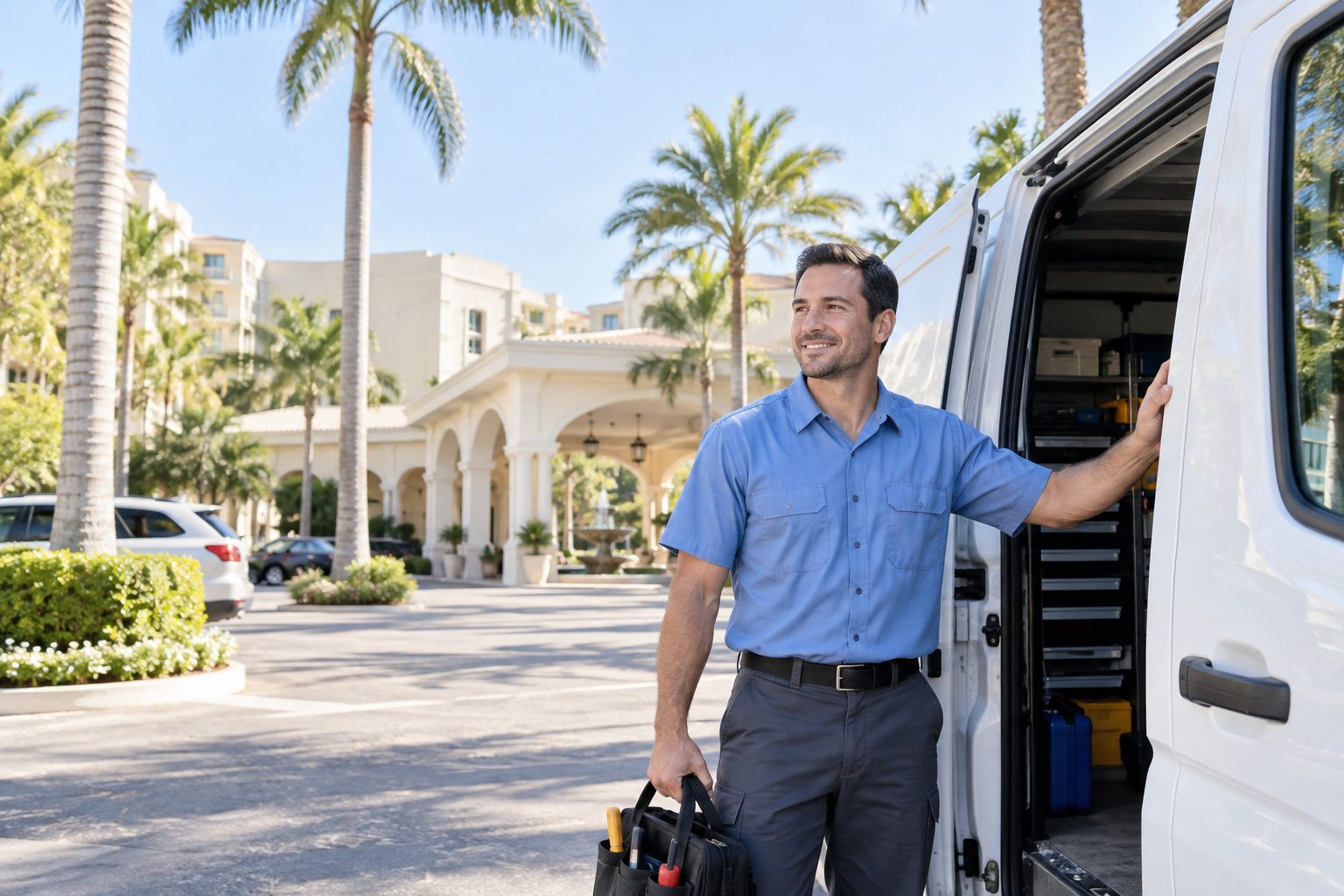
Outside the Town Center core, Avalon Park spreads into a more ordinary mix of condos, townhomes and single-family homes, most of it built within the last couple of decades. Between the two, we stay equally ready for a mixed-use building's layered entries and a standard single-family deadbolt -- two very different jobs that happen to share a ZIP code.
A lockout in a Town Center building can mean a shared street-level entry with its own lock, a stairwell or elevator lobby, and then the unit door itself. Any one of those layers can be the actual problem, and figuring out which one before deciding how to get through it is different work than a single-family house with one door and one lock.
It also means asking a different first question. Instead of "which key is missing," it's often "which door is actually locking you out" -- the building entry, the stairwell, or your own unit. We sort that out on arrival rather than assuming.
Business turnover in the ground-floor retail spaces means storefront rekeys are a regular part of Town Center work, entirely separate from anything happening in the residences above. A new tenant taking over a space that's changed hands a few times wants the locks changed before opening day, same as any other commercial rekey -- it just happens to be underneath someone's living room. We treat the storefront and the units overhead as two separate jobs, even when they're in the same building and even when the request comes in the same phone call.
Avalon Park's housing includes a real share of apartments and condos alongside the townhomes and single-family streets, and that means rekeys tied to unit turnover as much as to homeownership. A condo owner who just closed on a resale unit wants the locks changed before the previous owner's key is anywhere in play, and that's a one-door job, simpler in most ways than rekeying a house.
Most of Avalon Park's housing beyond the Town Center core is recent construction -- townhomes and single-family homes built well within the last twenty years, largely still on original builder hardware. A new owner or a new tenant moving in is usually what triggers a rekey here, on locks that have barely been touched since installation.
Because so much of this housing went up within a fairly narrow window, a lot of it shares the same handful of builder-installed lock brands and models. That's an advantage on our end -- we tend to already know the hardware before we've even opened the tool bag.
Both schools sit inside Avalon Park, and a share of our calls here involve a younger driver locked out of a car in a school lot, or a family sorting out keys for a teenager driving for the first time. It's a smaller category than the Town Center's mixed-use lockouts, but a consistent one.
Ask a resident of the Town Center what a lockout involves and the answer includes a shared entry code or a stairwell key fob as often as a physical deadbolt. Ask someone on a single-family street outside the core and it's just a front door. We don't assume which version of Avalon Park a call is coming from until we've heard the address -- the two halves of this town solve the same problem with completely different hardware.
We cover the Avalon Park ZIP code, from the Town Center core to the surrounding townhome and single-family streets.
Avalon Park's New Urbanist layout means a lockout can involve more than one door before you're actually home, and the Town Center's retail turnover adds a steady stream of commercial rekeys on top of it. Whichever version of Avalon Park you live in, (407) 792-1378 reaches us.
Most Avalon Park calls fall into a small set of patterns once you have been out here enough times. A family just closed on a house off Avalon Park Boulevard and wants every exterior lock on one key. A renter moved into a townhome and has no idea how many copies of the key the last tenant made. A parent is standing in a school parking lot with the car running and the doors locked. A shop owner in the Town Center is taking over a space and needs the back door and the front glass door keyed differently from the last tenant. None of these are unusual, but each one goes smoother when you know what to expect before the van pulls up.
This section covers the practical side: what we look at when we arrive, the choices you will be asked to make, what to have ready, and how the Florida climate on the east side of Orange County wears on the hardware you already own.
When someone asks us to "change the locks," they usually mean one of three different jobs. Knowing which one you actually need keeps the visit short and keeps you from paying for hardware you did not need.
Builder hardware in newer subdivisions is often a mid-grade residential line. It works fine for years, but the strike plates on many of these doors are held in with short screws that only bite into the thin door jamb trim. One of the most useful things we can do on a rekey visit is swap those short screws for longer ones that reach the framing behind the jamb. It is a small change, and it makes the door much harder to kick in.
A lot of Avalon Park homes came from the builder with the front door, the garage entry door and the back or patio door on different keys, or with a deadbolt and knob that do not match. Keying everything alike is one of the most common requests we get after a closing. What decides whether it can be done is the brand and keyway. Locks from the same manufacturer with the same keyway can usually be keyed together. Mixed brands sometimes can be if they share a compatible keyway, and sometimes one or two cylinders need to be replaced so the whole house matches.
If you want this done, count your exterior doors before you call, including the door between the garage and the house, and note any side gate or detached storage that has a keyed lock. That lets us bring enough pins and the right cylinders the first time.
In the condo and townhome communities across Avalon Park, the question of who owns which lock matters. Your unit entry door is usually yours to rekey. The shared building entry, pool gate, trash enclosure, mail room and fitness room are usually controlled by the association or the property manager, and changing those without approval can create a real problem with your neighbors and the board.
Before we touch a shared lock, we will ask who manages it. If you are a board member or a manager arranging work on common area hardware, it helps to have the following ready:
Individual owners who only need their own door done can skip all of that. Proof that you live there is enough for a unit door.
With the University of Central Florida a short drive north up Alafaya Trail, part of Avalon Park's rental stock goes to students, young professionals and people working at the office parks along the SR 408 and SR 50 corridors. Renters often call us for a lockout and then ask if they are allowed to change the lock themselves. The honest answer is to check your lease first. Many leases require the landlord to keep a working key, and a surprise lock change can cause a dispute when move out time comes.
If you are a landlord or a property manager, a rekey between every tenant is a simple habit that removes the question of who still has a copy. We can set up a rekey on the turnover day so the new tenant gets fresh keys at move in.
A few details make any Avalon Park visit faster:
We will not open a door for someone who cannot show they belong there. That rule protects you as much as anyone else, and it is why we ask for ID even when the situation is obvious.
Summers in Avalon Park bring the same pattern as the rest of Central Florida: heat building through the day, then a hard afternoon thunderstorm rolling in off the east. That daily cycle is tough on door hardware in a few specific ways.
Wood and composite doors swell with humidity, and a deadbolt that throws smoothly in the morning can bind by evening because the bolt no longer lines up with the strike. People often force the key, which bends it or breaks it off in the cylinder. If your deadbolt only fights you at certain times of day, the fix is usually a strike adjustment, not a new lock.
Fiberglass and steel doors facing west take a beating from direct sun. Dark finishes on handle sets get hot enough to be uncomfortable to touch, and the lubricant inside the cylinder can dry out. A dry graphite or a lock specific dry lubricant once or twice a year helps. Avoid heavy oil sprays, which collect dust and pollen and gum up the pins.
Keypads and smart locks exposed to afternoon rain can fail when water gets behind the exterior escutcheon. If your keypad goes dark after a storm, do not keep pressing buttons. Check the batteries first, then use the backup key. If it has no backup key, that is worth knowing before you are standing outside in the rain.
When a storm is tracking toward Central Florida, lock problems pile up in two waves. Before the storm, people lock themselves out while putting up shutters or moving patio furniture into the garage. After the storm, doors that took wind driven rain stick, garage doors will not open when the power is out, and people cannot find the manual release or the key to the garage entry door.
After a storm, if a door has swollen shut or a lock has been damaged by debris, do not pry at the frame. A locksmith can usually get it open without making the door impossible to secure afterward.
Vehicle lockouts here tend to happen in the same places: school pickup lines, the Town Center parking areas during a busy evening, grocery store lots along SR 50, and home driveways where a keyless fob was left inside while the engine was running. On newer vehicles we open the car without damaging weather stripping or the door panel. If the key is lost rather than locked inside, we can cut and program a replacement on site for many makes, which you can read about on our car key replacement page.
For families with a new teen driver, it is worth getting a spare key made while the original still works. Duplicating a working key is a simpler job than generating one after every key is gone, and it saves a stressful afternoon later.
Many Avalon Park streets use cluster mailboxes rather than individual boxes. When you move in, the previous owner's mailbox key may or may not have been handed over. Cluster box locks have their own rules about who can change them, and we explain that on our mailbox and cluster box locks page. Side yard gates, pool fence gates and storage sheds also often have keyed padlocks or gate latches that get overlooked on move in day. Walk the property and list them so nothing is left on an old key.
If you are opening or taking over a storefront in the Town Center, plan the lock work around the build out, not after it. Contractors, signage crews and inspectors all end up with keys during a fit out. The best time to rekey is right before your own staff take over, so every key in circulation is one you issued.
Think about how many people need to open and close, whether the rear service door needs to lock from inside only, and whether you want a separate key for the office or stock room. If your space has a glass front door with an aluminum frame, the lock is usually a narrow stile cylinder that is different from residential hardware. Our business lock rekey and storefront door repair pages explain those jobs in more detail. Check with your landlord before changing anything, since many commercial leases require the landlord to keep a key or to approve hardware changes.
After a rekey, the new keys are only as secure as the way they are handled. A few habits help:
Avalon Park is a community where people move in and out regularly, whether it is a family relocating for work, a student finishing school, or a business changing hands in the Town Center. Each of those changes is a good reason to look at who still has a key. A quick rekey puts you back in control, and it is one of the least expensive ways to improve the security of a home or a storefront.
When we arrive, we confirm the address and your ID, then look at the door and the lock before doing anything. For a lockout, we pick or bypass the lock using methods that leave the hardware working. Drilling is a last resort, used only when a lock is damaged or high security and cannot be opened another way, and we tell you before we do it. For a rekey, we remove each cylinder, repin it to a new key, test it, and reinstall it. We check that the deadbolt throws fully, that the latch catches, and that the strike lines up. Before we leave, you test every new key in every door yourself. If anything feels rough, we fix it then rather than leaving you to discover it the next time a storm rolls through.