Two miles separate the Longwood Historic District from the Woodlands, and about a hundred years of hardware history separate them too. One neighborhood has doors old enough to have been rehung more than once; the other has doors that were still on the builder's contractor key within living memory.
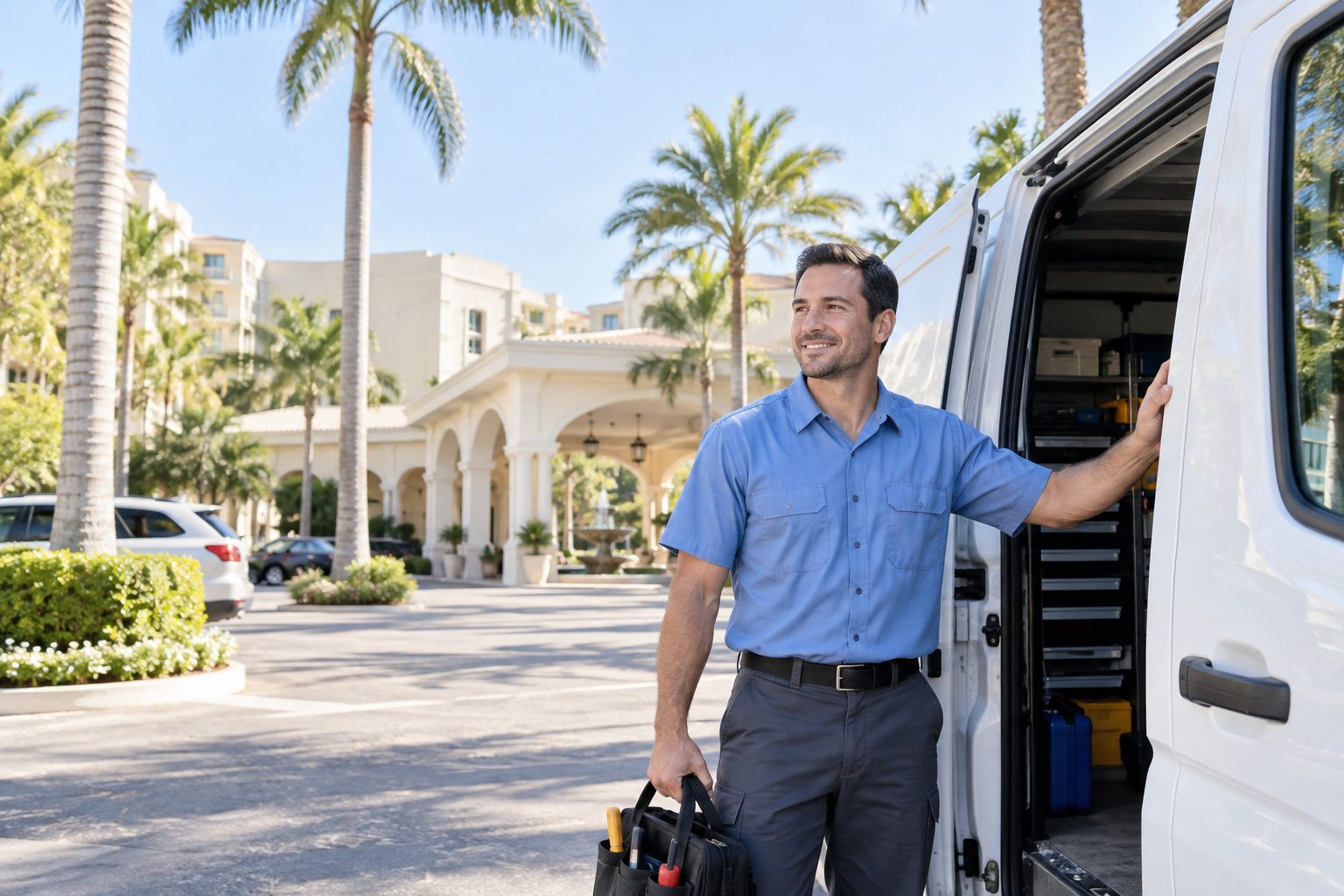
Longwood is a small, largely residential city, 5,926 housing units total, mostly a bedroom community rather than a commercial center, but it holds both of those eras at once, and that shapes what kind of locksmith call comes from which side of town, sometimes on the same afternoon.
The Longwood Historic District has the kind of housing stock where a mortise lock, set into the edge of the door rather than bored straight through the face, is not unusual. These are older mechanisms with skeleton-key-era roots, and a door that has had its knob removed and reinstalled a few times over a century can leave the mortise pocket slightly out of true.
Repairing or rekeying a mortise lock takes different tools and different parts than servicing a modern bored cylinder, nothing about it is interchangeable with what a big-box store carries, and matching a replacement to a historic door front takes more care than swapping a knob. Where the mechanism itself is beyond saving, we can often replace it with a mortise-compatible unit that keeps the original escutcheon and keyhole trim rather than leaving a mismatched patch on a hundred-year-old door.
The Woodlands went in during the 1980s, and the deadbolts and knobsets that came with those houses when they were built are now well into their fourth decade. Builder-grade hardware was never meant to be a permanent installation, it's what goes on a house to pass inspection and get it sold, with the assumption an owner might upgrade later.
Forty years later, 'later' has mostly not happened, and a lot of Woodlands doors are still running on their original 1980s cylinders. A rekey resets the pins; a hardware swap resets the whole mechanism, and on a house this age either one is a reasonable call to make.
The SunRail Longwood station puts a real number of residents on a commuter schedule, out early, back after the workday ends. A bedroom community built around a rail stop means a lot of households are away from the house for a predictable block of the day, which changes when a lockout or a rekey actually gets scheduled versus when it happens.
We work around that. A homeowner who commutes doesn't need to burn a vacation day for a rekey when evening or weekend service covers it just as well.
It also means a household's schedule can flip depending on which era of Longwood they live in, a Woodlands family juggling two commutes looks nothing like a historic district resident who works from a converted study a block from downtown. Both need the same kind of flexibility from us, just for different reasons.
With 5,926 housing units and comparatively little standalone commercial development, Longwood is a city built for living in rather than doing business in. That matters for locksmith work because nearly every call here is residential, house keys, garage service doors, the occasional detached shed, rather than storefront cylinders or office suites.
It's a narrower kind of work than a retail-heavy city generates, but it's steady, and it means we know the difference between a historic front door and a 1980s builder door before we ever ring the bell.
A satin-brass mortise escutcheon on a century-old door and a satin-nickel bored deadbolt on a Woodlands colonial are two different aesthetic worlds, and a Longwood locksmith call is as likely to be about getting the finish right as getting the mechanism right. We stock a range of finishes rather than defaulting to whatever's most common, because 'most common' means something different on each side of this city.
That's a small thing, but it's the kind of small thing a resale buyer or a longtime owner in the historic district notices at a glance if it's wrong.
Longwood spans two ZIP codes, 32750 and 32779, and our coverage includes both, from the Longwood Historic District downtown to the Woodlands subdivisions and everything near the SunRail station in between.
Historic district or Woodlands subdivision, the call is (407) 792-1378, we bring the right hardware for whichever side of Longwood you're on.
In the older homes around downtown Longwood, it is not only the front door that carries history. Interior doors often still have their original hardware too: small mortise privacy locks on bathrooms and bedrooms, some with keyholes that take a simple bit key, and some with a thumb turn on one side and nothing but a small hole or slot on the other. These work fine for decades until a child or a guest locks the bathroom door and the key has been lost for years.
Most interior privacy locks, old or new, are designed to be opened from the outside in an emergency. Modern ones usually have a small hole in the outside knob that takes a thin tool. Older mortise ones may need a bit key or a careful manipulation of the lock. If someone is locked in and cannot get out, especially a young child, tell us that right away. If a person inside is in danger, call 911 first. For ordinary cases, we can usually open the door without harming the original hardware, and we can cut a replacement bit key so the next time is easier.
Longwood is known for its mature tree canopy, and the Woodlands earned its name for a reason. Big oaks and pines are part of what makes these streets pleasant, but during summer thunderstorms and hurricanes they drop limbs, and a limb striking a porch roof, carport or garage can rack a door frame out of square. When that happens, the door may still close but the deadbolt will not line up, or the door will not open at all.
After storm damage, resist the urge to pry the door loose with a bar. Prying usually splits the jamb, and then the lock has nothing solid to hold into. A locksmith can often open the door by working the lock and latch, then adjust the strike or reset the hardware so the door secures again until a carpenter can repair the frame properly. If structural damage is serious, get it looked at by the right trade before anyone relies on that door for security.
Many historic district homes, and quite a few Woodlands homes that were updated over the years, have French doors opening to a porch or patio. French doors are beautiful but tricky to secure. Two doors meet in the middle with no fixed frame between them, so one leaf is usually held shut only by bolts at the top and bottom. If those bolts are short, worn, or not fully engaged, the pair can be pushed open together.
Upgrades that keep the look include longer surface bolts, a stronger strike at the head of the frame, and an astragal, a strip that covers the gap between the two doors so it cannot be pried. Glass panels near a thumb turn are also a concern on older doors. Security film on the glass is one way to make it harder to break through and reach the lock, without changing how the door looks.
Longwood has plenty of long time residents, and some of the most useful work we do here has nothing to do with lockouts. As people get older, arthritis or a weaker grip can make round knobs and stiff deadbolts genuinely difficult. A few changes can make daily life easier without reducing security:
For historic homes, lever sets are made in traditional styles and finishes, so the entry does not have to look modern to become easier to use. A keypad lock also makes it simple for adult children, caregivers or home health aides to get in without handing out copies of keys, and codes can be changed whenever the people coming and going change.
With little commercial space in town, a good number of Longwood residents run a business or work remotely from home. If you keep client records, company equipment, or inventory in the house, it is reasonable to put a keyed lock on the office or storage room itself, separate from the front door key. Cleaners, visiting family and repair people then have access to the house without access to the room where work material is kept. A simple keyed lever or a deadbolt on an interior door is usually enough, and it can be keyed differently from every exterior door.
Larger lots in the Woodlands and around the historic district often have a detached shed, workshop, or garage with its own service door. These buildings frequently get the cheapest hardware on the property, even though they may hold expensive tools, mowers and bikes. A few upgrades go a long way. Replace thin hasps with heavy ones mounted with carriage bolts that cannot be unscrewed from outside. Choose a padlock with a hardened, shrouded shackle. Put a real deadbolt on a solid service door rather than a knob lock. And if you want, key the outbuildings to match the house so one key opens everything you own.
For households that commute on SunRail or drive I-4 every day, someone else often needs to get into the house during the workday: a dog walker, a pet sitter, a house cleaner, or a neighbor checking on things. Handing out physical keys works, but over time it becomes hard to know who still has one. A keypad or smart deadbolt lets you give each person their own code and remove it when they no longer need it. Many models also keep a log of when each code was used. If you prefer to stay with physical keys, keep a written list of every copy and plan a rekey whenever a key holder stops working for you. Our smart locks and keyless entry page covers the electronic options.
If you are closing on a house in either part of town, plan the lock work as part of the move rather than weeks later. On a historic home, find out whether the front door has a working mortise lock or whether a previous owner added a bored deadbolt above or below it, since some doors have both. On a Woodlands home, count the exterior doors, the garage entry door, the side gate and any shed. Ask the seller for every key, garage remote and keypad code they have, and plan to rekey regardless of how many they hand over. There is no way to know how many copies were made over the years.
Vehicle calls in Longwood usually come from driveways, the SunRail station parking area, and shopping centers along State Road 434 and U.S. 17 92. If you have locked your keys in the car at the station, note which part of the lot you are in and whether the engine is running. Have your registration or other proof of ownership ready. For lost keys rather than locked in keys, many vehicles can have a key cut and programmed on site. The car key replacement page explains what we need for that.
Old wood doors in the historic district move a great deal between the dry spring and the humid summer. A door that closes easily in April may rub the frame by July. That movement shifts where the latch and bolt meet the strike, and it is the most common reason an older lock seems to fail suddenly in summer. Before you replace a lock that has become stiff, have the alignment checked. Often a small adjustment to the strike, or planing a tight spot on the door edge, brings back smooth operation. Mortise locks in particular benefit from a light dry lubricant and a cleaning every so often, since dust and old grease build up inside the case over the years.
Owners of older Longwood homes often worry that adding security means covering an original door with modern hardware. It usually does not. A mortise lock in good condition can take a new cylinder with a fresh key, and a well fitted mortise case with a proper deadbolt function is a strong lock in its own right. Where more protection is wanted, the most effective upgrades are often invisible: a longer, heavier strike set into the frame, screws that reach the wall studs, and hinge screws replaced with longer ones so the hinge side cannot be forced. None of that changes what visitors see when they walk up to the porch, and all of it makes the door harder to force. If a second lock is truly needed, it can be placed and finished to suit the age of the house rather than looking like an afterthought.