A pattern shows up often enough on Buick calls around Central Florida that it's worth naming directly: the owner has had the car for years, has never had a spare key made, and has just lost the only one they ever owned. Buick's owner base here skews a bit older on average than some other brands, and a car that's been reliable for a long stretch of years is exactly the kind of car nobody thinks to duplicate a key for, until the day there isn't one left at all.
Call (407) 792-1378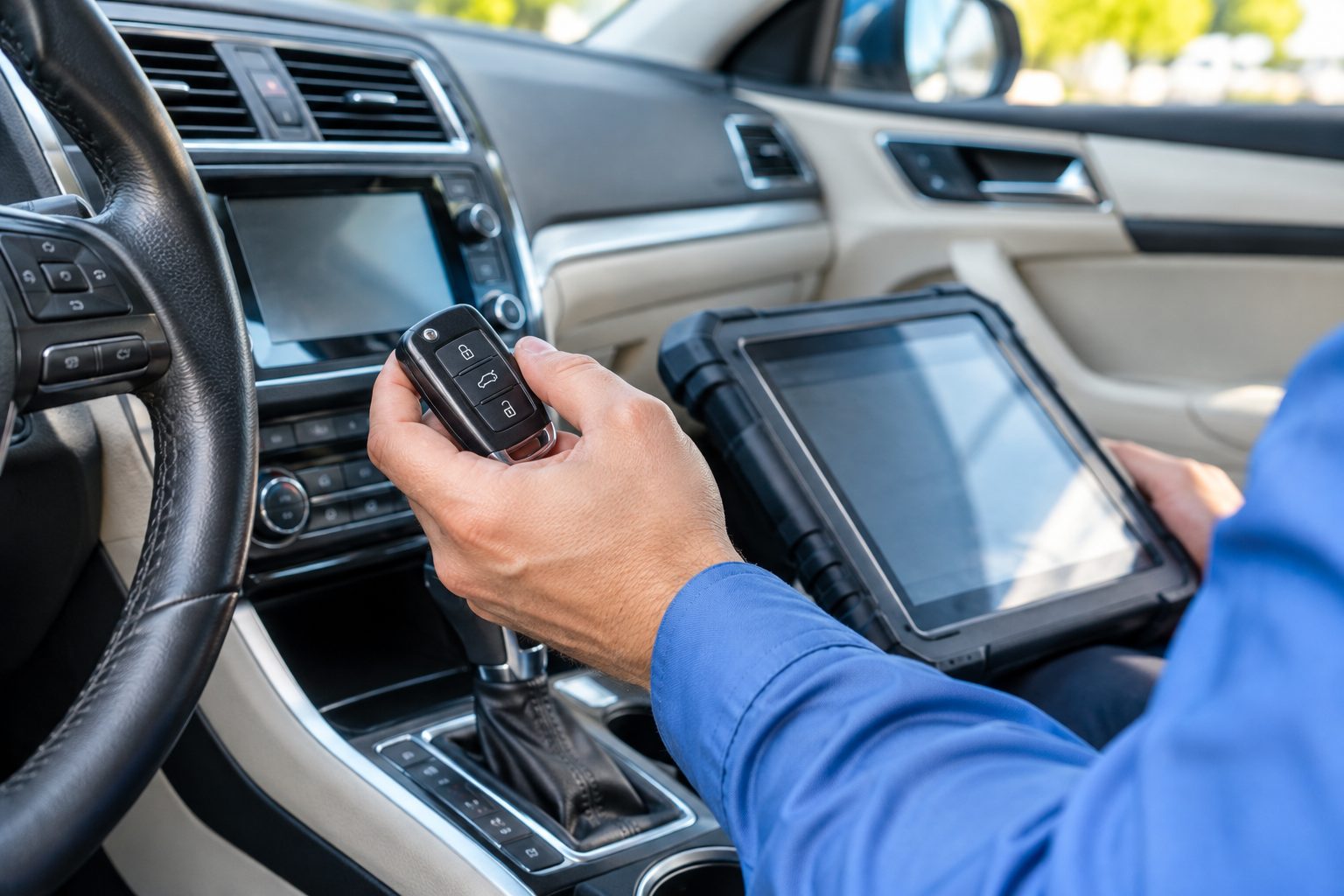
That's not a criticism. It's just the reality we plan around. When we get a call about a Buick, we come prepared for the possibility that we're not adding a spare to an existing set, we're building the only working key the car has, from nothing.
A lot of Buick owners bought their car once, kept it a long time, and never had a reason to think about a second key, nobody planned to lose the first one. It's a completely reasonable way to own a car for most of its life, right up until the single key gets set down somewhere, slips out of a pocket, or simply stops working after years of daily use. When that happens, there's no backup sitting in a drawer to fall back on, and the job becomes originating a key from scratch rather than copying one.
Buicks on the road span a wide range of years, and the key setup changes with that range. Older models typically use a metal key cut to the lock, carrying a small chip the car's computer has to recognize before it will start. Newer Buicks lean toward a proximity fob that stays in a pocket or purse while a button starts the engine. Either way, there are always two things happening, a mechanical cut that operates the physical lock, and an electronic step that gets the car to trust the key enough to run.
When there's no working key left anywhere for the car, we're not simply matching a cut and copying a signal, we're teaching the vehicle to trust a credential it has never seen before, with nothing already established to reference. That's a longer process than duplicating a key that still works, and it's usually the situation we walk into on a Buick call. Knowing that going in helps set realistic expectations rather than assuming it's the same quick job as a copy.
On newer Buicks with a proximity fob, a fob that seems to have stopped working entirely is sometimes just a battery that's run down, a cheap, simple fix that gets mistaken for a much bigger problem. It's one of the first things worth ruling out before assuming the fob itself has failed, especially on a car that's been reliable for years and suddenly seems to be acting up.
Because so many of these calls involve originating the only key a Buick has, we're especially careful about verification. We ask for a photo ID matched to a registration or title for that exact vehicle before any cutting or programming happens. It's the same requirement on every car we work on, but it matters even more here, given how often we're creating the sole working key rather than adding a second one.
We verify the vehicle is yours: photo ID plus a registration or title that matches it. Every reputable locksmith does this, and we will not skip it.
If your Buick's only key just disappeared and there's never been a backup, that's a situation we handle regularly, at the vehicle, without a tow. Call (407) 792-1378 to get it moving again.
That's a common situation, and it means originating a new key from scratch rather than copying an existing one. It takes longer, but it's something we can do at the vehicle.
Plenty of owners decide it's worth it after going through a lost-key situation once. It's the same cutting and programming work, just done ahead of time instead of during an emergency.
Not necessarily. A dead battery in the fob looks identical to a failed fob from the driver's seat. Checking the battery first is worth doing before assuming the worst.
Yes. We're a mobile service and come to wherever the Buick is parked in the metro Orlando area, there's no shop to bring it to.
A photo ID and the registration or title for that specific Buick. We check both before cutting or programming any key.
The Buicks on Orlando roads cover a long span of years. There are late model Enclaves, Encores, Encore GX and Envision crossovers, a good number of LaCrosse and Regal sedans from the last fifteen years, and plenty of older LeSabres, Centurys, Park Avenues and Lucernes still running well past the point most people keep a car. Each group handles keys differently, and knowing which one you have is the first step toward the right replacement.
Tell us the model and year when you call, and we can usually say which system you have before we arrive.
Buick is part of General Motors, and older Buicks share their anti-theft history with Chevrolet, Pontiac, Oldsmobile and Cadillac from the same years. Before transponder chips became universal, GM used a few different systems. Some cars read a small resistor pellet embedded in the key blade and would not start if the value was wrong. Others monitored the ignition cylinder itself. These systems look like a plain metal key to the owner, but a key cut from a basic blank without the right electronics will turn the ignition and still not start the engine.
When one of these older cars refuses to start and the security light on the dash is lit or flashing, the problem may be the key, the ignition cylinder wiring or the anti-theft module, not the battery or the starter. Some GM vehicles of that era also have a relearn procedure that involves leaving the key in the on position for timed intervals so the car can accept a key again. We can tell you whether that applies to your car and handle it if it does.
A Buick driven for fifteen or twenty years with the same key often ends up with a worn ignition cylinder as well as a worn key. The symptoms creep in slowly. The key has to be jiggled to turn, it sticks in the start position or it will not come out when the car is in park. Heavy key rings make this worse, since the weight hangs on the cylinder every time the car moves.
A new key cut to the original factory specification sometimes fixes the problem, since the old key has worn down along with the lock. If the cylinder itself is worn, it can often be repaired or replaced. Our ignition repair page explains that job. Either way, lightening the key ring by moving house keys and extra fobs to a separate ring takes stress off the ignition and makes the new parts last.
Before assuming a key or ignition has failed, check two common causes. First, the steering wheel lock. If the car was parked with the wheels turned, the steering column lock can bind against the ignition. Turn the steering wheel gently back and forth while turning the key, and it often releases. Second, the shifter. Many automatic Buicks will not release the key or allow it to turn unless the shifter is fully in park. Moving the shifter firmly into park and trying again can solve a problem that looks like a broken lock.
If neither works, do not force the key. A key bent or snapped in the ignition turns a manageable problem into a harder one. Call and describe what happens when you try to turn it.
Because many Buick owners keep their cars a long time, we often hear from family members after a parent has passed away or moved into care. The car is in the driveway, the keys cannot be found and the family needs to move it, sell it or start driving it. We still need to verify ownership, but the paperwork looks different in these situations.
Helpful documents include the title, the registration, a death certificate together with letters of administration or other estate documents naming the person handling the estate, or a power of attorney for a parent who is still living. If the title has already been transferred to you, bring the new title or registration. If you are not sure which paperwork you have, call first and describe it. We would rather sort it out on the phone than arrive and be unable to proceed.
Many Buicks are equipped with OnStar, and depending on the vehicle and whether the service is active, OnStar or the vehicle's mobile app may be able to unlock the doors remotely. If you are locked out and your car has an active subscription, that can be a quick fix. It will not help with a lost key, since remote unlock does not let the engine start without a recognized key or fob, but it can get you into the car to retrieve belongings or to find a key that was locked inside.
On Buicks with push-button start, a weak fob battery often shows up first as a message on the dashboard saying no remote detected or similar. Most of these cars have a backup spot where the fob can be placed so the car can read it even with a dead battery, often in a cup holder, a console pocket or a marked slot. Your owner's manual shows the exact location for your model. Using that spot starts the car long enough to get home and replace the battery.
The hidden blade inside the fob opens the driver's door when the fob cannot unlock it. On many models, a small cap on the door handle covers the keyhole and pops off with the blade.
Buick lost-key calls around Orlando often come from ordinary places: grocery store parking lots, church lots on a Sunday, medical office parking near the hospitals, and the parking areas of active adult communities across Central Florida. A key set down on a shopping cart or dropped in a doctor's waiting room is a common story. Wherever the car is parked, we come to it. When you call, give the name of the business or community, the part of the lot and a description of the car so we can find it quickly.
If you still have a working Buick key, the most useful thing you can do after reading this page is get a second one made. A spare cut and programmed while one key still works is a smaller job than originating a key from nothing, and it means a lost key becomes an inconvenience instead of a stranded car. Keep the spare inside the house, not in the car, and tell a family member where it is. For drivers who no longer drive as often, the spare also lets a relative move the car if needed without searching for the only key.
Some Buicks in Central Florida are second cars that sit for weeks at a time, or belong to seasonal residents who leave them in a garage for the summer. Fobs left unused still draw a small amount of power, and car batteries drain when a vehicle sits. When the owner returns, the fob may not unlock the doors, and the car may not start even with the right key. Replace the fob battery before the car goes into storage, and consider a battery maintainer for the car if it will sit for months. If the car will not unlock when you return, use the hidden blade in the fob or the door key rather than assuming the fob has failed.
Many Buicks from roughly the 2010s use a flip key, where the metal blade folds into the remote and springs out when a button is pressed. The mechanism is handy, but it wears. The spring weakens, the pivot pin loosens and eventually the blade flops loose or will not lock open, which makes it hard to turn the ignition without the blade folding back. Sometimes the buttons still work perfectly while the flip part fails.
In many cases the electronics and chip can be moved into a new flip key housing with a fresh blade cut to the car, which keeps the same programmed key and avoids reprogramming. If the remote board is damaged as well, a full replacement key is the better choice. Either way, bring the old key along, even if it is falling apart, since it tells us exactly which housing and blade the car uses. A cracked housing held together with tape is still useful to us, because the chip inside may be the one the car already trusts.
With that in hand, most Buick key jobs move quickly once we arrive. For more general information, see our car key replacement and all keys lost pages. A photo of the registration saved on your phone is a smart backup, since the paper copy is often locked inside the car.
Searching locksmith near me in Orlando for a house lockout? We are mobile across metro Orlando and quote the price before we come out. Call (407) 792-1378.
ZIP codes we cover in Orlando: 32801, 32803, 32804, 32805, 32806, 32807, 32808, 32809, 32810, 32811, 32812, 32814, 32817, 32818, 32819, 32820, 32821, 32822, 32824, 32825. City services: Orlando Official Website.