Subaru owners tend to hold onto their cars. Outback and Forester drivers in particular seem to keep a vehicle well past the point where other brands would've been traded in, and that habit shows up clearly in the kind of calls we get. A Subaru key call is often not just about a lost key, it's about a key and an ignition that have both been wearing down together for a long time.
Call (407) 792-1378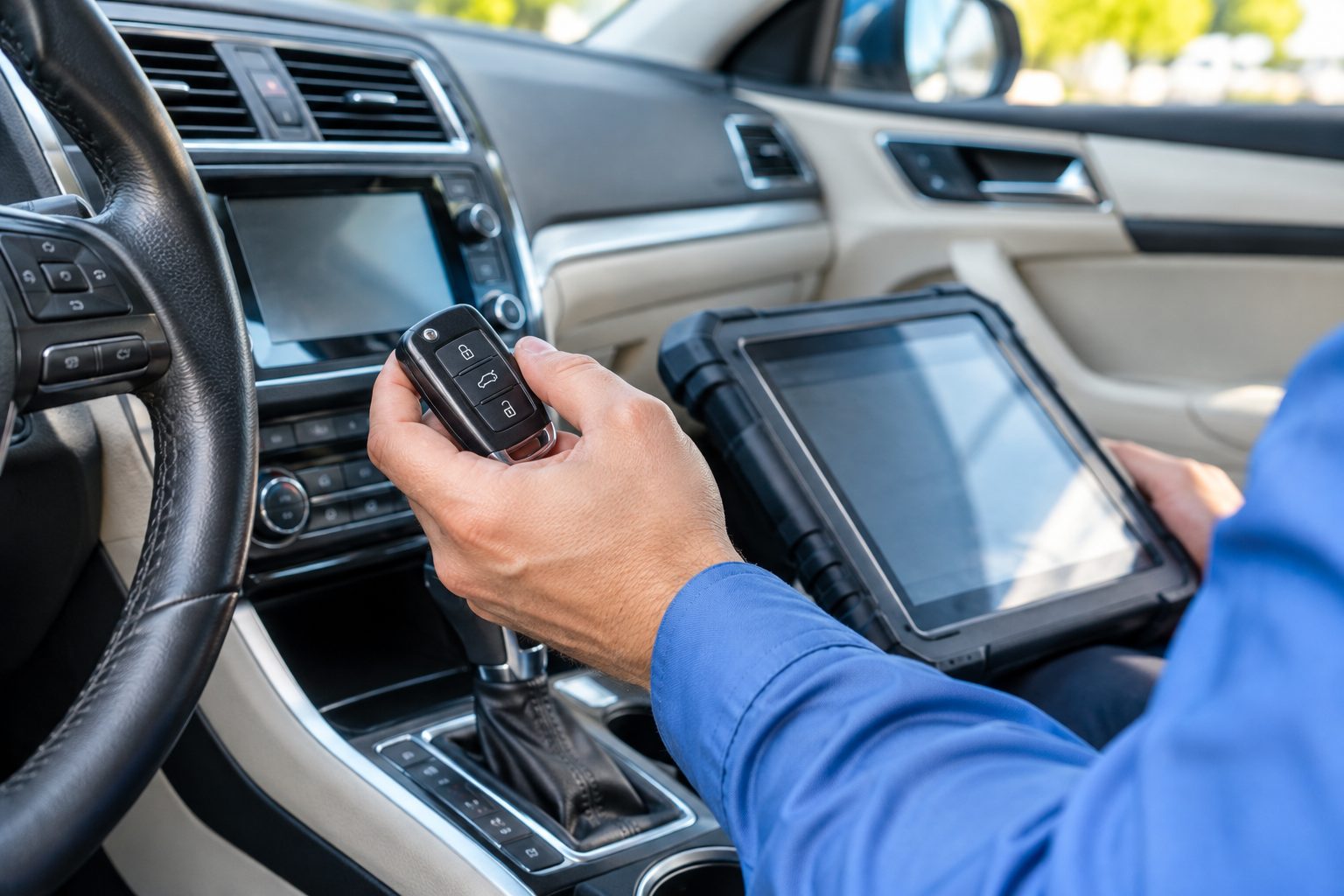
That combination matters more than people expect, because a brand-new key cut to factory spec doesn't always solve a problem that's really coming from a worn lock, not a worn key.
It's common for us to work on an Outback or Forester that's been with the same owner since it was new, sometimes well over a decade. Over that many years of daily use, both halves of the lock-and-key relationship wear down, the metal edges of the key blade round off slightly with use, and the pins or wafers inside the ignition cylinder wear from being turned by that same key thousands of times. Individually those changes are small. Together, they can make the ignition feel sticky or reluctant even though nothing has technically failed yet.
A new key cut precisely to the vehicle's original specification is sharper-edged than the old, worn-down one, which sounds like it should only help, and usually does. But if the ignition cylinder itself has worn in a way that was compensating for the old key's wear, a correctly cut new key can occasionally feel different in that lock at first. It's worth knowing going in, so a slightly stiff turn on day one doesn't read as a mistake in the cutting.
Most of the long-owned Subarus we see use a traditional key: a metal blade cut to match the door and ignition locks, with a transponder chip in the head that the car checks separately before allowing the engine to start. The two are independent, cutting the blade correctly gets you a key that turns the lock, but the car won't run until the chip is also programmed and accepted.
More recent Outback, Forester, and Crosstrek trims have moved toward keyless proximity access and push-button start, following the same industry-wide shift most brands have made. The fob stays in a pocket, the doors respond as you approach, and a small backup blade is usually built into the fob housing for situations where a battery, not the fob itself, turns out to be the actual issue.
Long ownership tends to mean the paperwork is easy to produce, most owners who've had a car for years have the title tucked away somewhere reliable. We still ask for it every time, along with a photo ID, before cutting a blade or programming a chip or fob. It's a standard we hold regardless of how long you've owned the vehicle or how well we might get to know a returning customer.
We verify the vehicle is yours: photo ID plus a registration or title that matches it. Every reputable locksmith does this, and we will not skip it.
Subaru owners in Central Florida tend to keep their vehicles a long time, and that long relationship between an aging key and an aging ignition is something we account for on every visit. Call (407) 792-1378 and we'll talk through what your Outback or Forester needs.
Not necessarily. On a vehicle with a lot of years on it, the ignition cylinder itself may have worn in a way that was masking how worn the old key had become. A correctly cut key can feel different in an older lock at first.
Yes, regularly. Long-owned Outback and Forester models with a chipped metal key are a large part of what we see.
A photo ID and the vehicle's title or registration in your name. We check this before doing any cutting or programming.
Generally yes. A duplicate can often use an existing working key to authorize the new one. All-keys-lost means starting with nothing the car currently trusts, which takes longer.
It's a reasonable thing to plan for, especially on a vehicle you've already had a long time. Having a spare ready means one worn key breaking doesn't turn into a full lockout.
Many newer Subarus with keyless access offer a feature built for people who spend their days outside: a personal code entered through the button on the rear gate. Once it is set up, you can lock the fob inside the car, lock the car using the code, and head off to swim, paddle or hike without carrying an electronic fob that does not like water. While the car is locked this way, the fob inside is disabled, so someone who breaks a window cannot simply start the car with it. When you come back, you enter the code on the rear gate button and the car unlocks.
This feature has to be activated and a code chosen, usually through the settings on the dash or with the steps in the owner's manual, and it only exists on certain models and trims. Many owners never set it up. If yours supports it, it is worth doing before your next trip to the springs or the beach. It is also a way back in if you lock the fob inside by accident, but only if the code was set beforehand.
Subaru drivers around Orlando tend to use their cars the way the ads suggest: kayaks on the roof at Wekiwa Springs, bikes on the back for a trail day, a cooler and chairs for Cocoa Beach or New Smyrna. That lifestyle is hard on keys. Fobs fall out of board shorts, sink in the springs, get soaked in a cooler, or end up with sand packed in the button gaps. Standard Subaru fobs are not built to be submerged.
If your fob gets wet, remove the battery, open the case if possible, rinse salt water off with fresh water, and let everything dry thoroughly before trying again. Some fobs recover. If yours does not, a replacement can be programmed. If the key was lost in the water rather than just soaked, the lost fob is gone for good and cannot be used by anyone, but it is still worth having it removed from the car's memory when a new one is programmed so the car's key list is accurate.
Subaru owners bring their dogs everywhere, and a surprising number of lockouts start with a dog stepping on the door lock button while the owner is outside. The car locks with the key inside and the dog pacing in the back seat. In Central Florida, that is not a minor inconvenience. A closed car in the sun heats up very quickly, even with windows cracked, and a pet can be in real danger within minutes. If an animal or a person is locked inside, call 911 first. Emergency responders can act faster than anyone else.
To make this less likely, keep the fob on you rather than leaving it in the car while loading the dog, and if your model offers the rear gate code, set it up. Some owners also keep a spare physical key in a wallet, since a flat blade key or card fits more easily than a full fob.
If your keyless access Subaru stops recognizing the fob, the fob battery is the first suspect. On many models, you can still start the car by holding the fob directly against the push button start switch while pressing the brake and the button. The car reads the fob's chip at close range even when the battery is too weak to be detected from a pocket. The owner's manual shows the method for your model. If that works, replace the fob battery with the same type printed on the old cell. If it does not, the fob or the car's receiver may be at fault, and that is where we come in.
Subaru keyless access fobs have a mechanical key tucked inside, released by a small latch. That blade opens the driver's door when the fob or the car battery is dead. On a Subaru that has been kept a long time and always opened with the fob, the driver's door lock cylinder may never have been used, and in Florida humidity it can seize. Try the blade in the door once in a while so you know it still turns. A small amount of dry lubricant in the keyhole helps keep it working.
Many key-start Subarus from the last decade or so use a key with the remote buttons built into the head, rather than a separate key and remote. These keys combine the blade, the transponder chip and the remote in one piece. When the buttons wear out or the case cracks, the whole unit is often replaced, cut to your car and programmed so both the remote functions and the engine immobilizer accept it. Older Subarus with a separate remote and key can have each replaced independently, which can make sense if only the remote has failed.
Subarus with an active connected services subscription through the Subaru Starlink system may be able to unlock remotely from a smartphone app or through a call to the connected services center. If you are locked out and your car has an active plan, try that first. If the plan lapsed, there is no cell signal, or you need a new key anyway, we can open the car without damage and handle the key at the vehicle.
The Subaru BRZ was developed together with Toyota and has a Toyota-badged twin. The cars share more than their bodies, and some owners come to us having read about the Toyota version's keys. As with every brand pairing, the shared engineering is a useful starting point, but we match the key and the programming to the exact vehicle in front of us. If you own the Toyota twin, the Toyota page covers that side of the family.
For owners who plan to drive a Subaru until the wheels come off, a few habits protect the key and ignition. Keep the key ring light so it does not pull on the ignition as you drive. Replace a key once its edges have visibly rounded, and have the new one cut to factory specification rather than copied from the worn original. Have a spare made while you still have a working key. And if the ignition starts to feel sticky or needs a wiggle, have it checked. Our ignition repair page describes what can be done before it fails completely.
Have the model, year and trim, the vehicle identification number, your photo ID and your title or registration. Tell us whether the car uses a traditional key, an integrated remote key or a keyless access fob, and whether any working key remains. Mention whether the rear gate code feature was ever set up. If a pet is inside the car, tell us immediately, and call 911 first if it is hot. Give us the exact location, including the park, trailhead or lot name if you are out on an adventure.
Subarus tend to carry gear, and gear brings its own locks. Roof boxes, bike racks, kayak carriers and hitch-mounted cargo carriers usually have small keyed locks, often with keys that look nearly identical to each other. Those keys get lost at trailheads and boat ramps, and the gear stays locked on the car. Many carrier locks can be picked or have their cores replaced, and some manufacturers offer replacement keys by the number stamped on the lock face. Note that number now and keep it with your records. If you lose the key and cannot find the number, we can usually open the lock so the gear can come off, and replacement cores can often be keyed so one key opens every carrier on the car.
When the day finally comes to sell a Subaru you have driven for years, hand over every key and fob you have, including spares tucked in a drawer, and any rear gate code or app account connected to the car should be removed or reset. The next owner will thank you, and it keeps your old account from being tied to a car you no longer own. If you are buying a used Subaru, ask the seller for every key and any codes, and consider having your keys reprogrammed so only the ones you hold will start the car.
Newer Subarus such as the Crosstrek and the three-row Ascent are showing up more often around Orlando's suburbs, frequently as family cars with several drivers. As with any shared car, the key problems follow the handoffs: a fob that went to school in a teenager's backpack, a spare that nobody can find, a parent locked out while the kids are buckled in. Keeping a separate fob for each regular driver, and setting up the rear gate code on models that support it, cuts those calls down considerably.
When you call about a Subaru key, the job falls into one of three types. A duplicate adds a new key while a working one still exists, and the car can usually accept it with the existing key present. A replacement covers a key that is broken or worn but still in your hand, where the old key can help confirm the cuts and sometimes the programming. Originating a key means every key is gone, so the lock is decoded or the key code is obtained, a new key is cut from that information, and the car is programmed from scratch. Knowing which one you need helps you plan, and it is the first question we ask on the phone.
On a long-kept Subaru, it is also worth asking whether both the key and the ignition need attention at the same time. If the ignition is already sticky, a new key alone may not be the whole answer, and it is better to know that before the visit than after.
Searching locksmith near me in Orlando for a house lockout? We are mobile across metro Orlando and quote the price before we come out. Call (407) 792-1378.
ZIP codes we cover in Orlando: 32801, 32803, 32804, 32805, 32806, 32807, 32808, 32809, 32810, 32811, 32812, 32814, 32817, 32818, 32819, 32820, 32821, 32822, 32824, 32825. City services: Orlando Official Website.