We'd rather set the right expectation up front than have a Volkswagen owner surprised partway through a job: VW's immobilizer systems are, in general, more involved to program than what we're used to seeing on many domestic and Japanese vehicles. That's not a knock on the cars. It's a difference in engineering philosophy that goes back years, and it means a Volkswagen key job can genuinely take more time and more steps than the same kind of job on other brands we service.
Call (407) 792-1378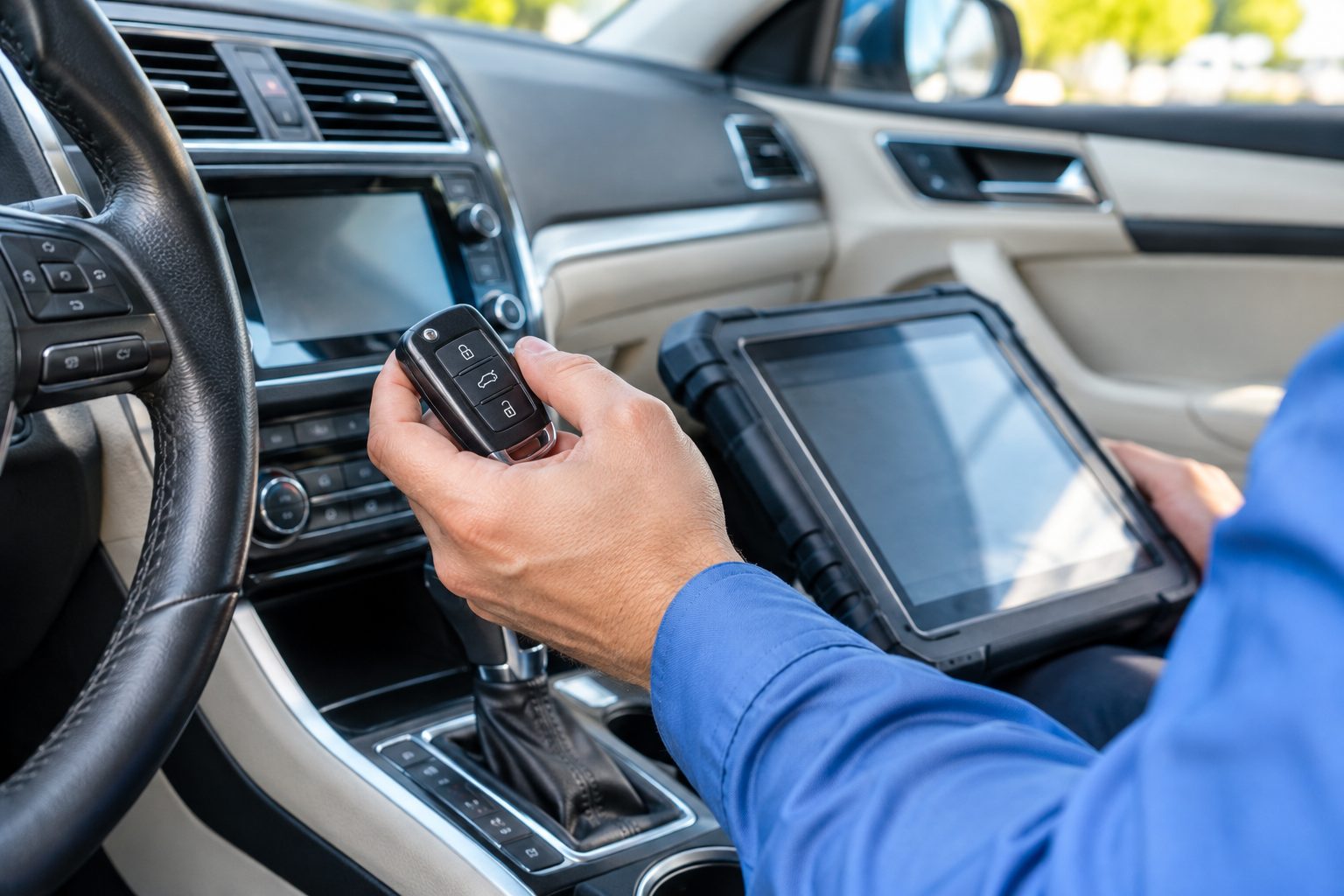
We say this because a surprise about timing feels worse than a heads-up about timing. If you're standing next to a Jetta, a Tiguan, or a Passat with no working key, we'd rather tell you honestly that the process has more layers to it than promise something we can't guarantee and let you find out the hard way.
Volkswagen's approach to vehicle security has historically involved more layers of verification between the key and the engine than what's typical on many other makes we work on. Where some systems check a single electronic credential and move on, VW's architecture tends to involve more back-and-forth confirmation before the vehicle trusts a new key enough to let it start the car. None of that is a flaw, if anything it reflects a security-conscious design, but it does mean the process asks more of the equipment and the technician doing the work, and that shows up as real time spent.
As with any modern car, a Volkswagen key is really two things bundled together: a mechanical blade cut to operate the lock, and an electronic credential the vehicle's computer has to accept before the engine will run. Cutting the blade to match the lock is a comparatively quick, well-understood process on a VW same as anywhere else. The programming side is where the extra involvement shows up, and it's the part we won't try to rush or shortcut for the sake of finishing sooner.
If there's still one working VW key or fob somewhere, adding a duplicate to the system is a more contained task, the car already trusts a credential, and a second one gets introduced alongside it. When every key for the vehicle is gone, there's nothing left to reference, and the vehicle has to be brought to trust a brand-new credential from a blank slate. Combined with VW's more involved immobilizer architecture, an all-keys-lost Volkswagen is realistically one of the longer jobs we take on, and we'd rather say that plainly than let someone assume it's a quick fix.
Newer Volkswagens increasingly use a fob-based system, unlocking as you approach and starting with a push of a button, with a small backup blade tucked inside the fob housing for emergencies. The hands-free convenience doesn't remove the underlying complexity of the immobilizer behind it, if anything, a proximity system adds another layer of communication between fob and vehicle that has to be established correctly before the car will start.
Regardless of model or how involved the programming turns out to be, we ask for the same thing on every Volkswagen: a photo ID matching the person requesting the work, along with a title or registration that names that exact vehicle. That check happens before a single cut is made or a single tool touches the immobilizer.
We verify the vehicle is yours: photo ID plus a registration or title that matches it. Every reputable locksmith does this, and we will not skip it.
If your Volkswagen needs a new key, we'll tell you honestly what the process looks like for that specific vehicle before we start, including that it may take longer than you'd expect from other brands. Call (407) 792-1378 and we'll come to wherever it's parked in metro Orlando.
VW's immobilizer architecture generally involves more verification steps than what's common on many domestic and Japanese vehicles. Cutting the blade is quick; the programming side is where the additional time comes in, and we'd rather explain that upfront than surprise you.
It depends on the specific situation, a duplicate made from a working key is more contained than originating a key when all are lost. In general, expect more involvement than you might see with other makes.
No. Older and some current models use a traditional chipped key, while newer trims lean toward a hands-free fob. Either way, the underlying immobilizer is the more involved part.
Yes, we're a mobile service and travel to wherever the Volkswagen is within metro Orlando. There's no shop location and no tow required.
A photo ID and a title or registration matching that specific Volkswagen. We confirm both before any cutting or programming begins.
Volkswagen made the flip key its signature for many years. The blade folds into the remote head and springs out with a button, and it shows up on Jettas, Passats, Golfs, GTIs, Beetles, Tiguans and more. The design is clever, but the hinge is the part that wears out. After years of flipping, the spring weakens, the blade wobbles, or the pivot pin breaks and the blade will not stay locked open. Often the transponder and remote inside are perfectly fine.
When the electronics still work, a new flip key housing with a freshly cut blade can take the existing internals, and the key keeps working with the car without reprogramming. That is one of the simplest and most common Volkswagen key repairs. If the remote no longer works or the car does not recognize the key, it becomes a programming job instead.
Most Volkswagen blades are not cut on the edges like a house key. They use an internal track cut into the flat face of the blade, sometimes called a sidewinder or laser-cut key. These blades need a different cutting machine than standard keys, and cheap duplicate shops often cannot cut them accurately. A poorly cut internal-track blade may turn the door lock with effort and wear the cylinder over time. Cutting to the vehicle's code, rather than copying a worn key, gives a blade that works smoothly in every lock.
On many older Volkswagens, the remote lock and unlock functions can fall out of sync with the car, especially after a battery change or after the buttons are pressed many times out of range. The car still starts because the transponder chip is separate, but the buttons stop working. On a lot of those models, the remote can be re-synced by pressing a button and then using the key blade in the driver door within a short window. The exact steps vary by model and year. If a re-sync does not work, the remote may need to be reprogrammed or the board may have worn contacts.
Newer Volkswagens, including many Atlas, Tiguan, Jetta and Taos trims, offer keyless access with push-button start. The fob stays in your pocket, the doors unlock when you touch the handle, and the engine starts with the brake pressed. When the fob battery dies, the emergency blade inside opens the driver door, often through a keyhole hidden under a cap on the handle. For starting, most models have a spot on the steering column or center console where the fob can be held so the car reads it at close range. Your owner's manual shows the location for your model.
Some recent Volkswagens use a system that ties certain electronic modules to the specific vehicle. On those cars, certain module replacements, and in some cases certain key operations, require online access to the manufacturer's systems. That is part of why a newer VW key job can involve more steps or, occasionally, a trip to the dealer. We will tell you plainly on the first call whether your model and year can be handled at the vehicle.
The ID.4 and other electric Volkswagens use updated electronic platforms. Key and fob support for the newest platforms can lag behind their release, and some functions may only be available through the dealer for a time. If you drive an electric VW, share the exact model and year so we can give a straight answer about whether the job can be done where the car sits.
Volkswagens, especially Jettas and Golfs, are popular with students and young drivers around UCF, Rollins and the colleges across the metro. Many are bought used with one key, sometimes with a flip key held together by tape. That single key is a risk. Adding a second key while the first still works is far simpler than an all keys lost job on a VW, which is one of the more involved key jobs we do. It also gives you a chance to replace a worn housing and have the blade cut fresh to code.
Volkswagen owners who rely on the remote or keyless access may go years without using the door lock cylinder. In the Florida climate, those unused cylinders can corrode or fill with dust, and the day the fob battery dies, the key will not turn in the door. Using the blade in the driver door every few months and a light dry lubricant keeps it working. If the cylinder has already seized, it can often be serviced or replaced and matched to the existing key.
GTIs, Golf Rs and older Volkswagens often have owners who modify them. Aftermarket engine tuning, swapped modules or used parts from other cars can complicate key programming, since a module from a different vehicle may carry its own key data. If your car has had electronic modifications or modules replaced, mention it when you call. It helps us plan the right approach and avoids surprises during programming.
If a key was lost or stolen, having it removed from the car's memory when the new key is programmed means that key can no longer start the vehicle. For proximity fobs, storing them away from exterior walls or in a signal-blocking pouch reduces the risk of signal relay theft. And a spare fob kept at home, rather than in the glove box, ensures a lost everyday key is an inconvenience rather than an emergency.
The Atlas and Tiguan are family haulers for many Orlando households, and the fobs for them get passed around constantly. Kids grab them from the counter, teens take the car to practice, and a fob ends up in a sports bag at a field in another city. Keeping two working fobs, one of them always at home, is the easiest way to avoid a family emergency when one goes missing. With a proximity system, keep the spare far enough from the car in the garage that it does not leave the vehicle startable or unlocked.
Volkswagen went through several generations of immobilizer technology over the years, and each generation has its own programming requirements. Older Jettas, Golfs and Passats from the late 1990s and 2000s may need specific procedures and codes that differ from a newer model with the same name. Some of those older cars need a security code retrieved from the vehicle's instrument cluster or engine module before a new key can be added. That is one of the reasons we ask for the exact year before quoting the job.
A simple lockout, with the key visible on the seat or in the ignition, is usually quick. Volkswagen door frames and window seals are tight, and a careful opening protects the weatherstripping and the paint. Avoid trying to pry at the top of the door yourself, since bending the frame even slightly can cause wind noise and water leaks later.
Many VW fobs include a button for the trunk or rear hatch, and some Atlas and Tiguan trims offer a power liftgate. After a new fob is programmed, test the trunk button and, if equipped, the hands-off liftgate sensor under the rear bumper. If the liftgate opens with the button but not with the foot motion, the setting may need to be turned on in the vehicle menu rather than reprogrammed.
Internal-cut Volkswagen blades are thin, and a worn or cracked blade can snap in the door lock or, on older cars, in the ignition. If that happens, do not try to push the broken piece further in or grab it with pliers. The broken tip can usually be extracted with the right tools, and the remaining piece of the blade helps confirm the cut when a new key is made.
When every key to a Volkswagen is gone, the job may involve reading data from a module, obtaining codes, and working through the immobilizer's steps one by one. Planning for that time means you can arrange a ride or rearrange your day instead of standing in a parking lot. It is still usually faster than towing the car to a dealer and waiting for a service appointment.
Most Volkswagen fobs use a common coin cell, and the flip key housings open with a small tab or a coin in a slot. When replacing the battery, note which way the old one faced and avoid touching the board contacts with fingers. A weak battery shows up first as reduced range, then as a remote that works only right next to the car. If a new battery does not restore the remote, a re-sync or reprogramming may be needed, which we can handle at the car.
Downtown Orlando garages, hospital decks and airport lots can make a car hard to find. When you call about a Volkswagen in a garage, give the garage name, level, section and nearest elevator, plus the model and color, so the technician can reach the car without searching.
Searching locksmith near me in Orlando for a house lockout? We are mobile across metro Orlando and quote the price before we come out. Call (407) 792-1378.
ZIP codes we cover in Orlando: 32801, 32803, 32804, 32805, 32806, 32807, 32808, 32809, 32810, 32811, 32812, 32814, 32817, 32818, 32819, 32820, 32821, 32822, 32824, 32825. City services: Orlando Official Website.