A restaurant runs on doors that open and close all day: front entrance, kitchen, walk-in cooler, dry storage, office, delivery door, patio. Late shifts, deliveries and staff turnover add pressure. This page explains how a mobile locksmith helps restaurant and bar owners keep doors working and keys under control.
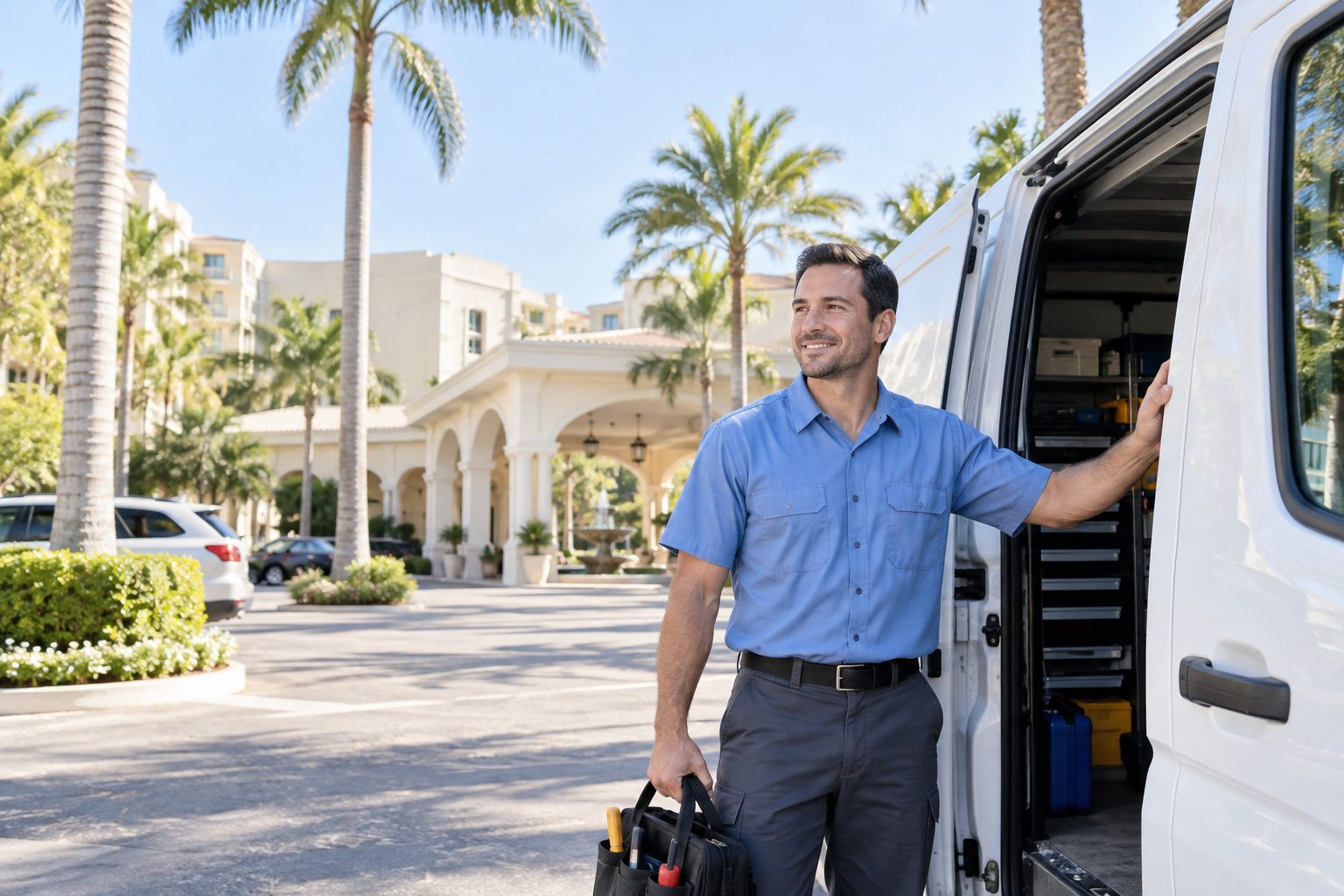
Restaurants and bars have some of the hardest-working doors in any commercial setting. The kitchen door swings thousands of times in a week. The back door opens for deliveries, trash runs and smoke breaks, often with hands full. Steam, grease, cleaning chemicals and temperature swings attack hardware. A hinge that works on an office door will sag in a kitchen within months.
The hours add to the strain. Many restaurants open early and close late, and a bar may close well after midnight. Opening and closing are the riskiest times: the staff member who unlocks first or locks last may be alone, tired and carrying cash, deposits or inventory. Doors and locks have to work reliably in poor light and under time pressure.
Turnover is high in the industry. Servers, cooks, bartenders and dishwashers come and go. A key given to a new hire in March may not come back when they leave in June. Over a few years, the number of keys that exist may be a mystery.
All of this makes restaurant locks a matter of both hardware and habit. A locksmith can supply sturdy hardware and a plan for key control. Pricing is given by phone, and larger projects need an on-site visit first. A service call charge applies to that visit and is explained before dispatch.
The back door is where most restaurant security problems begin. It opens onto an alley or a service lane, often out of view of the street. It is used by staff, delivery drivers and sometimes by people who should not be there. It is often propped open during the busiest hours.
A solid door, a quality deadbolt, a reinforced strike plate and sturdy hinges are the foundation. The door should close and latch by itself, which means a working closer. Many back doors have a closer that has been disconnected or is so worn that it no longer pulls the door shut. A technician can adjust or replace it; see door closer adjustment.
Exit hardware matters too. Many commercial kitchens use a panic bar or push bar on the back door so that staff can leave quickly in an emergency. The device must always allow exit. Do not chain or lock the inside of an exit door. For details, see panic bar and push bar hardware.
Deliveries are a particular challenge. A supplier arrives at an hour when no one is on site, or when the kitchen is busy. Leaving the door unlocked is risky. Options include a keypad lock with a code that the supplier receives, a lockbox for a key, or a scheduled delivery when a staff member is present. Keypad codes can be changed whenever a supplier changes drivers, which is easier than recovering keys.
Walk-in coolers and freezers have heavy doors with latches and often a lock. The latch is designed to hold a heavy, insulated door tight against a gasket. The hardware is exposed to cold, condensation and frequent use, and it wears. A latch that no longer catches lets warm air in and strains the refrigeration. A broken handle can be an annoyance or, in the worst case, an issue for anyone inside.
A walk-in must always be openable from the inside. Most are fitted with an inside release for that reason. If the inside release is broken or blocked, stop using the walk-in until it is repaired. Safety is the priority. A locksmith may be able to repair or replace some walk-in hardware, but refrigeration technicians also handle it, so describe the problem when you call.
Dry storage rooms hold inventory that is attractive to thieves: liquor, meat, packaged goods. A lock on the storage door with a limited set of keys controls losses. A keypad with individual codes lets management see who entered and delete codes when people leave. Cabinets for liquor are often locked, and cabinet lock replacement is a common request; see file cabinet and desk locks.
Make sure that any lock on a cold storage door can be opened from inside without a key. Test it regularly. If you are unsure, ask the technician to check.
The front door is both a security device and a welcome. A heavy door with a tired closer, a loose handle or a sticky lock sends the wrong message. Glass storefront doors, in particular, have narrow stiles and purpose-built hardware that wears with use. A locksmith can service or replace hardware on storefront doors; see storefront door repair.
Many Orlando restaurants have patios or outdoor seating, with gates or doors that lead to them. These doors are exposed to rain, sun and humidity and may have locks that corrode. They also must be secured at night. A patio gate that does not latch is an open invitation. A technician can replace the latch or lock with a weather-resistant model; see gate lock and latch repair.
Bars add another layer. A bar may have an age-check at the door, a back bar with liquor that must be locked, and an office with a safe. Each area needs its own control. A bar's front door may be fitted with a lock that is keyed on the outside and thumbturn on the inside, depending on code. Do not change a lock's function in a way that restricts exit.
If a door is difficult to lock at closing time, staff may skip the step. A smooth, easy lock is more likely to be used properly. A technician can adjust or replace hardware so that locking at closing time takes seconds.
The office is where the money and records are. Even in a restaurant that mostly takes cards, there is usually some cash, a safe, payroll records and the manager's computer. The office door should be solid with a good lock, and the key limited to the people who need it.
A safe holds receipts, change and sometimes deposits. Safes vary in quality. A small floor safe can be carried off, and a drop safe can be defeated if poorly installed. A locksmith can help with installation, combination changes and opening a safe if the combination or key is lost, subject to confirming ownership and authority. See safe opening and installation.
Think about the closing routine. Cash handling should be done in a secure place, not at the back door. A dedicated spot with a lock helps. Avoid carrying deposits alone after dark where possible, and follow your own procedures and local police guidance on cash handling.
When a manager leaves, change the safe combination and consider rekeying the office. This is routine and prevents unpleasant surprises. Keep a record of who knows each combination.
Because restaurant staff change often, key control matters more than in most businesses. A restricted keyway makes copying harder. Few people should hold keys: the owner, managers and perhaps a lead. Other staff can be given access by keypad code, which can be changed.
Keypad locks are popular in restaurants because they eliminate the problem of unreturned keys. A manager can create a code for each person and delete it when they leave. Some systems keep a log. Place the keypad at the staff entrance and the back door. Keep a mechanical key backup for emergencies.
If you use keys, number them and keep a log. Do not stamp the restaurant's name or address on a key. Do not let staff duplicate keys. When a key is lost or a person leaves without returning one, rekey the affected locks. It is simpler and less costly than dealing with an unknown risk. The guide on key control policies for businesses offers a framework.
Master key systems can help larger restaurants with multiple storage areas, offices and entrances. See master key systems.
A lockout at a restaurant often happens at the worst moment: the closing manager steps out the back door for the trash and the door locks behind them, or a key snaps in the lock at midnight, or a bartender arrives at open and the lock will not turn. The restaurant cannot open, deliveries are due and the staff are standing outside.
If anyone is in danger, call 911. If a fire or alarm is involved, call the fire department. For a lockout where no one is in danger, call a locksmith and describe the situation: the address, which door, whether the lock is a deadbolt, a lever or a panic bar, and who you are. The technician will need to confirm that you are authorized. A manager or owner can usually do so by phone and with identification on arrival. A staff member who is not the manager may be asked to call the owner.
Prevention is simple. Keep a spare key in a secure place held by a manager, not hidden outside. Make sure back doors have a way to stay unlocked from the inside while staff are outside, such as a door stop or a cylinder that locks only with a key. Do not prop a door with something that allows it to be pushed in from outside.
This site does not promise arrival windows, and no locksmith can honestly promise service at every hour and location. When you call, you will be told what is available, and the service call charge is explained before dispatch. See locked out of business after hours and business lockout.
Orlando restaurants range from tourist-corridor sit-down places to neighborhood spots in Winter Park, Mills 50 and Thornton Park, plus food courts, bars and late-night venues. Each has its own pattern. A restaurant in a strip center has a landlord and a shared back alley. A freestanding building controls its own doors. A bar in a historic downtown building may have older doors and frames.
Humidity and heat matter. Kitchen heat, steam and cleaning chemicals accelerate corrosion. Exterior doors face rain and sun. Plan to replace hardware earlier than you would in a dry climate, and ask a technician to check the doors regularly.
Storms can close a restaurant for days. Before a storm, secure the building, and afterward check each door and lock before reopening. A frame that has shifted can stop a latch from catching. See hurricane season door and lock prep and humidity and lock longevity.
Seasonal tourism changes volumes. Extra staff in busy seasons mean more keys. Plan key control before the rush, not after.
Have the restaurant name and address, your role, and a description of the door or lock. Say whether the issue is a lockout, a broken lock, a rekey, a new lock or a key control project. Tell the dispatcher what type of door it is: glass storefront, steel back door, wood interior, walk-in cooler.
Be ready to show authority. An owner or manager may be asked for identification and, if the building is leased, a lease or other proof. If the landlord controls the door, the landlord's permission may be needed. A staff member who calls should be able to reach someone with authority.
If you have a list of keys or locks, have it nearby. If not, a quick list of doors will help. Take photos if you can.
Quotes are given by phone. Multi-door jobs, key systems or electronic access need an on-site visit before a final quote, and a service call charge applies and is explained before dispatch. When you are ready, call and tell the dispatcher what is going on. The person on the phone will explain the options and what the technician will need.
In some cases, yes, but cooler hardware is also handled by refrigeration technicians. Describe the latch, handle and gasket problem when you call. Every walk-in must be openable from inside, so if the inside release is broken, stop using the unit until it is repaired.
Options include a keypad lock with a code the supplier uses and you can change, a lockbox for a key, or scheduling deliveries when staff are present. Avoid leaving doors unlocked. Keypad codes are easier to manage than keys because a code can be changed when a driver changes.
If anyone is in danger or there is a fire or alarm, call 911. Otherwise call a locksmith and describe the door and lock. You will be asked to confirm authority, so reach the owner or a manager. Keep a spare key with a trusted manager, not hidden outside.
They are popular because staff turnover makes key recovery hard. A manager can assign codes to individuals and delete them when people leave. Some models keep a log. Choose models rated for humidity and heat, and keep a mechanical key as a backup.
Often yes, after confirming that you own the safe and are authorized. When a manager leaves, changing the combination is a good routine. Describe the safe's make and model when you call, and the technician will explain what is possible.
It is risky because it allows entry from the alley and defeats the lock. If staff need to move in and out, use a door with a working closer and consider a keypad or a staffed exit. Never block or chain an exit door. A technician can adjust hardware so it is easier to use properly.
Describe the situation by phone and we will tell you what the job involves. Quotes are given by phone. Jobs that cannot be quoted without seeing them need a technician on site, and the service call charge is explained on the phone before anyone is dispatched.
A restaurant cannot easily pause service, so lock work has to fit around the rhythm of prep, service, and cleanup. The technician asks about the slow periods, the delivery windows, and which doors are essential during service. Back of house doors often see the most abuse, with carts, boxes, and steam wearing on latches and hinges. If a door needs to be taken out of service for a short time, the staff should know how the area will be secured meanwhile. Planning around those facts keeps the work from interfering with meals, deliveries, or health and safety routines that the kitchen already follows.
The environment also shapes what lasts. Grease, moisture, cleaning chemicals, and heat attack hardware in ways a typical office does not see. The technician looks for corrosion, loose fasteners, and sticking mechanisms that hint at deeper wear. They may suggest finishes and materials that stand up better to washdowns and humidity. Staff can help by pointing out which doors stick, which locks have been temperamental, and which keys are failing. It also helps to clear the work area ahead of time, move stored items away from the door, and let employees know that the technician will be working near the kitchen.
Safety and sanitation rules matter in any food service space. Exit routes must remain usable, and hardware should never trap staff inside walk in storage or work areas. The technician checks that the doors still open easily from the inside and that any interior release works. Tools and parts are kept off food prep surfaces, and the area is cleaned before leaving. The scope and any quote are explained before work begins. Afterward, ask for a count of keys and a note of what was changed, so you can update your records and brief the managers who open and close.