A safe that will not open is a strange kind of lockout, because the thing you need is sitting right there and you cannot reach it. This page explains how safe locks behave, what usually goes wrong, what information makes a phone call useful, and how a visit from a mobile locksmith in Orlando is handled, including the honest limits of what any technician can promise.
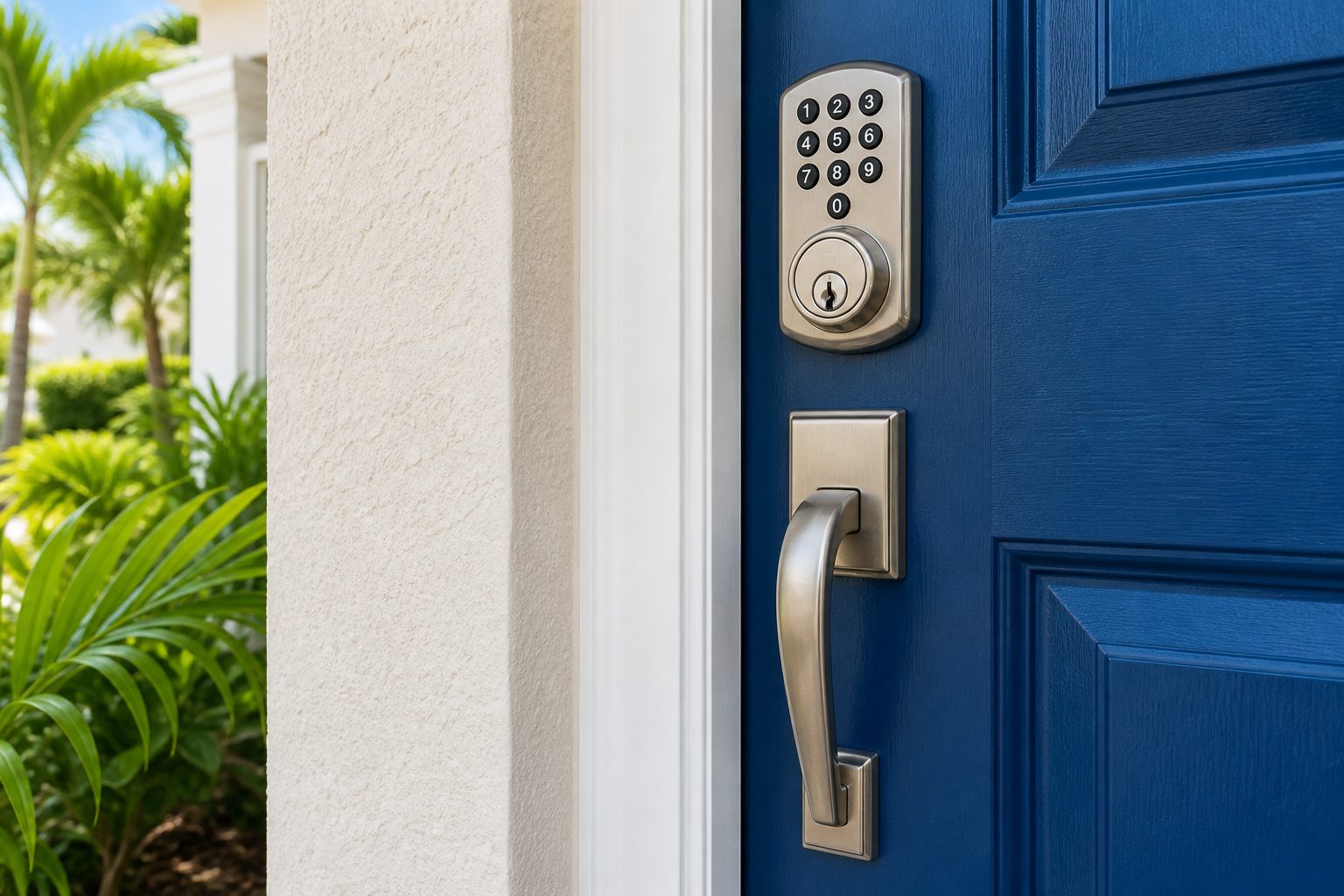
A door lockout has a few well known outcomes. A safe lockout has more variables, because safes are built to resist exactly the kind of access you now want. The lock may be a mechanical dial, an electronic keypad, a key cylinder, or a combination of two of those. The body may be thin sheet steel in a closet cabinet or heavy plate in a unit that weighs several hundred pounds. The contents may be paper documents, jewelry, keepsakes, small electronics, or business records. Each of those details changes what a technician can try and how long it takes.
The people who call about a safe are usually in one of a few situations. Some bought a used safe and the previous owner did not pass along the code. Some inherited a safe along with a house or a family estate. Some changed a combination months ago and cannot recall the new one. Some have an electronic keypad that stopped answering after the batteries ran down. Some have a key safe where the only key went missing during a move. In every one of these cases the first useful step is the same: figure out what kind of lock you actually have.
Orlando adds its own wrinkles. Warm humid air is hard on electronics and on the small contacts inside keypad safes, and many homes here keep a safe in a garage, a laundry room, or a closet on an outside wall where moisture collects. Rental properties and vacation homes see frequent turnover, which means codes get set, forgotten, and passed around loosely. A short, honest description of your safe goes a long way toward getting the right help.
It helps to know the vocabulary before you call, because the technician will ask about it. Most home and small business safes fall into the following groups.
A combination safe, in everyday speech, can mean either a dial or a keypad, since both are opened by a number sequence. A key safe is simply a safe opened by a physical key. When you describe your situation on the phone, say which one you have, and mention whether there is a second method of entry. That detail alone can change the plan.
People often assume they simply forgot the number, and sometimes that is true. But several other causes produce the same symptom, and some of them are easy to rule out before anyone is called.
Before calling, it is reasonable to try the code slowly and deliberately, with fresh batteries if the safe takes them. If a delay lockout is active, let it expire rather than pressing more buttons. Do not hit, pry or shake the safe. Force is the quickest way to turn a simple problem into a damaged lock, and it can jam the bolt work so that a gentle approach no longer succeeds.
Key operated safes seem simple, and in many ways they are. The usual problems are a lost key, a broken key, or a cylinder that has worn so that the key turns roughly or not at all. A key that was copied at a hardware counter can be slightly off, which is more noticeable on a small safe cylinder than on a door. Salt air and humidity can also leave the cylinder sticky.
If the key breaks off in the cylinder, stop and leave it alone. Pushing it further in can make extraction harder. If you have a spare key somewhere, check the places where spare keys tend to end up: a desk drawer, a jewelry box, the pocket of a coat that has not been worn in a while, or a folder of paperwork that came with the safe. Some safes were sold with a key tag that carries a code number, and that number can sometimes be used to order a replacement key. Look at the key, the lock face and any paperwork for stamped numbers.
When a key cannot be found or replaced from a code, a technician considers the construction of the safe and the lock before deciding on an approach. The options depend on the safe, and nobody can promise a particular method works on every unit. That is why the first conversation is about identification rather than tools.
A good description saves time for you and for the technician. You do not need technical knowledge, only observations. If you can send nothing more than what is printed on the door, that is already useful.
If you inherited the safe, mention that too. It does not change what the technician needs from you, but it explains why there is no code and no key on hand, and it affects the conversation about proof of ownership.
Any responsible locksmith asks you to show that you are entitled to have a lock opened, changed or serviced, and that applies to safes just as it does to doors and cars. A safe protects valuables, and a technician cannot guess whether the caller on the phone is the owner, a tenant, a relative, or a stranger. Expect a request for identification and some connection to the property or the safe.
What counts depends on the situation. For a home safe, that may be identification showing the address, a lease or deed, a utility bill, or a document tying you to the property. For an inherited safe, it may include paperwork about the estate or the home. For a business safe, it may be a business record or a letter from the owner or property manager. The technician explains what is acceptable when you call. Having these items ready before the visit keeps the appointment from stalling at the door.
This is not about suspicion of you personally. It protects the real owner of every safe in the city, including you on the day someone else tries to claim yours.
The process is meant to be predictable. Knowing the steps lets you prepare and keeps the technician from needing to improvise around a messy room or missing information.
You are welcome to stay present for the work. Most people prefer to, because the contents are theirs. A practical tip: clear a path to the safe and move anything fragile, so that the technician has room to work and nothing gets knocked over.
This is the part many websites skip. Safes are made to resist entry. Some cheap units can be opened with little effort, and some quality units are very hard to open without damaging them. A technician can examine your safe and tell you what looks realistic, but there is no guarantee that a given safe will open, that it will open without any mark, or that it will open in a particular amount of time.
Please be wary of anyone who promises to open any safe, always without damage, in a set number of minutes. A better answer sounds like this: here is the lock type, here is what we will try, here is what it could affect, and here is what we will do if the first approach does not work. If a safe cannot be opened on the first visit, a straightforward conversation about the next options is more useful than a promise that falls apart.
Contents matter too. A technician is not responsible for what is inside and will not take anything out of your safe for you. They open it, confirm it works, and leave you to handle your belongings.
Once a safe is open, it is a good moment to deal with the underlying cause. Many lockouts come from a code nobody can remember or a key nobody can find, and resetting those solves the problem for good. Changing a combination on an electronic keypad is usually a short procedure that the owner can learn. On a mechanical dial, changing the combination takes a special change key and a precise setup, and it is best done by a person who has done it before.
There are other reasons to change a lock or code. A household member moved out. A tenant left. An employee who knew a business safe code no longer works for the company. A safe came with a factory default code that was never changed. A previous owner knew the combination and you do not know who else did. In any of these cases, a new code is cheap insurance compared with the uncertainty of an old one.
If the lock itself is worn, damaged or damaged during opening, a replacement lock may be the sensible choice, and the technician can tell you whether a matching part is available for your model. Not every safe has parts that can be replaced, and older or unusual models can be limiting. That is one more reason to share the brand and model when you call.
Home safes are usually small to medium units used for documents, passports, jewelry, keepsakes, spare keys and backup drives. They tend to live in a bedroom closet, an office, a laundry room or a garage. Because they are used rarely, the lock gets stiff, the batteries run down and the code fades from memory. A safe that you open twice a year is exactly the kind that surprises you at the worst moment.
A few habits make a difference. Write the code down and keep it somewhere separate from the safe, such as with other important household papers. Change keypad batteries on a schedule instead of waiting for a warning. Test the safe after every move or power event. Keep a spare key in a different location from the safe. If you rent, ask the landlord whether a safe on the premises belongs to the property or to you, and whether any code was set by someone else.
Condos and apartments bring their own questions. If the safe is bolted to the structure, an owner or management usually needs to approve any work on it. A technician will ask for that approval when it applies, and it is easier to sort out beforehand. If your concern is the door of the unit rather than the safe, the page on house lockout service covers that situation.
Businesses use safes for deposits, petty cash, key cabinets, records and sensitive items. The lockouts here have extra complications because several people may have used the safe, and a code that was set years ago may have been known by staff who have since left. The owner of the safe is the business, so identification and authority matter even more.
If you manage a store, office or restaurant, think about who has access to the safe and how that is recorded. A written log of who knows the code, and a habit of changing it when staff change, prevents most business safe problems. Drop safes with a deposit slot are usually opened only by the owner or a trusted manager, and they carry the same ownership checks as any other.
Safe lock work is often combined with other business needs, such as rekeying doors or adding hardware. The pages on business lockout and commercial locksmith work show how that side of the job is handled, and the key control guide explains how to keep track of who holds what.
Electronic keypads are convenient, and batteries are their weak point. Many keypad safes run on a few common cells stored inside the door or behind a cover on the front. When those weaken, the keypad can behave oddly: lights that appear and vanish, beeps with no movement, or a bolt that starts to retract and stops. A safe that is hard to open from the outside can also have an external battery connection or contact points for emergency power, and the manual explains how to use them.
Heat and moisture shorten battery life. A safe in an Orlando garage sits in swings of temperature and humidity that a closet safe does not experience. Corrosion on the contacts can look like a white or greenish crust. Do not scrape inside a live circuit with metal tools. If the batteries are fresh and the safe still does not respond, the cause could be a worn keypad, a loose cable, or a failed solenoid. A technician can test these without guessing.
It helps to know whether your safe has a way to be opened if the keypad itself dies. Some have a hidden key override, which is why a lost spare key matters more than people realize. Some have no override at all, and for those a keypad failure turns into a more involved job. Check your paperwork now, while nothing is wrong.
Safes show up in estates, garage sales, move out cleanups and property purchases. These come with their own questions. Who owns the contents? Is the person calling entitled to open it? Is there paperwork that identifies the brand and lock? A technician cannot settle ownership disputes, and in some cases the right step is to confirm authority with a family member, an attorney, a property manager or the estate representative before work starts.
When the safe is yours without question and you simply have no code, the first job is to identify it. Manufacturers often have a way to confirm a safe model from its serial number, and some can provide help when ownership is shown. Depending on the maker and the age of the safe, that may be possible or may not. A technician with experience can tell you whether to try the manufacturer first or whether the safe is old enough that records are unlikely to exist.
Moving an inherited safe is its own challenge. Heavy units can injure people and damage floors and stairs. Do not try to tip, drag or carry a large safe without proper equipment. If the safe is going to a new home, mention that when you call, because the plan for opening it may differ from the plan for relocating it.
Central Florida weather shapes how safes age. High humidity brings condensation, and condensation brings rust on bolts and corrosion on contacts. A safe placed on bare concrete in a garage will pick up moisture from below. Safes without good door seals can allow moisture to creep inside, which can harm paper, photographs, and electronics.
The usual advice applies. Place the safe in a conditioned part of the home when you can, keep it off bare slab with a small base or pad if the manufacturer permits it, and use a desiccant pack inside, replacing it when it is saturated. Open the safe now and then, even if you do not need anything from it, so moving parts keep moving and the batteries are tested in real use.
Dust and lint do build up in dial locks over time, and an annual look at the dial feel can alert you to a stiff mechanism before it fails. A dial that suddenly feels rough or loose deserves attention before you are locked out, not after. For a wider view of moisture and locks, the guide on humidity and lock longevity goes deeper.
| Situation | What to mention | What usually happens next |
|---|---|---|
| Forgotten code on a keypad | Brand, whether it lights up, battery age | Batteries are checked first, then the keypad and solenoid |
| Forgotten dial combination | Brand, any paperwork, dial feel | The technician explains the options for that lock |
| Lost key to a key safe | Brand, lock face stamping, key tag numbers | A code or the lock itself guides the plan |
| Inherited safe, nothing known | Brand, size, location, estate details | Identification of the safe comes first, then ownership proof |
| Safe opens but acts oddly | Symptoms, when it began | Lock and linkage are checked, repair or replacement discussed |
| Business safe after staff change | Who used it, authority of the caller | Authority is confirmed, then the lock and code are reset |
Most safe lockouts are preventable with ten minutes of attention once or twice a year. Pick a date you will remember, perhaps the start of hurricane season or the first of the year, and run through a short routine.
If your safe is part of a larger plan for protecting a home, the home security checklist for Florida places it in context with doors, windows and lighting. If you are thinking about a new unit, the safe opening and installation page explains placement, anchoring and setup.
No promise can honestly be made. Some safes are simple to open and some are built to resist entry. A technician looks at the brand, the lock type and the condition of the door, then explains what seems realistic and what it could mean for the safe afterward.
Stop trying random numbers, especially on a keypad that locks out after repeated mistakes. Write down every digit you recall, in which position, and whether the code was changed recently. Share that with the technician, since it can guide the plan.
Yes, some form of identification and a link to the property or the safe is requested before work begins. What counts depends on whether it is a home, an inherited safe or a business safe, and the technician explains it on the call.
It depends on the safe and the method. Some approaches leave the safe untouched, and others involve work on the lock or door that needs repair afterward. The technician explains the likely effect before you agree to anything.
Usually yes. Keypad safes often let the owner set a new code in a short procedure, and dial safes can be reset with the right change key. If the lock is worn or damaged, replacement is discussed.
Yes, with the same ownership checks. Business owners or managers are asked to show their authority, since several people may have used the safe over time.
Clear space around the safe, gather identification and any paperwork, note the brand and lock type, and avoid forcing the door. Fresh batteries in a keypad safe are a reasonable thing to try before the visit.
If a safe lock in Orlando is the problem you are facing, call and describe the brand, the lock type and what happened. We explain how the work would go and how the service call charge is handled on the phone, and we ask for proof of ownership before opening or changing anything.