Every lock has a limit, and most locks never get tested against it, a Grade 2 residential deadbolt is more than enough for a door that just needs to keep out an opportunist. This category starts past that point, where a standard cylinder is no longer the part of the door most likely to fail, and something else has to take over: a restricted keyway that can't be duplicated at a hardware store kiosk, an electric strike wired into a door's release logic, a closer tuned precisely enough to matter for compliance instead of just convenience.
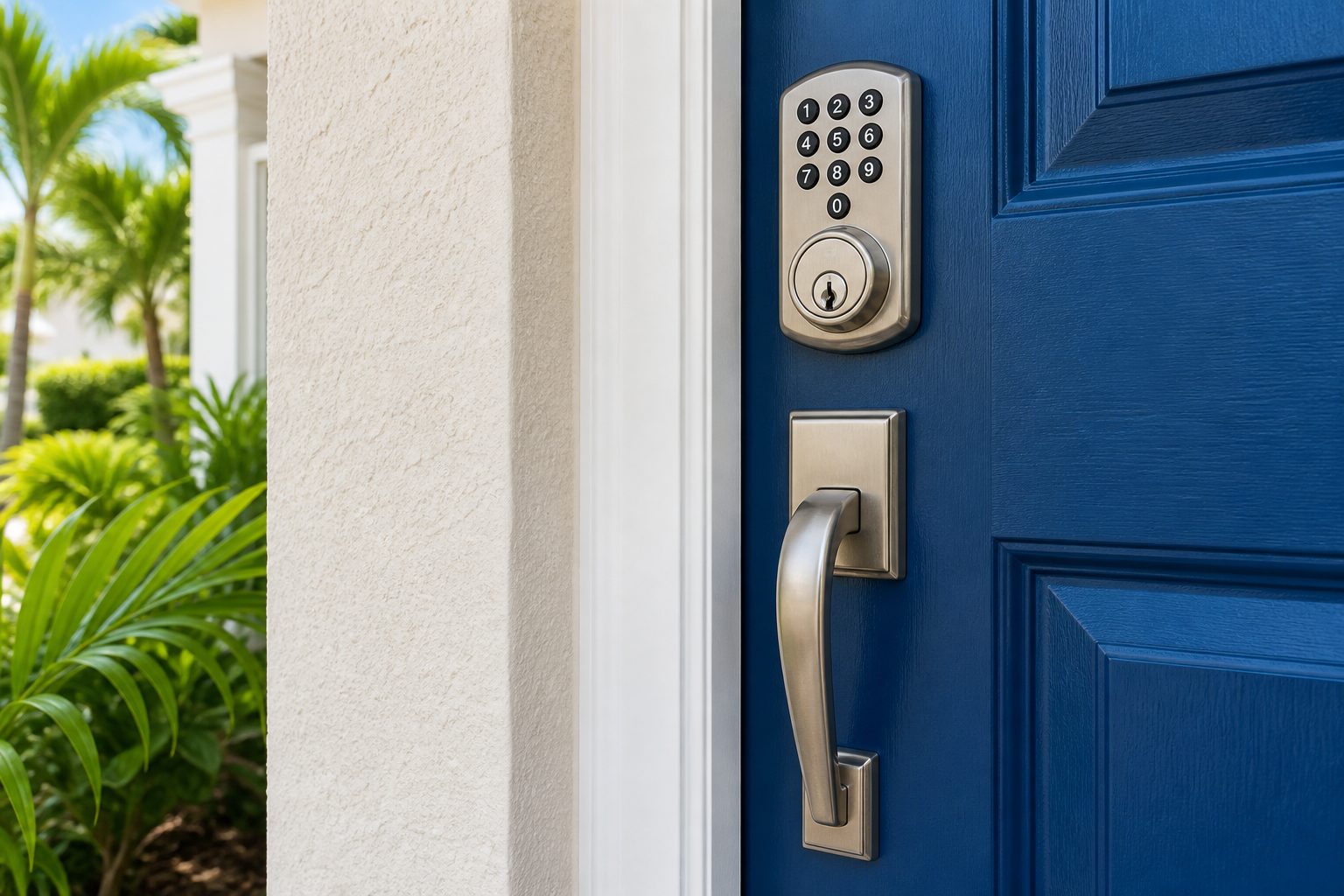
It's a smaller, more specific category than the others for a reason. This is hardware chosen on purpose, usually by someone who has already outgrown what a standard lock offers, a business with more keys in circulation than anyone can track by memory, or a homeowner who wants a lock that resists more than a screwdriver and a Saturday afternoon.
A standard keyway can be duplicated at nearly any hardware counter, no questions asked, by anyone holding the key for five minutes. A restricted keyway breaks that chain, patent-protected geometry that a locksmith controls distribution on, so a key doesn't get copied without authorization from whoever holds the property's key control. Paired with bump and pick resistance built into the cylinder itself, this is the point where the lock stops being the easiest way into the building, which shifts the actual vulnerability somewhere else entirely: the door, the frame, or the people who still happen to hold old keys.
An electric strike or a magnetic lock has to be told what to do when the power goes out, and there are exactly two answers: unlock, which is fail-safe, or stay locked, which is fail-secure. On a fire-rated egress door, that decision is made for you, power loss has to mean the door unlocks, because a locked exit during a power failure is a life-safety violation, not a design preference. On an interior door protecting something like a server closet or a cash room, fail-secure might be the correct call instead, because staying locked through an outage is exactly the point. Getting this backwards on the wrong door is the kind of mistake that only surfaces during the one situation it was supposed to handle.
A door closer that slams doesn't need replacing most of the time, it needs adjusting. Closing speed, latch speed, and backcheck are three separate settings on most commercial closers, and a closer set wrong on any one of them turns into an ADA compliance issue for anyone who can't get through before it swings shut, or a liability problem the first time it catches someone's hand. This is precise, incremental work, not a swap of one part for another, and it's the difference between a closer that's genuinely broken and one that was simply never dialed in correctly after it went in.
A single restricted lock or a single electric strike rarely stands alone for long, once a property has more than a couple of doors on different access levels, the hardware needs a structure behind it. That structure is mechanical key hierarchy: different keys opening different subsets of doors, controlled from the top down, so an office manager's key and a maintenance key don't grant the same reach. It's listed here as well as under commercial work because the same logic applies whether the property is a single suite or a multi-tenant building, more doors means the structure matters more, not less.
This is the hardware chosen after the basics are already handled, when the question isn't whether the door locks but who controls it, and what happens to it if the power goes out. Call us to talk through which piece applies to your property.
Is a restricted keyway worth it for a single door?
Sometimes, it depends on what's behind the door and who's held keys to it over the years. It's more commonly chosen for a property with several access points and a real need to control duplication.
Most forced entries do not beat the lock. They beat what the lock is attached to. A deadbolt thrown into a strike plate held by two short screws in a thin wood jamb will give way at the jamb long before the bolt itself bends. That is why the first security hardware we recommend on many Orlando homes and businesses is not a fancier cylinder but reinforcement around the lock that is already there.
These upgrades are nearly invisible once installed and do not change the look of the entry, which makes them a good fit for HOA communities with strict hardware rules.
Many locks sold in the United States are rated under ANSI/BHMA standards, which grade hardware by testing cycles, strength and durability. Grade 1 is the heaviest, intended for commercial use. Grade 2 is common on good residential hardware and light commercial doors. Grade 3 is basic residential hardware. The grade is usually printed on the packaging or in the product specifications.
Grade matters most on doors that see heavy use or need to resist force. A back door on a restaurant that opens hundreds of times a day wears out a Grade 3 lever quickly. A front door on a family home is well served by a good Grade 2 deadbolt when it is installed into a reinforced frame. We match the grade to the door and how it is used rather than defaulting to the most expensive option.
A secondary lock adds a layer that works only from inside, which makes it useful when you are home. Common options include:
For apartment residents, many of these can be installed without major changes to the door, but check with the property first. For homeowners, a secondary lock on a bedroom or a safe room door is a simple way to add a protected space inside the house.
Florida homes lean heavily on glass: sliding patio doors to the pool, French doors to the lanai, big windows facing the backyard. The back of a house is usually less visible from the street than the front, which makes these openings a more common target. Sliding doors in particular often rely on a small latch that wears over time.
A bar or pin in the track, a keyed secondary slider lock and new rollers so the panel sits properly all help. French doors need their inactive leaf bolted top and bottom, or the pair can be pushed open regardless of the deadbolt on the active side. Our sliding patio door locks page goes into those doors in detail.
Commercial rear doors in Orlando usually swing outward, which puts the latch gap and the hinges on the outside. A steel latch guard covers the gap so a pry bar or a thin tool cannot reach the latch. Non-removable hinge pins or hinge studs keep the door in its frame even if the pins are knocked out. Together, these two small pieces of hardware close the most common weak points on a steel back door, and they cost far less than replacing the door or the lock.
Keypad and app-controlled locks are often sold as convenience products, but they can also improve security when chosen and installed well. The main benefit is key control. Codes can be given to specific people and removed without rekeying, and many models keep a log of who entered and when. That matters for rental properties, homes with regular service workers and small businesses.
The weak points are the same as any deadbolt, plus a few new ones. The bolt still needs a reinforced strike. The door still needs to be aligned so the motor can throw the bolt fully. And the lock still needs a secure mechanical backup and a plan for dead batteries. Our smart locks and keyless entry page covers choosing and installing them.
Security hardware extends beyond the door. A safe bolted to the floor protects documents, cash, jewelry and firearms from a quick grab. Key cabinets keep spare keys organized and locked instead of hanging on a hook by the back door. Locking file cabinets and drawer locks keep sensitive records out of reach in offices and clinics.
The most common mistake with safes is not anchoring them. A small safe that is not bolted down can be carried out and opened somewhere else at leisure. Anchoring into concrete or framing is simple when the safe is installed. See our safe opening and installation page for more.
When a property owner wants to improve security but does not know where to start, we suggest working through it in roughly this order:
Doing the basics first means money spent on higher-end hardware is not wasted on a door that can be kicked in at the frame.
Hardware in Central Florida has to handle heat, humidity and heavy seasonal rain. Some finishes hold up better than others. Plated finishes on inexpensive locks can peel or pit within a few years on a door exposed to afternoon sun and storms. Solid brass, stainless steel and quality powder coated finishes last longer. For doors with no overhang, a lock designed for exterior exposure matters more than the brand name.
Moisture also works into cylinders and latches. A dry lock lubricant once or twice a year, rather than oil, keeps keys turning smoothly. Keypads on sun-exposed doors should be models rated for outdoor use, and batteries should be changed on a schedule, since heat drains them faster.
Many newer homes and replacement doors in Florida are impact-rated and use multi-point locking systems that engage the frame at the top, middle and bottom when the handle is lifted. Those doors perform well in storms only when all the locking points are engaged. If the handle is hard to lift, the door is out of alignment and the points are not reaching their keepers. Forcing it wears out the gearbox.
Adjusting the door and keepers so the handle lifts easily restores both storm performance and security. If a gearbox has failed, it can often be replaced as a single part. Bring the door brand and a photo of the edge of the door when you call, so we can identify the system.
Landlords and property managers balance security for tenants with the need to access units for maintenance and emergencies. Durable Grade 2 or Grade 1 hardware reduces repeat calls, a consistent lock brand across units makes rekeying between tenants faster and a planned key system keeps master keys under control. For garden-style complexes with ground floor units, secondary slider locks and reinforced strikes are often worth adding across the property rather than one unit at a time.
In many Orlando homes, the door between the garage and the house is the weakest exterior door. It is often a lighter door with only a knob lock, because builders treat it as an interior door. But if the overhead garage door is opened, forced or left up, that inside door is all that separates the garage from the living space. A proper deadbolt on that door, installed into a reinforced strike, is one of the most useful upgrades a homeowner can make.
The overhead door itself can be secured with a manual slide lock that engages the track, especially when you are away for a long stretch. Many people leave the manual lock unused for years until it rusts in place. Test it before you need it, and keep the emergency release cord from being reachable through a gap at the top of the door, since a hooked tool can pull it from outside on some installations. A simple shield or zip tie arrangement on the release handle stops that.
Security hardware extends to the edges of the property. Side gates on fenced yards, pool screen enclosure doors and gates on driveways all control access to the back of the house. A keyed gate latch, a lockable pool enclosure door and hinges that cannot be lifted off keep the backyard from being an easy approach to sliding doors and windows. For pool gates, a self-closing hinge and a self-latching latch also protect children, which in Florida is a good reason to check them every season.
If you are not sure which of these pieces applies, the simplest step is to walk the property with us and describe how each door is actually used. Who goes in and out, which doors are left unlocked during the day, where keys are kept and what has happened before. Hardware chosen for how a door is really used works better than hardware chosen from a catalog. We will explain what each option does and what it will not do, so you can decide what fits your property and budget.
It helps to bring a few things to that conversation: photos of the doors you are worried about, the brand of any existing smart locks or keypads, a rough count of how many keys are out and any rules from an HOA or landlord about what can be changed on the outside of the door. With that in hand, recommendations can be specific to your property rather than general advice that may not fit. A short list of what worries you most is a good place to begin.
Searching locksmith near me in Orlando for a house lockout? We are mobile across metro Orlando and quote the price before we come out. Call us.
ZIP codes we cover in Orlando: 32801, 32803, 32804, 32805, 32806, 32807, 32808, 32809, 32810, 32811, 32812, 32814, 32817, 32818, 32819, 32820, 32821, 32822, 32824, 32825. City services: Orlando Official Website.
Describe the situation by phone and we will tell you what the job involves. Quotes are given by phone. Jobs that cannot be quoted without seeing them need a technician on site, and the service call charge is explained on the phone before anyone is dispatched.