Sand Lake Road is known for its restaurants, offices, hotels and condominiums, a busy mix of dining spots that open early and close late and residences packed close to them. A locksmith in this area moves between kitchen doors, office suites, condo units and cars parked in shopping center lots.
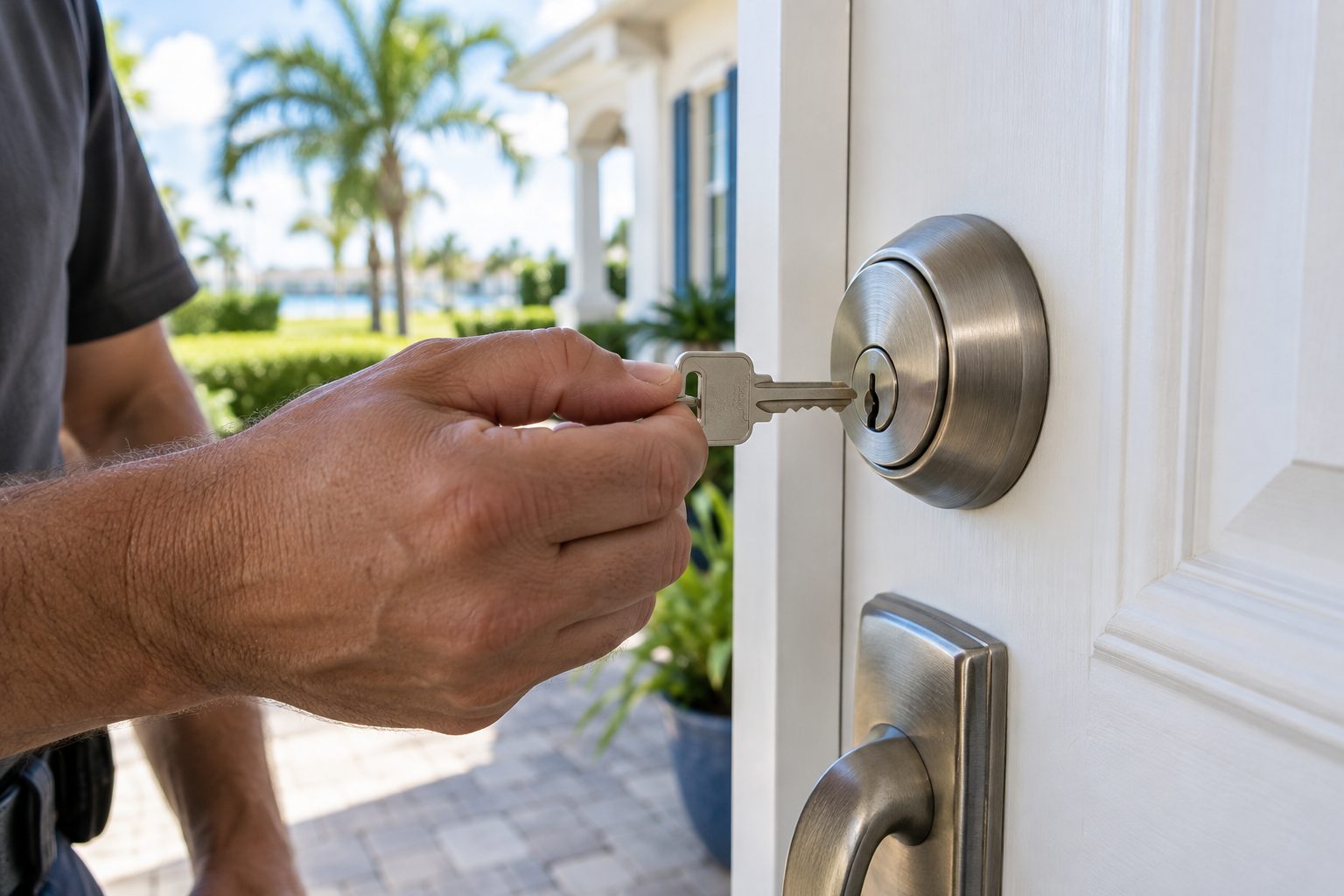
Few roads in Orlando mix as many uses in a short span as Sand Lake Road. There are restaurants of every size, offices and medical suites, hotels, shopping plazas and condominiums and apartments tucked behind them. A person might live in a condo, work in an office, eat dinner at a restaurant and park in a shopping lot, all within a mile or two. Each of those places has its own lock needs.
That mix gives a mobile locksmith a varied workday. A restaurant owner calls because the back door will not latch. An office manager calls because an employee left without returning a key. A condo owner calls because the unit door sticks in the humidity. A driver calls because the keys are locked in the car outside a restaurant. These calls arrive at different hours, from different kinds of people, and all start with a short phone conversation.
The sections below go through the common situations in turn. If your situation does not match any of them, call anyway. A dispatcher can ask the right questions and tell you whether a mobile technician can help.
Restaurants are hard on locks. The front door opens thousands of times a month. The back door is used for deliveries, trash and staff breaks, and is often propped open. Kitchen heat, grease and steam get into cylinders and latches. A restaurant that opens at eleven in the morning cannot afford a front door that will not lock at night, and a manager who arrives at six to find a key that will not turn has a problem before the day begins.
Typical restaurant calls include a worn front door cylinder, a back door that does not close fully, a panic bar that has stopped latching, a closer that slams or hangs open and keys lost or not returned by departing staff. A technician can repair or replace each of these on site. Sometimes the fix is as simple as cleaning and lubricating a cylinder. Sometimes the hardware is worn out and should be replaced.
Walk-in coolers and storage rooms have their own latches, often with inside release hardware that must always work. Never disable an inside release. If a walk-in latch feels sticky or the inside release is loose, have it repaired promptly, because a person trapped inside is a real danger. See our page on restaurant lock service for what a technician checks.
Restaurants and shops have high staff turnover. Servers, cooks, cleaners and delivery drivers come and go, and keys come and go with them. After a few months, a manager may have no idea how many working copies of the front door key exist.
The most practical answer is a simple policy. Give keys only to those who need them, number each key and keep a log. When someone leaves and does not return a key, rekey the lock. It is a small job compared to the risk of an unknown key holder. For doors where many people need access, consider a keypad lock, so that each person can have a separate PIN and you can delete it when they leave.
Some owners ask about master key systems. A master key lets the owner open every door while an employee carries a key that opens only the doors they need. It is a sound approach for buildings with several doors, but it takes planning. A technician can advise on the layout when you call. For more detail, see key control policies for businesses and master key systems.
The offices along the road range from small suites to larger buildings with many tenants. Multi-tenant buildings have a shared front entrance and keyed or access-controlled doors to each suite. The landlord controls the building entrance, and each tenant controls the lock on their own suite, subject to the lease.
A tenant who wants to rekey a suite should check the lease and notify the building manager. In some buildings the landlord keeps a master key and wants to approve any change. A locksmith can work within those rules, and the quote reflects what is needed.
Medical offices have additional concerns. Records, medication storage and patient privacy all depend on locks that work. A lock on a file room or a medication cabinet should be reliable and under the control of a named person. See medical office lock service and file cabinet and desk locks for common requests, such as replacing a lost desk key or rekeying a filing cabinet.
Condominiums and apartment communities sit close to the commercial strip. Their residents share concerns about lockouts, lease turnover, mailbox keys, amenity doors and gate access. A condo owner often has more control over the unit door than a tenant, but the association may set rules on what hardware can be installed.
If you are locked out of a condo, try the association's management office or the unit owner first, since a spare key may be on file. If neither can help, a mobile locksmith can open the door after confirming that you live there. Expect to be asked for photo identification and something with your address on it. A condo's front door may be fire-rated, and the lock must be one that meets the building rules. A technician can tell you what fits.
Condo doors in multi-story buildings often have deadbolts that are very close to the frame, and the shared hallway is quiet, so noises from a lock repair carry. A technician aware of this will work promptly and keep the area tidy. See condo and highrise lock guide for details on what to know before you call.
The plazas along the road have large lots that fill up at lunch and dinner. A car lockout there is a common call. Keys on the seat, keys in the ignition, a fob left in a cup holder while you stepped out to talk to someone. A mobile locksmith can open most cars without damage.
For lost keys, the technician needs the vehicle identification number, proof of ownership and photo identification. A new key is cut and programmed on site for most vehicles. If you have one working key left, a copy is a simpler job than starting from scratch. Our pages on car lockout and car key replacement explain the process.
If a child or animal is locked in a car, do not wait. Call 911 first. In the Florida heat, the inside of a closed car becomes dangerous in minutes, and emergency responders are the right people to act at once.
Restaurants and bars near the road close late, and staff may leave after midnight. A closing manager who locks the door and then discovers the keys are inside is a typical after-hours call. So is a server who loses a key ring in a parking lot, and a delivery driver who finds a rear door will not unlock.
When you call after hours, be ready to explain who you are and why you can authorize the work. A manager's work ID, a lease or a call to the owner can all help. The technician will not open a business door for someone who cannot show authorization, since that protects the business. If an alarm is connected to the door, tell the dispatcher and have the passcode and the alarm company number ready to avoid a false alarm.
The word 24-hour describes the service concept of taking calls at all hours. It is not a promise of arrival at a specific time. The dispatcher will explain what to expect and give the quote before dispatch. See business lockout service for more.
Many condos near a busy commercial road are owned by people who live elsewhere, rent the unit out or use it only part of the year. An empty unit has its own lock concerns. Nobody is there to notice a loose handle, a sticking deadbolt or a door that no longer latches fully. A problem can sit for weeks before anyone sees it.
Owners in that position should decide who holds keys and keep the list short. A trusted neighbor, a property manager or a family member can check the unit on a schedule. Between guests or tenants, rekeying is a straightforward way to make sure former occupants no longer have access. A keypad deadbolt, where the association allows it, lets an owner change the PIN from a distance, though batteries need attention and a backup key should be kept in a safe place.
Before any lock change, read the association rules. Some buildings require that the hardware match the building standard, keep a spare key on file with management or limit the type of lock on a fire-rated entry door. A technician can work within those rules if you tell the dispatcher about them on the call.
When you return to an empty unit after a long absence, test every lock before you unpack. Turn each key from both sides, check the deadbolt throw and make sure the door closes smoothly. If anything feels off, mention it on the phone and ask what the technician would bring. Our pages on vacation lockup checklist and snowbird home lock checklist list what to check before leaving and when you come back.
Sand Lake Road sees the same humid summers and afternoon storms as the rest of Central Florida. Add kitchen grease and heavy foot traffic, and door hardware ages quickly. Exterior locks collect dust and moisture. Interior kitchen locks collect grease. Both can cause sticking.
A simple maintenance habit helps. Once or twice a year, wipe down hardware, tighten loose screws and apply a dry lubricant to the keyway. Avoid heavy oils on locks, since they trap dust. If a key feels stiff, do not force it. Forcing can bend or snap the key. A technician can clean or replace the cylinder before it fails.
Door closers need attention too. A closer that has lost oil may close too fast or too slowly, and either one causes problems. A door that does not close fully will not latch, and an unlatched door is an open door at night. Our guide on humidity and lock longevity has more tips.
Every price is given by phone before a technician is sent. A dispatcher asks about the job, the location and the kind of door or vehicle involved, then explains the cost. For simple work, such as a car lockout, the quote can often be given on the first call. For complicated work, such as multiple doors, older mortise hardware or electronic access, an on-site visit may be needed first. A service call charge applies, and it is explained before dispatch.
When the technician arrives, expect an introduction, a request for identification and a clear explanation of the work. Test each lock when the job is done, keep your receipt and ask any final questions. For help evaluating a company, read how to spot locksmith scams and what to expect on a locksmith call.
Whether you are a restaurant manager with a failing back door, an office tenant who needs a rekey, a condo owner locked out or a driver with keys on the seat, a short call is a good start. If anyone is in danger, call 911 first. Otherwise tell the dispatcher where you are and what is happening, hear the quote and decide. Call when you are ready, and have your identification and address at hand.
Yes. Rekeying changes the internal pins so the old key no longer works, and new keys are cut for the people who need them. A technician can do front, back and storage doors in one visit. Tell the dispatcher how many locks are involved and what brands, if known, so the right supplies come with the technician.
Check your lease and tell the building manager. Many landlords keep a master key and want to approve changes so they can reach the suite in an emergency. A locksmith can work within those rules and may be able to key the new lock to the building master if the landlord requires it.
It can work well if the lock is rated for commercial use and the door is in good shape. Keypad locks let you give each person a separate PIN and delete it when they leave. Keep a backup key, replace batteries on schedule and check that the door still allows emergency exit as required.
First check whether the door is rubbing on the frame, since humidity makes wood swell. A strike plate adjustment or a hinge tweak often solves it. If the key itself feels stiff, a dry lubricant in the keyway may help. If the lock still binds, call before the key breaks off inside.
Yes. A mobile technician comes to the lot, checks your identification and the vehicle registration, and opens the car or makes a replacement key. Give the business name and the nearest side of the building so the technician can find you. If a child or pet is inside, call 911 first.
Describe the situation by phone and we will tell you what the job involves. Quotes are given by phone. Jobs that cannot be quoted without seeing them need a technician on site, and the service call charge is explained on the phone before anyone is dispatched.
When a manager or a long time employee leaves a restaurant, the question of who still has keys becomes urgent. Start with a list of every door: front entrance, back door, office, storage, walk in cooler and any exterior gate. Then list who was issued a key to each. Knowing the full picture lets a technician plan a clear scope. Be sure to check the less obvious entries too, such as the delivery door, the dumpster enclosure gate and the cooler padlock, which are often forgotten in key lists.
Rekeying changes the inside of the cylinders so old keys stop working while the locks stay in place. It is often quicker and less disruptive than replacing hardware, and it can be done around service hours. A technician will tell you which doors can be rekeyed and which hardware is too worn and should be swapped. Timing matters for a busy kitchen. If possible, plan the work for a slow morning or a closed day, and warn staff in advance. A technician can often finish a rekey of several cylinders without taking the whole building out of service for long, depending on the hardware found.
Think about how new keys will be issued. A key system where each role gets a key to only the doors they need reduces risk. Keep a signed log of who received each key, and decide ahead of time how you will collect keys when someone leaves. Ask for a short written summary at the end, listing which doors were rekeyed and how many keys were cut. Filing that record with your staff paperwork keeps future changes straightforward and makes training a new manager much easier.
Restaurant doors face conditions that homes seldom meet. Kitchen steam, airborne grease, daily mopping and strong cleaning products all work their way into locks and hinges. Grease collects dust and forms a sticky paste inside the cylinder, and chemicals can dull finishes and corrode springs over time. Door sweeps and weatherstripping deserve attention as well, because worn seals let in moisture and pests and can also keep a door from closing fully against its strike. Keep a small log of cleaning dates for door hardware so you can tell at a glance when a lock last received attention.
Regular care helps. Wipe exterior hardware with a mild cleaner instead of spraying chemicals directly at the lock. Avoid heavy oil, which attracts more grime. A dry lubricant made for locks keeps pins moving without turning into paste. Hinges and closers also benefit from occasional attention so doors latch fully. Walk-in coolers have their own latch hardware, often with an inside release for safety. If that release sticks, treat it as urgent, since a person trapped inside is a real hazard. A technician can inspect and service these latches, and the work is explained first.
If a lock has become stiff or the key needs jiggling, treat that as a warning rather than a nuisance. A technician can clean or replace the cylinder before it fails on a busy night, and the options are explained before any work starts. Schedule a routine check of all exterior hardware a couple of times a year. A short visit to tighten screws, clean cylinders and adjust closers costs less in disruption than a failure at closing time, and it keeps your staff confident that doors will work.