Lake Nona Medical City is a newer, planned area built around healthcare, research and education, with offices, clinics and fast-growing neighborhoods nearby. Newer buildings bring their own lock needs: construction keys, access control and privacy rules. Here is how mobile locksmith service fits.
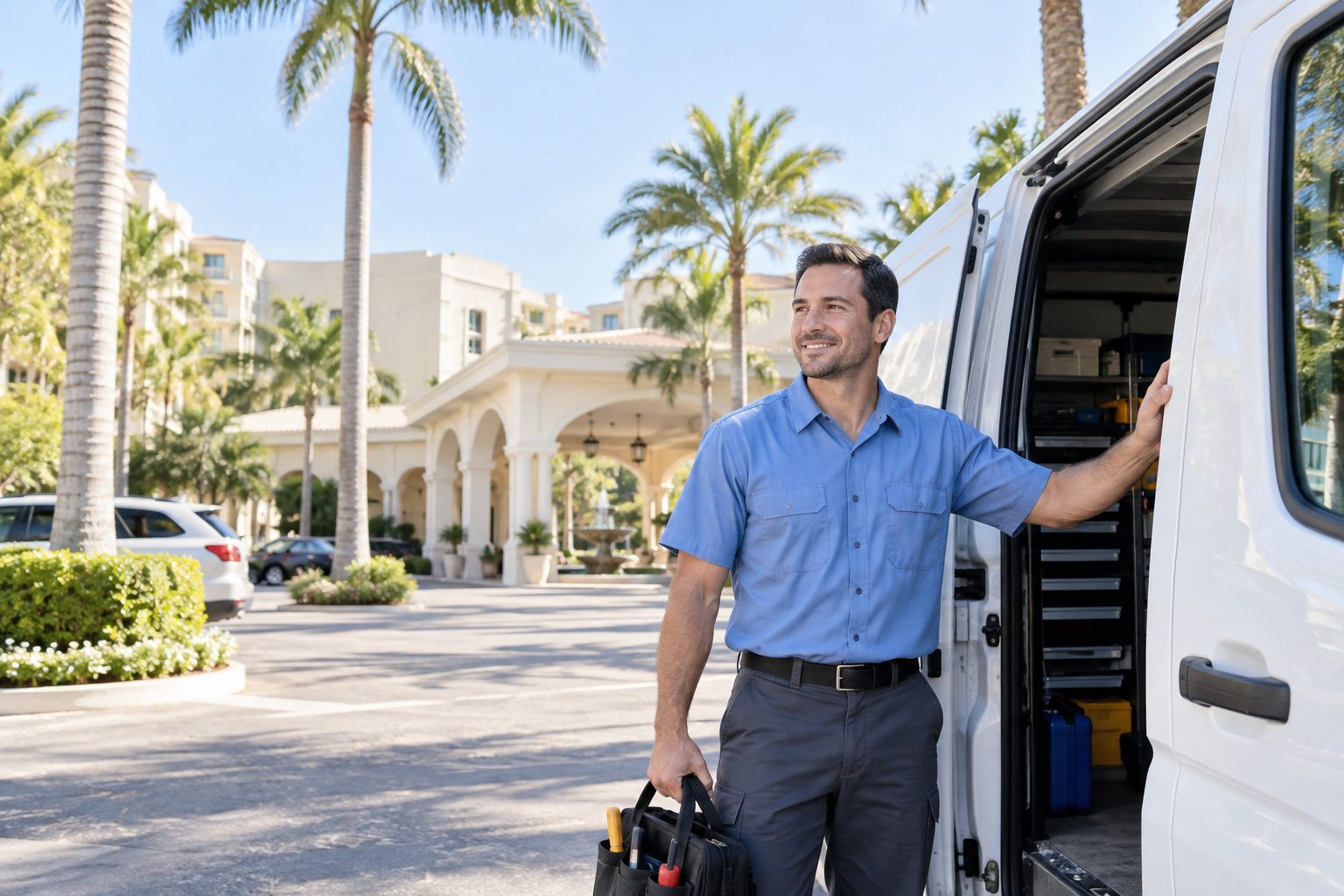
Lake Nona Medical City is an area of newer buildings. Clinics, offices, labs and educational facilities sit alongside new homes and apartments. Newer construction usually means modern doors, tighter frames and hardware designed for current standards. It also means a lot of recent tenants, a lot of recent key handovers and a lot of buildings where the original construction keys are still out there.
The calls that come from this kind of area differ from those in older neighborhoods. Instead of worn mortise locks and swollen wood doors, you see new keypad locks that will not respond, access control readers that lose connection, and cylinders that were never rekeyed after the builders left. You also see a high demand for privacy and compliance, because medical and research spaces handle sensitive records and supplies.
A locksmith working here has to think in terms of systems: how the door, the lock, the credential and the building rules fit together. A quick fix on one door can affect others. Good technicians ask about the whole setup, not only the one door that failed.
A medical office has different lock needs from an ordinary business. Records, supplies and equipment must be protected. Some rooms must be accessible to staff but not to patients. Others, such as exam rooms, must be private but also quickly accessible in an emergency. A lock that works for a retail shop may not suit a space where a patient might need help behind a closed door.
Typical requests include rekeying after staff changes, installing keycard or keypad readers on supply rooms, adding lever handles that are easier for people with limited grip, and fitting locks that allow staff to enter an occupied room in an emergency. Exit routes and fire doors have strict rules, so any hardware change must respect them. A technician will ask which doors are on an exit route before touching them.
Accessibility is part of the picture. Lever handles are easier to use than round knobs for people with limited hand strength, and many public-facing doors are expected to be easy to operate. See medical office lock service and lever handle installation for more on how these are handled. Where the rules are unclear, check with the building owner or your compliance contact before work begins.
Access control means managing who can open which door and when, usually with keycards, fobs, keypads or a combination. In a medical or research setting, it appeals because it can be changed without cutting new keys. If a card is lost, it can be deactivated. If a person leaves, their access can be removed. Some systems also record who opened which door, which helps with accountability.
These systems are not magic. They need power, network connections, software and regular maintenance. A door with an electric strike or magnetic lock needs a power supply, and a failure in that supply must not trap people inside. Fire rules usually require that such doors release when the fire alarm sounds, and a technician must wire them properly. Mechanical keys still have a place as a backup for the times when electronics fail.
For small offices, a simpler setup may be enough: a keypad deadbolt on a supply room, a few keyed-alike locks and a master key for the manager. For larger operations, a full access control system installed by a qualified team makes sense. Our access control vs traditional keys guide compares the two, and electric strikes and maglocks explains common door hardware used with them.
When a new building is finished, the locks are often keyed during construction so that workers and trades can enter. Those construction keys may be held by many people for months. When the building is turned over, a rekey ensures that only the new owner or tenant holds working keys. Skipping this step leaves a gap that costs little to close and can be a real risk if left open.
The same is true for new homes. Builders, subcontractors, inspectors and real estate agents may all have had access. A new homeowner can rekey every exterior lock soon after closing, and many do so as part of moving in. It also lets you have all doors on the same key, so that you carry one key instead of several. See new construction lock checklist and moving into a new home security steps for a full list.
In addition to rekeying, check the hardware itself. Some new builds use light-duty builder grade deadbolts and short screws in the strike plate. Upgrading the strike plate and screws is a small change that adds real strength. A technician can look at your doors and tell you which are fine and which are worth improving.
Many newer homes in the area come with, or are upgraded to, keypad and smart locks. These offer convenience, such as entry without a key, temporary numbers for guests and a record of who came and went. They also bring new failure modes. Weak batteries, a lost connection to the home network, a door that has shifted slightly and a motor that cannot extend the bolt all cause lockouts that seem mysterious.
If a smart lock stops working, start with the batteries, which are the most common cause. If the lock has a physical key backup, use it to enter and then troubleshoot. Check whether the door closes easily and the bolt lines up with the strike. A door that has settled can make the motor strain and fail. Restarting the lock or rejoining it to the home network may fix a connection problem, but follow the maker's instructions rather than guessing.
When you choose or replace a smart lock, pick one with a physical key backup and a clear low battery warning. Keep spare batteries on hand. See smart lock keeps locking you out and smart lock troubleshooting for more, and digital lock best practices for good habits with entry numbers.
Around the medical and research buildings are many homes and apartments, with residents who work in healthcare, research, education and other fields. Healthcare workers often have shifts that run through the night. A lockout after a long shift or a lost key on the way to work cannot wait for office hours. The 24-hour service concept is built for these calls, although availability depends on the time and place, and the dispatcher will tell you what to expect.
For a home lockout, the technician will ask for photo identification and proof that you live at the address. Newer homes may have a deadbolt, a smart lock and a garage entry. Tell the dispatcher which one is failing. If you hold a key but the lock will not turn, do not force it. A key broken in a new lock is a bigger problem than a stuck one.
If you recently bought a home, a rekey is a wise first step. See house lockout and lock rekeying for how those jobs go. For an apartment, your landlord or property manager may need to approve work, and the apartment lock service page explains what is usually possible.
Medical and research spaces hold information and materials that deserve careful protection. A locksmith is not a compliance advisor, and the rules for medical records, controlled supplies and laboratory materials come from other sources. What a locksmith can do is help the physical layer: doors that close and latch, locks that suit the use, keys that are tracked and hardware that fits your policy.
Practical measures include locking file rooms and records cabinets, using separate keys for supply rooms and administrative areas, rekeying after any key loss and keeping a written log of keys. File cabinets and desk drawers often have light locks that are easy to defeat, and upgrading them can be a small but useful improvement. See file cabinet and desk locks for options.
If your organization has a security or compliance team, involve them before changing hardware. Some buildings have a required system, a required vendor or a required documentation process. A locksmith who knows this at the start can plan the work to fit, and you avoid a surprise later. Do not assume a quick fix is acceptable in a space that has formal rules.
Medical City draws a large daily population of staff, students, patients and visitors, and car key problems follow them. A fob stops working in the middle of a shift. A key is locked in the car in a parking lot or garage. A visitor loses a key between an appointment and the car. Many cars made in recent years use a transponder key or a smart key, which means a replacement must be programmed to the vehicle, not only cut.
If you are locked out, check for a spare, a manufacturer app or roadside assistance first. If those fail, a mobile locksmith can come to the car. Have the make, model, year, color and exact location ready, and be prepared to show registration and photo identification. For a replacement key, the vehicle identification number is needed. Staff who park in large lots should note the section or row, since a technician will need to find the car quickly.
Prevention helps. Keep a spare key somewhere safe at home, not in the car. Replace weak fob batteries when the car first warns you. Avoid storing a fob where it gets very hot, such as a dash in summer sun. See car key replacement and car key fob not working for more. If a child or animal is trapped in a locked car, call 911 first.
Clinics and research buildings often control entry tightly. A technician may need to be signed in, escorted or approved in advance. Some areas cannot be entered at all without specific clearance. When you call, mention that the building has controlled access, and ask whoever manages the space what the vendor process is. Passing that information to the dispatcher makes the visit smoother.
Timing also matters. A clinic cannot always shut a door during working hours, and a lab may have time-sensitive work. Plan the work for a quiet period where possible, and expect that the technician may need to work around a schedule. If the issue is urgent, say so, and explain what is at stake so that the dispatcher can plan.
A good technician respects the rules of the space and explains each step. If you feel pressured to skip a rule, pause and ask the dispatcher or your building manager. Rules in a medical setting exist for good reasons, and a short delay is better than a mistake that affects patients or staff.
Before you call, gather the address, the building or suite, the door involved and a short description of the problem. Have photo identification and, for a business, proof of authority such as a lease, a business paper or a note from the building manager. For a home, bring something that links you to the address. For a car, the make, model, year and registration.
Quotes are given by phone only, and more complicated jobs, such as access control or multiple doors, need an on-site visit before a final quote. There is a service call charge, and it is explained on the phone before anyone is dispatched. Ask any question you have, including who approves work in your building and what documentation you should keep.
Our how to choose a locksmith guide lists questions worth asking before you commit to any company. When you are ready, call and describe what you need. The dispatcher will explain the next step, and you can decide with full information.
A technician can rekey, repair and replace locks, and discuss keypad or card options for supply rooms and records areas. Doors on exit routes and fire-rated openings have strict rules, so those are handled with care. Compliance requirements come from other sources, so involve your own compliance contact where needed.
Yes, it is a sensible early step. Builders, trades and agents may have held keys during construction or sale. Rekeying makes sure only current keys work and can put all doors on one key. A technician can also check strike plates and deadbolts, which are sometimes light-duty on new builds.
Start with the batteries, since they are the most common cause. Use the physical key backup if there is one. Check that the door closes smoothly and the bolt lines up, because a settled door can stop the motor. If it still fails, a technician can inspect the lock and the door.
It means managing entry with cards, fobs or keypads in place of or alongside metal keys. Lost credentials can be deactivated, and some systems record door activity. They need power, setup and maintenance, and doors must release safely in an emergency. A technician can advise on a size of system that suits your space.
Quotes are given only by phone, after you describe the job. Complicated jobs need an on-site visit first. There is a service call charge, and it is explained on the phone before any technician is dispatched. You can ask questions before agreeing to anything.
The service is built around 24-hour calls, but availability depends on the time, location and workload that day. The dispatcher will tell you honestly what is possible. Have your address, door or vehicle details and identification ready when you call.
Describe the situation by phone and we will tell you what the job involves. Quotes are given by phone. Jobs that cannot be quoted without seeing them need a technician on site, and the service call charge is explained on the phone before anyone is dispatched.