Geneva is a quiet, rural corner of Seminole County near the St. Johns River, with large lots, fish camps, gated acreage and boats on trailers. Locks here fight humidity, distance and old hardware. If something has failed, call and describe where you are and what you have.
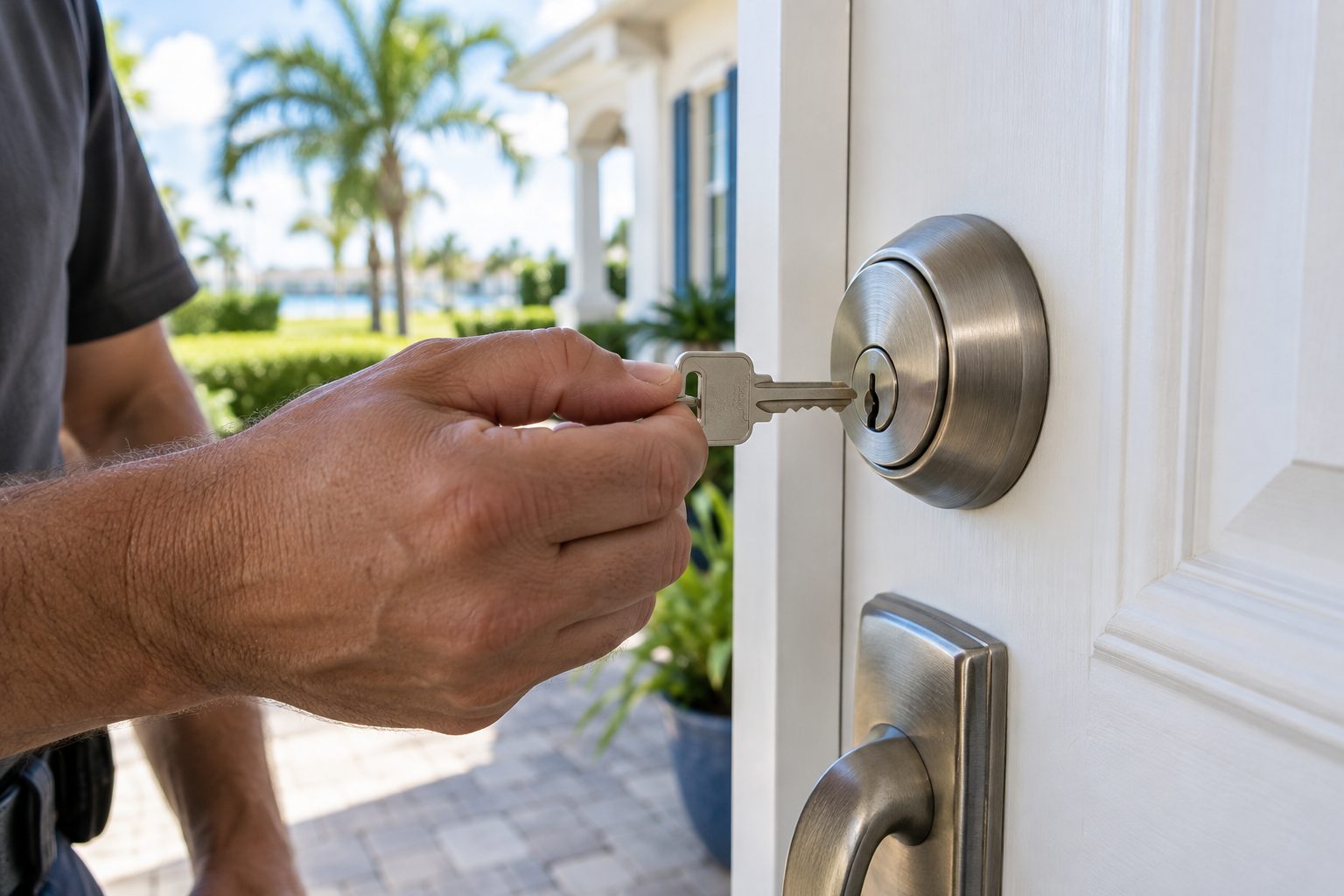
Geneva sits in the eastern part of Seminole County, near the St. Johns River and the wide, slow wetlands around it. People here often live on larger lots, keep boats and trailers, and enjoy a quiet, rural setting that feels far from the busier parts of Orlando. Fishing, hunting, horseback riding and gardening are part of daily life for many households.
From a locksmith's perspective, that lifestyle creates a recognizable set of needs. There are gates at the end of long driveways, padlocks on sheds and boat storage, trucks that live outdoors, and homes that sit a long way from a neighbor. The wet climate accelerates corrosion. Dirt roads, dust and pollen work their way into hardware. A lock that gets regular use in these conditions can wear faster than the same lock in a drier, cleaner place.
This page covers what a Geneva owner is most likely to run into and how to handle it. It does not promise any particular arrival time, because distance, road conditions and workload vary through the day. You will receive a quote by phone, along with an explanation of the service call charge, before a technician is dispatched. More complicated jobs may need an on-site visit before a final quote.
Many Geneva properties are gated. The gate might be a simple pipe gate with a chain and padlock, a swing gate with a latch and lock, or an electric gate with a keypad. A long drive from the gate to the house means that when something goes wrong, you may be a long way from the problem. A seized padlock on the gate can keep you out of your own property. A broken keypad can lock a delivery driver out. A lost key can leave a chain locked with nobody able to open it.
A locksmith can open a stuck padlock, replace a worn one, rekey a group of padlocks so one key works for all of them, and recommend latches that suit the gate. Choose padlocks with weather-resistant bodies and shrouded shackles for outdoor use, because exposed shackles are easier to cut and corrode faster. Where a chain is used, consider a heavier one and a lock that sits protected from direct cutting.
Learn how your gate works in a power cut or if the operator fails. Know where the manual release is. Keep spare batteries for keypads and remotes. If you share the gate with neighbors or workers, consider whether a keypad you can reprogram would be easier to manage than a set of keys. See gate lock and latch repair and padlock key lost.
Some properties around Geneva are used part of the year, such as cabins, hunting or fishing camps, and weekend places. These sit empty for weeks. That is exactly what makes them attractive to thieves, because nobody is around to notice a broken door or missing equipment. The locks on them are often basic and old, and the keys have often been copied and shared among family and friends over the years.
If you own a seasonal property, begin with a rekey. A rekey makes every older key useless and gives you control of who has access. Next, look at weak points: door frames, strike plates, hinges and windows. A deadbolt with a reinforced strike plate and long screws is a major improvement over a simple latch. A lockbox or keypad can let you give controlled access to guests or family without handing out keys.
When you leave, make a routine: check every lock, take valuables with you or lock them in a sturdy cabinet, and note who holds keys. When you return, look for signs of attempted entry before opening the door, such as scratches, bent hardware or a lock that feels different. If you find signs of a break-in, do not enter alone, call the sheriff's office, and then talk to a locksmith about repairs. See lock change after break-in and the vacation lockup checklist.
River country means boats. Boats on trailers, jet skis, kayaks and fishing gear are stored in yards, under carports or in sheds. They are valuable, and they are portable. Locks on trailer couplers, hitch pins and storage boxes protect against quick theft. Locks on boat consoles and storage compartments protect gear.
A locksmith can help with trailer coupler locks, door locks on enclosed trailers and padlocks on storage. Replacement keys for these are often straightforward, but a lock that has seized from corrosion may need to be opened or replaced. If you use a marine environment, choose hardware that is rated for it, such as stainless steel or brass padlocks, which resist corrosion better than plain steel. See boat and marine locks and RV and trailer locks.
Think also about identification. Write down the hull identification number, the engine serial number and the trailer identification number and keep them somewhere other than the boat. Photograph your gear. If anything is stolen, these records help law enforcement. They are also useful when you need proof of ownership for a replacement key or lock.
Trucks are workhorses in Geneva, and they take punishment. Mud, dust, water and heat all find their way into door locks, ignition cylinders and key fobs. Keys get dropped in fields, left in jacket pockets or bent by use as pry tools. An ignition that is worn may start to refuse a key that used to work.
A mobile automotive locksmith can often handle several of these jobs: opening a locked truck without damage, cutting a replacement key, programming a transponder key or fob, and extracting a broken key. What is possible depends on the vehicle, so give the make, model and year on the phone. Be ready to show ID and proof of ownership. If you are the owner of a business truck, you may need to show company paperwork too.
If your key is stiff, worn or cracked, do not wait for it to fail. Get a new one cut while the old one still works, because copying from a good key is simpler than starting from nothing. For vehicle-related help, see car key replacement, ignition repair and key broke off in ignition.
Homes in Geneva span older frame houses, mid-century ranches, manufactured homes and newer builds on larger lots. Each tends to have its own weak points. Older houses have aging locks and doors that have shifted. Manufactured homes often have lighter doors and frames. Newer homes have good front doors but may have weaker secondary entries.
A walk-through is a good start. Check every exterior door. Does it have a deadbolt? Does the strike plate have long screws that reach the frame? Does the door latch every time without a shove? Does the sliding glass door have a secondary lock, and can the door be lifted off its track? Does the garage entry door have a proper lock? Where you find weak points, a locksmith can often fix them quickly.
If you do not know who has keys to your home, rekey. It is a straightforward way to start fresh. If your locks are worn, loose or damaged, replacement is likely better. A technician can explain the difference at the door. See rekey versus replace locks and residential locksmith services.
When you live on a large lot with few neighbors, a lockout feels more serious. Maybe you stepped out to check the animals and the door locked behind you. Maybe your keys fell from your pocket in a field. Maybe a gate padlock has seized and you cannot get a vehicle through. Whatever the cause, the nearest spare key may be far away.
Stay calm and look at what is within reach. Is another door or window unlocked, and can you safely reach it? Is there someone who can bring a spare? If you are in danger from heat, weather or a medical issue, or if a child or pet is trapped inside, call 911 first. Otherwise, call a locksmith, describe the location and how to reach it, and wait somewhere safe with your phone charged.
The technician will want to see ID and proof that you live at the property or own the vehicle. Rural addresses can be hard to find, so give directions a stranger could follow. Mention gates, dogs, soft sand and anything else that might slow or endanger a visitor. See house lockout service and car lockout service.
Central Florida's humidity is relentless near wetlands and rivers. Moisture condenses in cylinders, rusts springs and pins, and makes keys stiffen. Heavy rains soak entry hardware. Hurricanes and storms bring wind and falling debris that damage doors, frames and gates. After a storm, a door that used to close can refuse to latch, and a gate that used to swing smoothly can drag.
Seasonal upkeep helps. Before storm season, check that every door latches, every lock turns smoothly and every gate closes. Replace batteries in keypads and remotes. Lubricate locks sparingly using a product suited to the purpose. After a storm, walk the property and repeat the check. If a door no longer latches, a locksmith can often adjust or replace the strike plate and latch. If the frame is damaged, a carpenter may be needed.
Keep a basic kit: spare batteries, a small flashlight and a list of key numbers. Make sure family members know how to use the manual release on gates and garage doors. See hurricane season door and lock prep and humidity and lock longevity.
Not every lock is built for the outdoors. A padlock designed for a gym locker will not last a season on a boat shed in Geneva. When you choose hardware for a river property, look for features that fight moisture and tampering. Solid brass or stainless bodies resist corrosion better than plain steel. A shrouded or closed shackle is harder to cut. Drain holes let water leave the body instead of sitting inside. For hasps and hinges, stainless fasteners do not streak and rot the surrounding wood.
For doors on cabins and sheds, a deadbolt with a one-inch throw and a reinforced strike plate does more than a fancy handle set. Look at how the door is built, too. A hollow door with a thin frame is the weak link no matter what lock you fit. Sometimes the honest recommendation is a sturdier door, and a locksmith should say so.
Electronic locks can work outdoors if they are rated for it, but poorly sealed keypads may fail in humid conditions. If you choose one, pick a model made for exterior doors, keep spare batteries and keep a mechanical key backup. A technician can advise on models and installation. Be wary of any lock that depends entirely on a phone app for access in an area with patchy cell coverage.
Tools and equipment kept in sheds and workshops are among the most commonly stolen items on rural properties. Chain saws, generators, welders, power tools and fuel cans are easy to carry and easy to sell. Locks on these buildings are often afterthoughts, installed when the shed was built and never revisited.
Take a hard look at each building. What is inside? How strong is the door? Is the hasp mounted with short screws that a pry bar will tear out? Could someone reach the contents through a window? Improving a shed is mostly about the basics: a proper hasp, a quality padlock, long fasteners and, where needed, a reinforced door. Inside, a small lockable cabinet for the most valuable items adds another layer.
Record serial numbers of your tools and equipment, and photograph them. Mark them with your own identifier. If anything disappears, you will have the information the sheriff's office will need. And if a shed key goes missing, replace or rekey the lock at once. See security hardware and strike plate reinforcement for more.
When you call, tell the dispatcher where you are, how to find the property and what has happened. Describe the lock, door or vehicle. A quote is given by phone, with the service call charge explained, before a technician is dispatched. Quotes are not offered by text or posted lists. For larger jobs, an on-site visit may be needed before a final quote.
Have ready: photo ID, proof of ownership or residence, vehicle details and registration for vehicle work, directions to the property and instructions for the gate. If the property is a seasonal or shared place, be ready to explain who is authorized to approve the work.
After the job, test every key and lock. Ask what was changed and what to watch for. Keep a record of which keys open which locks and who holds them. For more on what to expect, read what to expect on a locksmith call and how a phone quote works. When you are ready, call and tell us what is happening at your property.
Mobile service covers the Orlando area, including rural parts of Seminole County. Give your location and directions on the phone, and you will be told whether and how a technician can reach you. No arrival time is promised because distance, road conditions and workload change.
Often yes, and a technician will try to do it with as little damage to the gate or hasp as possible. Avoid hammering or flooding the lock with oil beforehand. After it is open, you can discuss a weather-resistant replacement, or a keyed-alike set for several gates.
Start by rekeying so older copies stop working. Then look at weak points such as frames, strike plates and windows. A deadbolt with long screws helps, and a lockbox or keypad can control guest access. The quote is given by phone after you describe the property.
Often yes, after you show ID and proof of ownership such as registration, title or a bill of sale. Give the details on the phone. Some locks, such as seized trailer couplers, may need to be opened or replaced rather than copied.
Quotes are given only by phone, and the service call charge is explained before a technician is dispatched. No dollar amounts are posted here because the answer depends on the job, the lock and the distance. Complex jobs may need an on-site visit before a final quote.
Call 911 first. Emergency responders can enter quickly and are the right call if a person, child or pet is in danger. A locksmith can help with access afterward, or when nobody is at risk. Wait somewhere safe, shaded and visible until help arrives.
Describe the situation by phone and we will tell you what the job involves. Quotes are given by phone. Jobs that cannot be quoted without seeing them need a technician on site, and the service call charge is explained on the phone before anyone is dispatched.